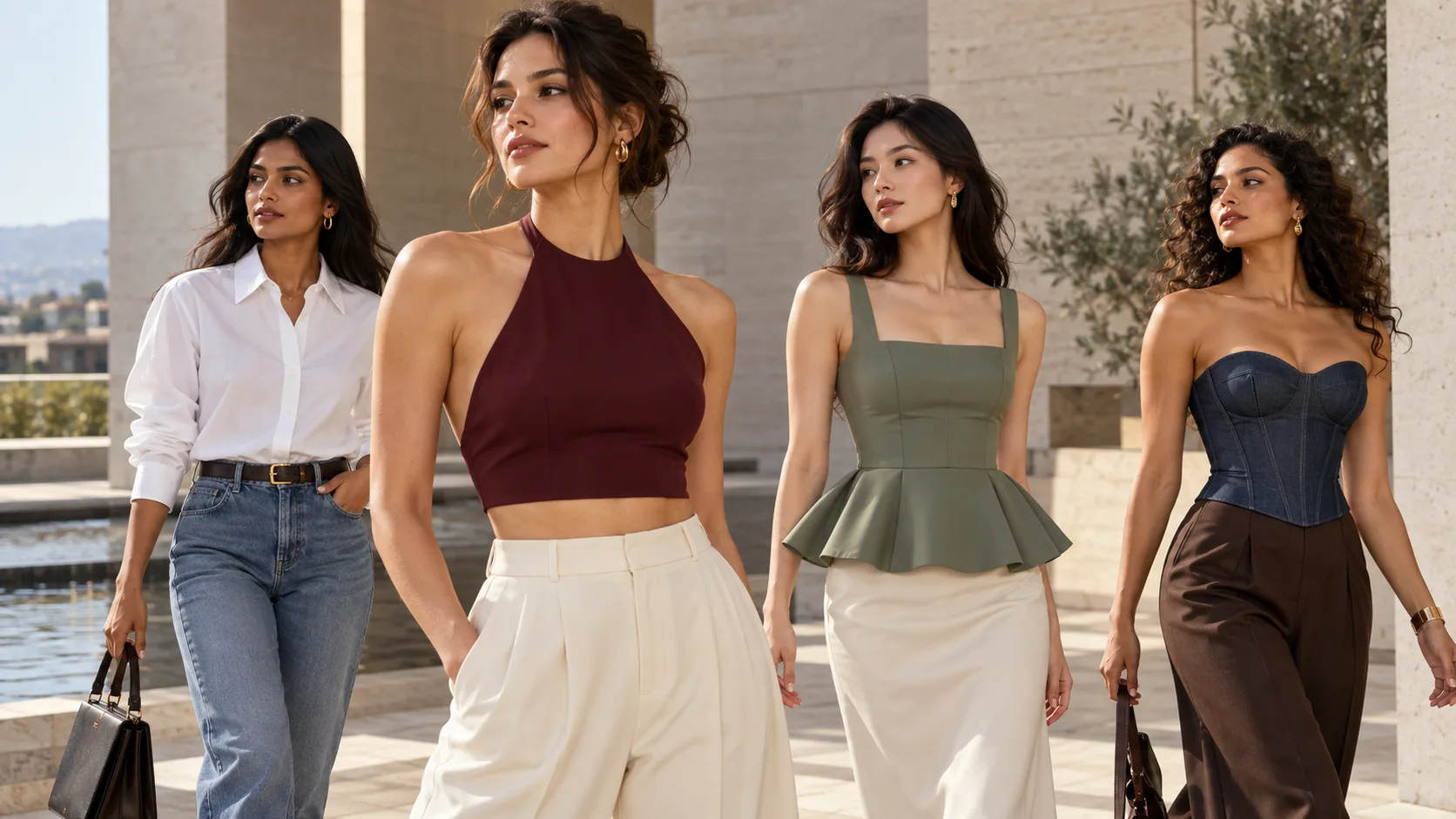
A crop top, halter top, camisole, corset top, and peplum top can all look completely different — but the confusing part is that those names are not describing the same thing.
Some describe length.
Some describe neckline or shoulder construction.
Some describe fit.
Others describe how the garment is actually built.
That is why “types of tops” can become messy very quickly.
A cropped halter top, for example, combines two categories at once: crop tells you where the top ends, while halter tells you what happens around the shoulders and neck.
The same is true for a fitted strapless corset top or a relaxed tunic shirt.
So this guide is not just a list of top names.
It is about understanding what part of the garment is defining the style — and why that changes how the top works with jeans, skirts, trousers, layering pieces, and even what you wear underneath.
Once you start reading tops by length, neckline, fit, and construction, the categories become much easier to understand.
And that is far more useful than simply memorizing names.
1. T-Shirt
 Pin it
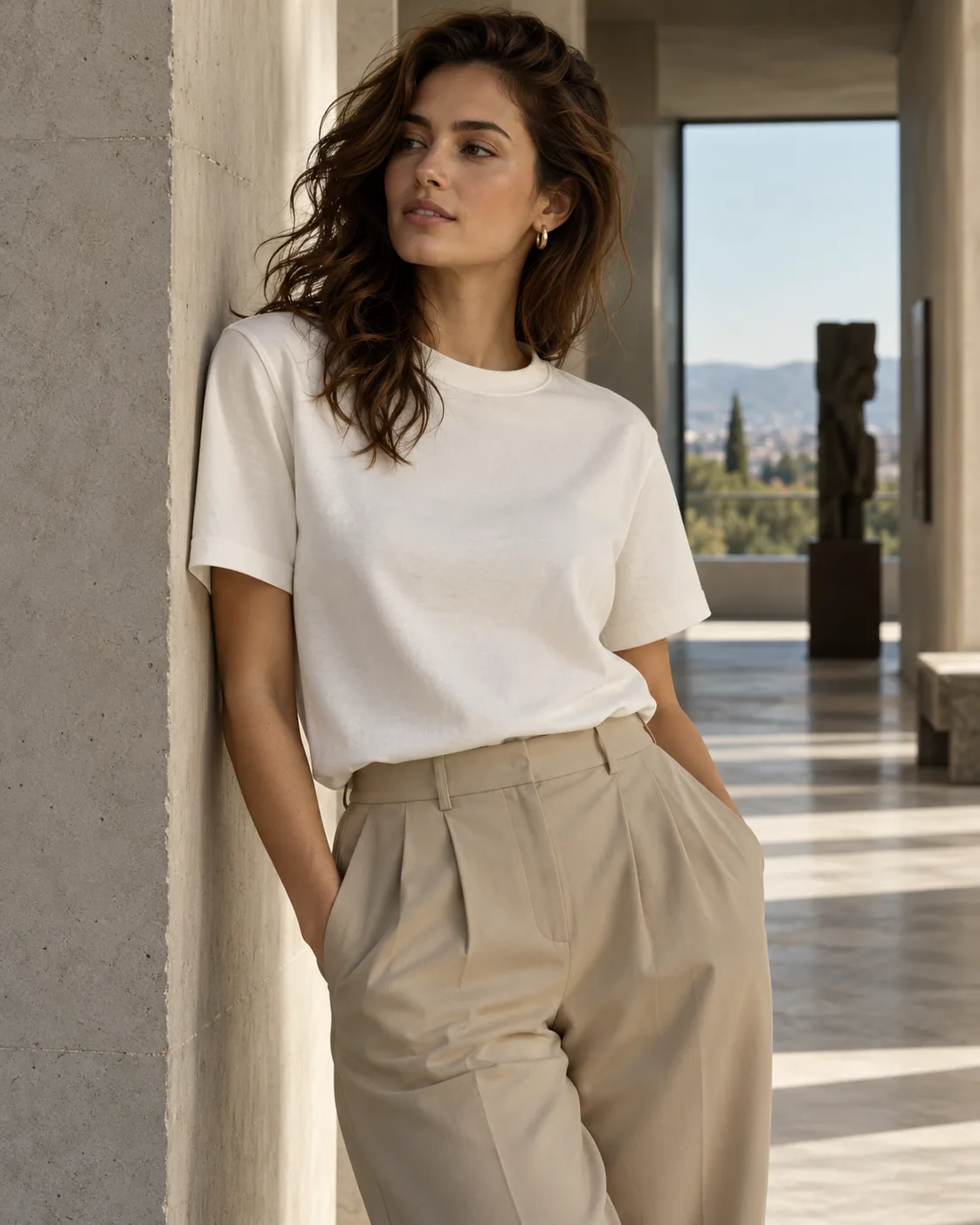
A T-shirt is the baseline of modern tops, but the category is broader than a basic crew neck.
It can be:
fitted or oversized
crew, V-neck, or scoop-neck
cropped or full length
structured cotton or softer jersey
What defines it most is the knit fabric, simple construction, and sleeve shape, not one exact neckline.
That is why a fitted ribbed tee can work almost like a base layer, while a boxy heavyweight T-shirt creates a much stronger silhouette on its own.
The fabric weight matters too. Thin jersey follows the body closely, while heavier cotton holds more shape and usually looks cleaner tucked into trousers or skirts.
For bottoms, the balance matters more than the label: a fitted tee can offset a fuller skirt, while a relaxed tee often works better with straighter silhouettes. Our Types of Skirts guide is useful if you want to understand how those skirt shapes change the overall proportion.
The key idea: a T-shirt is simple by construction, but fit, fabric, and length can completely change how it behaves in an outfit.
2. Tank Top
 Pin it
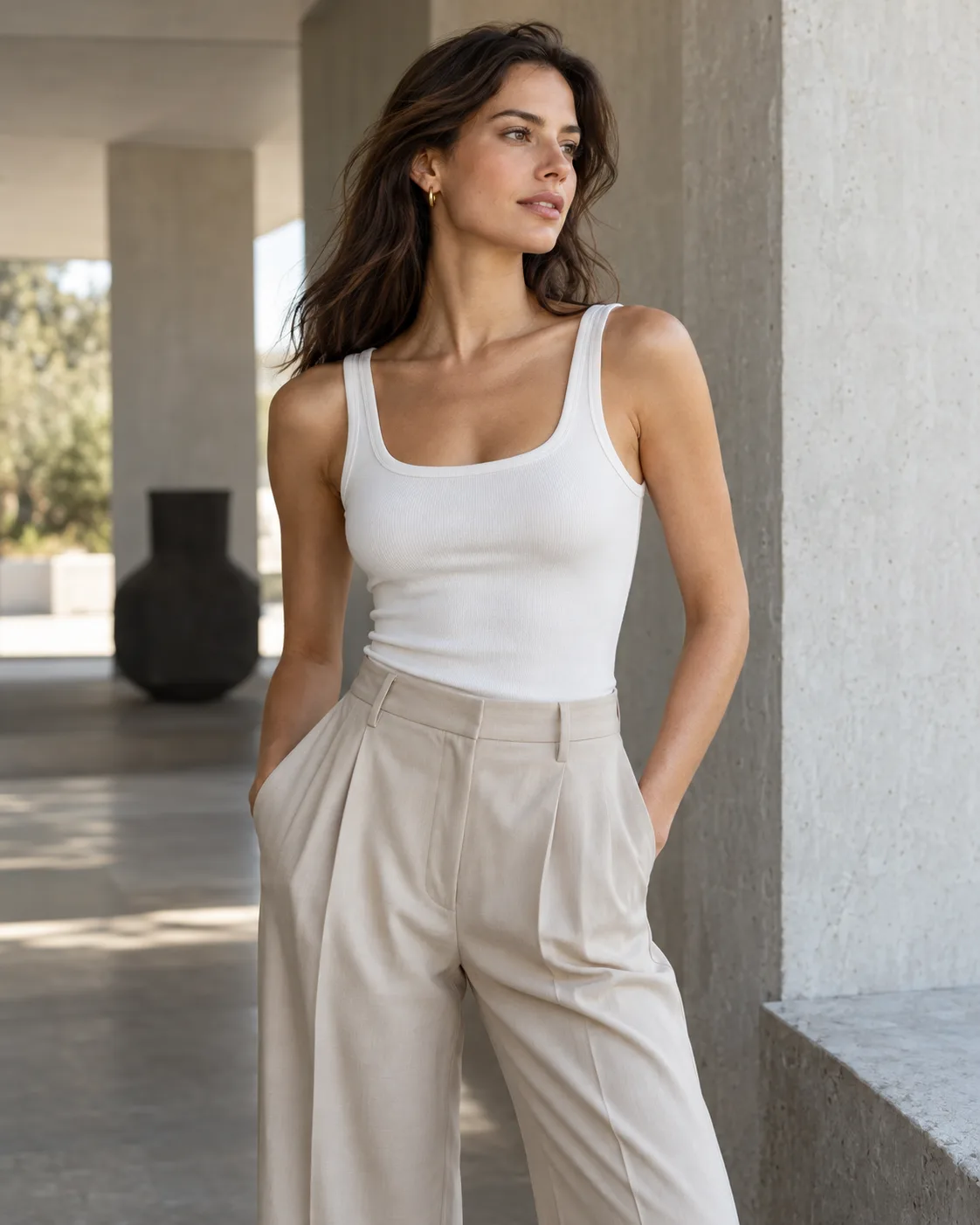
A tank top is defined by its sleeveless upper construction, but that still leaves a lot of room for variation.
It can have:
wide or narrow shoulder straps
high or low armholes
crew, scoop, square, or deep necklines
fitted or relaxed proportions
That is why “tank” tells you more about the absence of sleeves than the overall style.
A ribbed fitted tank behaves almost like a base layer. A boxier cotton tank creates more structure. A lower-cut version can feel more evening-ready, while a high-neck tank can look surprisingly polished under a blazer or with tailored trousers.
The armhole matters more than people often notice. A deeper cut can change what is visible at the side, which is why our guide to What Bra to Wear With a Deep-Neck or Backless Top or Blouse can be useful when a tank starts exposing more than just the shoulder.
The key idea: tank describes the upper construction; fabric, neckline, and fit decide whether the top feels casual, minimal, sporty, or polished.
3. Camisole
 Pin it
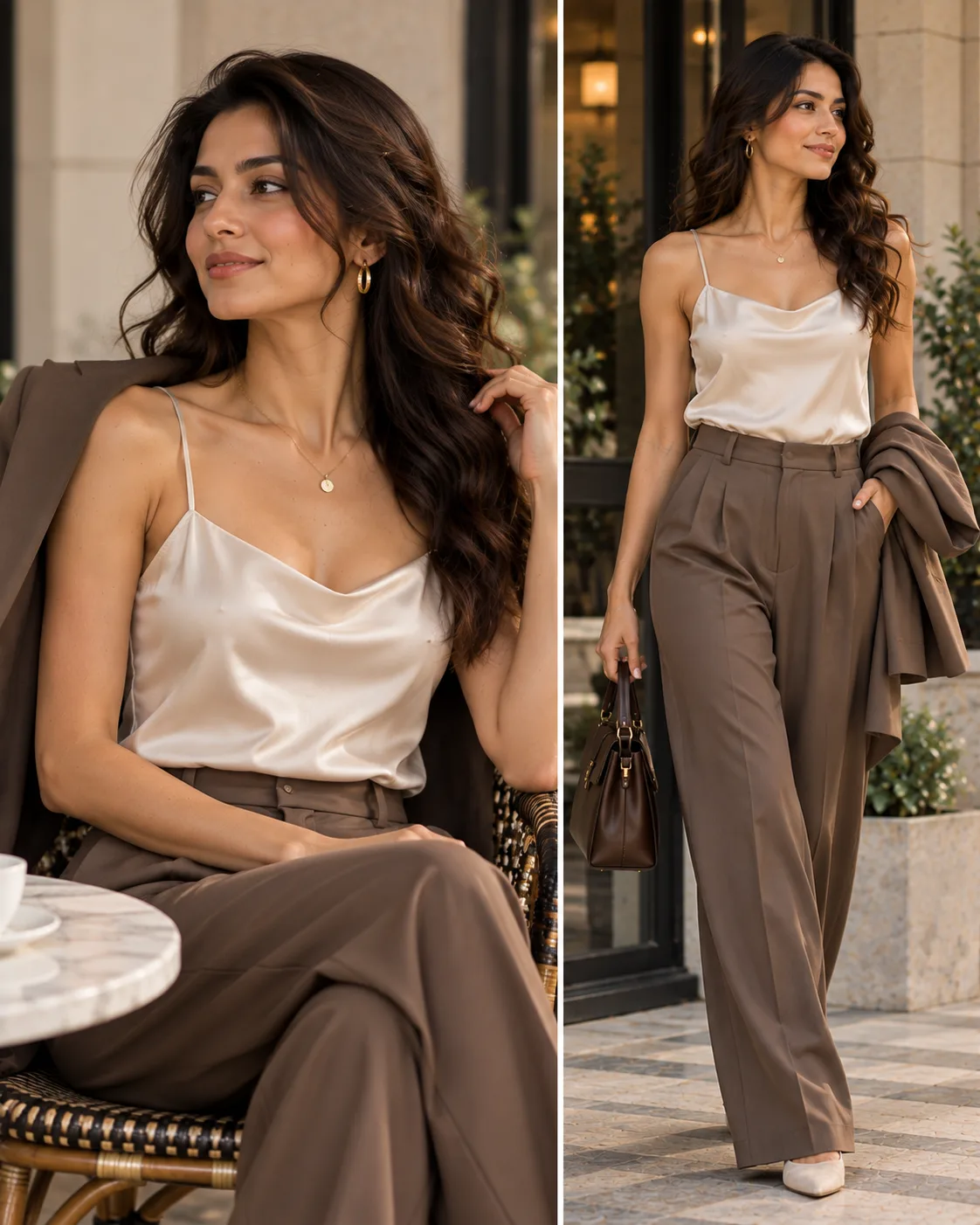
A camisole is lighter and more delicate than a tank top, usually with thin straps, softer fabric, and a closer fit.
You will often see it in:
satin
silk-like fabric
lightweight cotton
ribbed knits
lace-trimmed versions
Its role changes depending on how it is styled.
A simple cotton camisole can work as a base layer. A satin version can stand alone with tailored trousers or a skirt. Under shirts, blazers, or semi-sheer tops, it becomes part of the layering strategy rather than the main outfit.
The biggest difference from a tank is usually the strap width and fabric weight, not the neckline.
Because camisoles often expose more of the shoulders and upper chest, the bra underneath may matter more.
The key idea: a camisole is defined less by volume and more by lightness, narrow straps, and how easily it shifts between inner layer and standalone top.
4. Crop Top
 Pin it
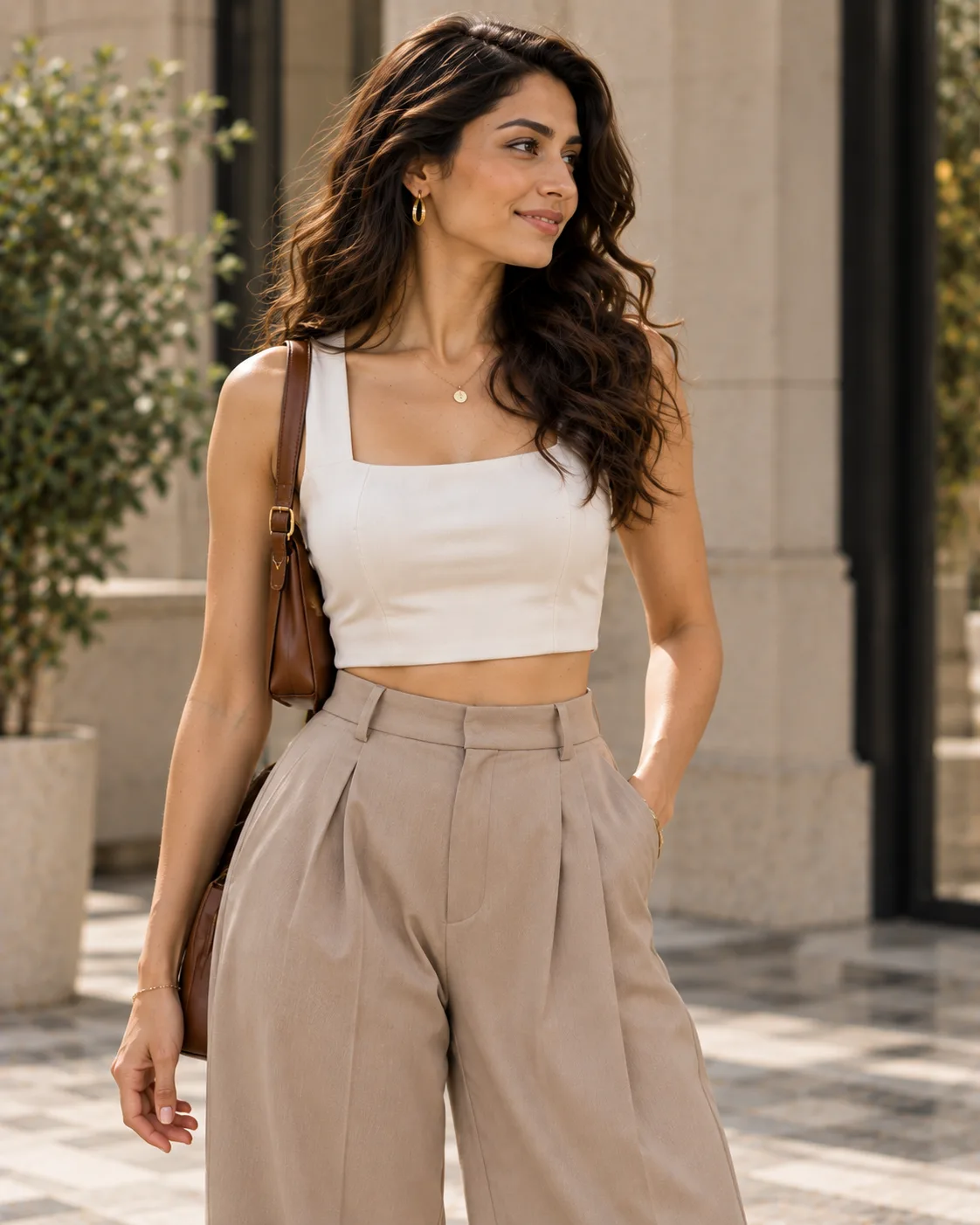
A crop top is defined by where it ends, not by one fixed silhouette.
It can be:
fitted or oversized
knitted or woven
halter, strapless, or sleeved
structured or soft
That is why “crop” is really a length category.
The styling difference comes from how the hem relates to the rise of the bottom. A cropped top with high-waisted trousers can create a very clean proportion, while the same top with a lower-rise skirt changes the balance completely.
This is also why crop tops pair differently with A-line, pencil, pleated, and straight skirts.
The key idea: crop tells you where the top stops; the neckline, fit, and construction tell you what kind of top it actually is.
5. Bodysuit
 Pin it
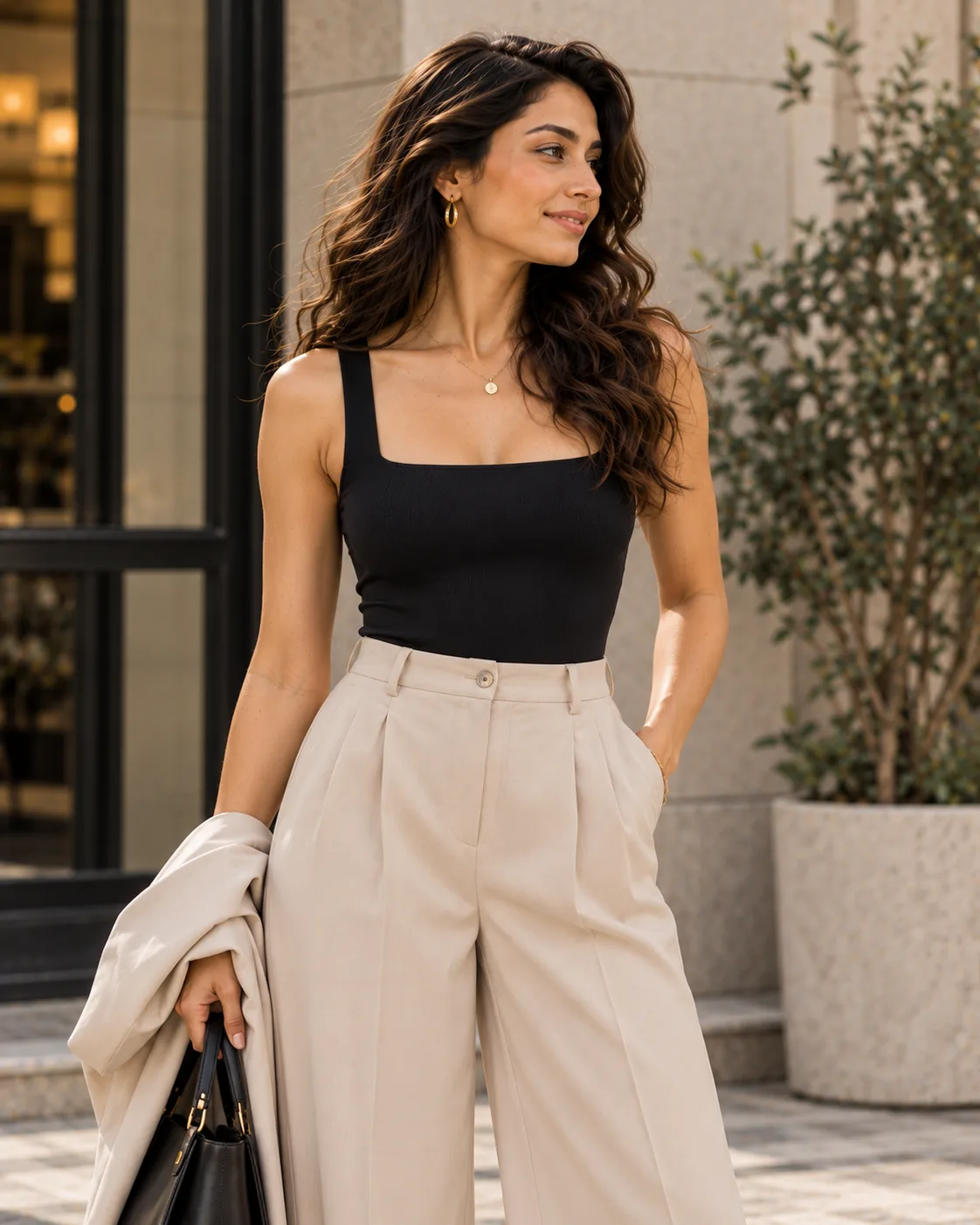
A bodysuit looks like a top from the waist up, but its defining feature is what happens below the waist.
The garment continues into a fitted lower section and fastens underneath, which helps the top stay smooth and tucked without constant adjustment.
That makes bodysuits especially useful with:
high-waisted trousers
pencil or straight skirts
jeans
tailored shorts
The upper half can vary completely — crew neck, square neck, halter, long sleeve, or even corset-inspired — so “bodysuit” describes construction, not neckline or style.
The main practical advantage is a cleaner line through the waist, especially under fitted bottoms.
The key idea: a bodysuit is not just a tight top; its lower fastening is what changes how it sits and stays in place.
6. Blouse
 Pin it
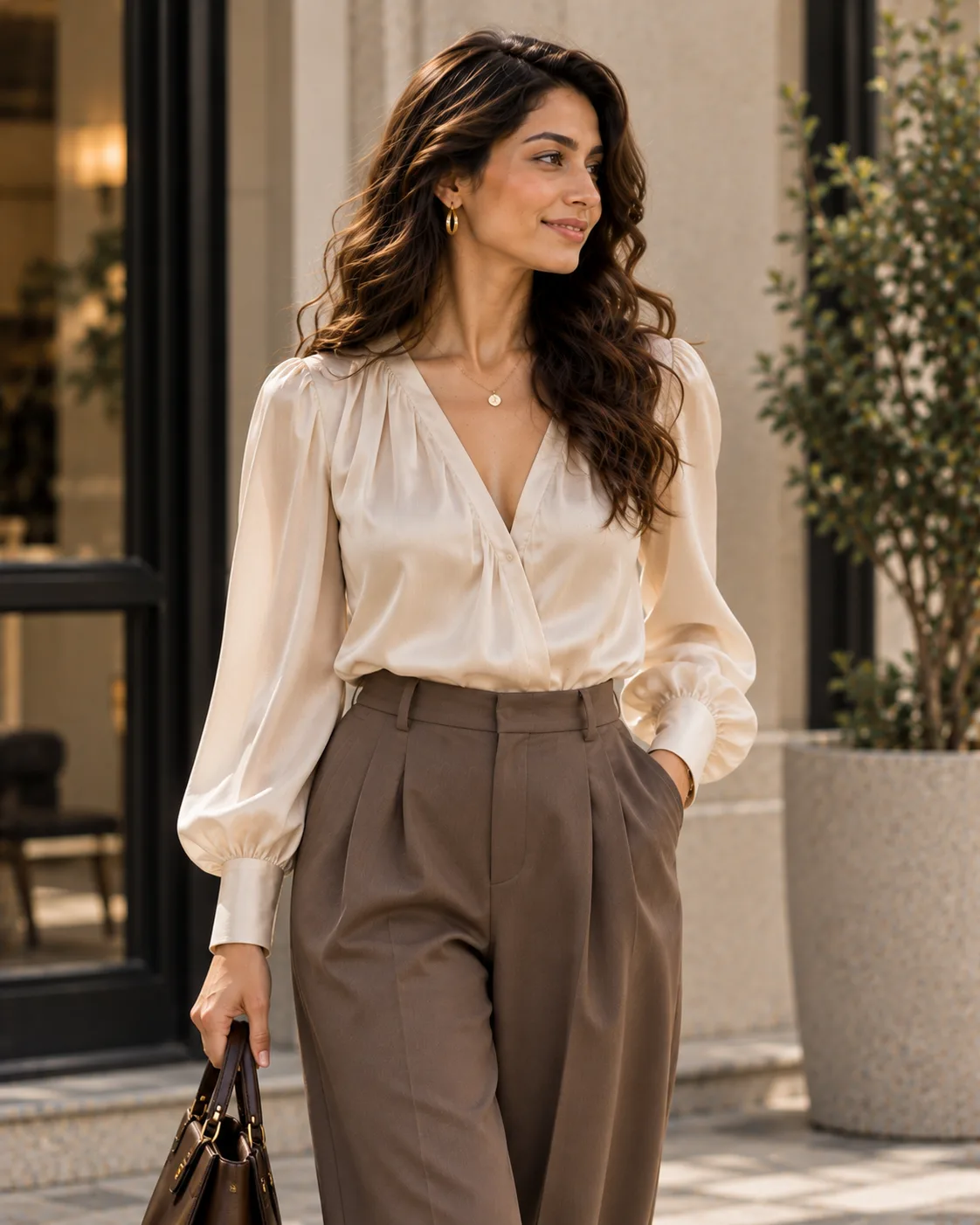
“Blouse” is a broad category, which is exactly why it often gets confusing.
A blouse can be:
fluid and softly draped
sharply tailored
sleeveless
buttoned
gathered
fitted
structured
What usually separates it from a basic T-shirt is fabric and construction. Blouses are more often made from woven fabrics such as satin, crepe, chiffon, poplin, or silk-like materials, and they usually rely more on seams, shaping, or drape.
The word also changes by context. In global fashion, “blouse” often means a dressier women’s top. In Indian fashion, it can also mean the fitted top worn with a saree or lehenga.
That makes blouse less of one silhouette and more of a family of constructed tops.
The key idea: blouse is a broad construction category, not one single shape.
7. Shirt
 Pin it
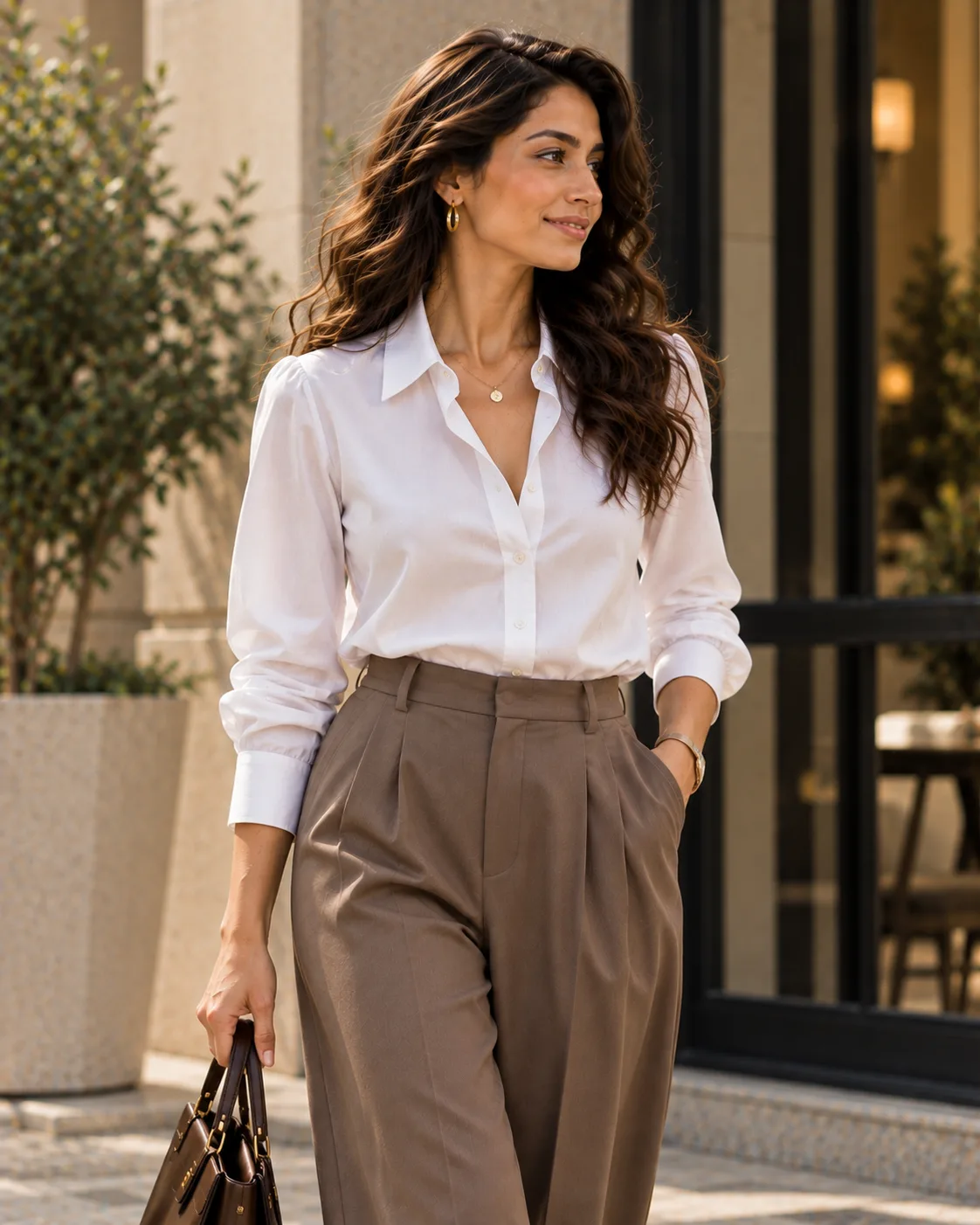
A shirt is usually more structured than a blouse.
Its defining details often include:
a collar
button front
cuffs
a straighter, more tailored cut
But shirts can still vary from crisp cotton and poplin to silk, linen, denim, or oversized relaxed versions.
What makes them useful is that the same basic construction can shift between polished and casual very easily.
A fitted shirt tucked into trousers feels sharp. An oversized shirt over a tank or camisole feels much more relaxed. Worn open, it can function almost like a lightweight jacket.
That versatility is why shirts pair easily with jeans, skirts, tailored trousers, and even layered dresses.
The key idea: a shirt is defined more by tailoring details and construction than by one fixed fit.
8. Peplum Top
 Pin it
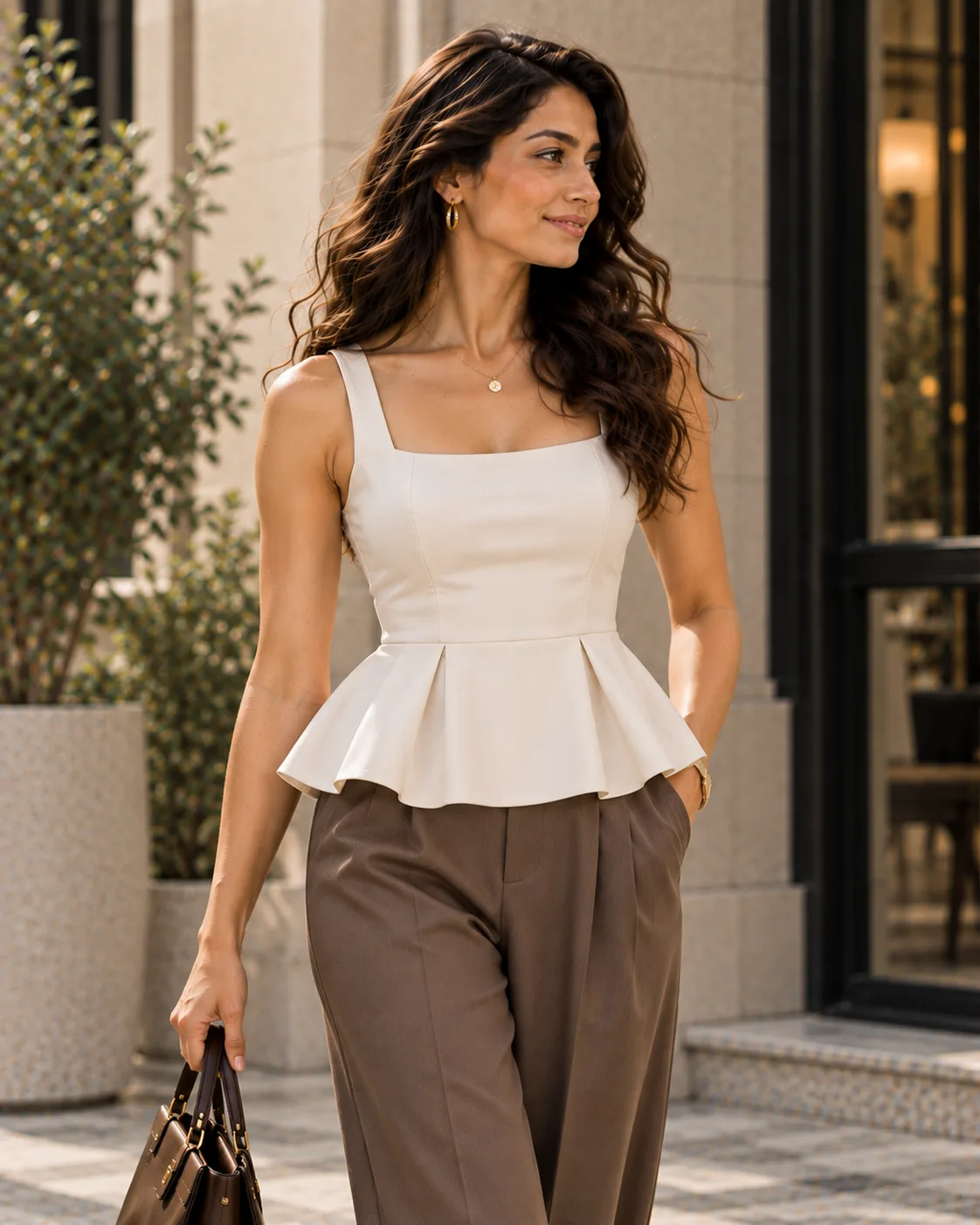
A peplum top is defined by where the volume begins.
The upper section stays fitted or shaped, then the fabric flares out around the waist or high hip.
That makes the waistline part of the design rather than just the point where the top ends.
Peplum tops can be:
structured and tailored
soft and draped
sleeveless
long-sleeved
cropped or regular length
The flare is what matters.
A crisp peplum creates a sharper, more architectural shape, while a softer fabric gives it more movement.
It also changes how the top works with bottoms. Straighter trousers and pencil skirts usually let the peplum remain the focal point, while very full skirts can create too much volume in the same area.
The key idea: peplum is defined by a fitted upper section with added flare at the waist or hip.**
9. Wrap Top
 Pin it
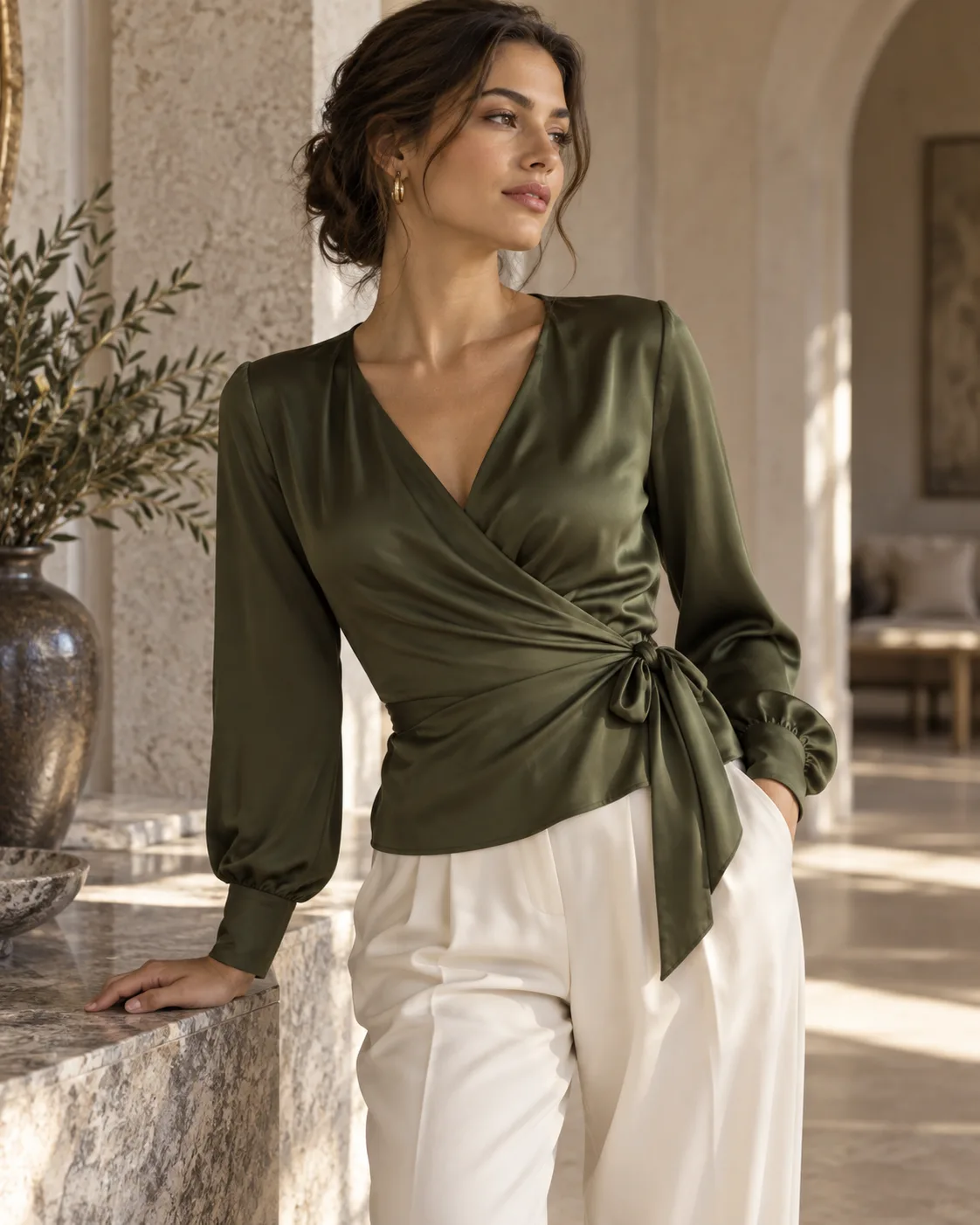
A wrap top is shaped by overlapping front panels that cross the body and usually fasten at the waist or side.
That construction creates three things at once:
a diagonal neckline
adjustable shaping
a more defined waist
A true wrap can be tightened or loosened, while a faux-wrap top only copies the crossover look.
Fabric changes the effect too. Jersey makes the shape softer and more casual; satin or crepe makes it feel more polished.
Because the neckline often forms a V, depth matters. If the crossover drops lower than expected, our What Bra to Wear With a Deep-Neck or Backless Top or Blouse guide can help with the support side of the styling.
The key idea: a wrap top gets its shape from the crossover construction, not just from a tie at the waist.
10. Halter Top
 Pin it
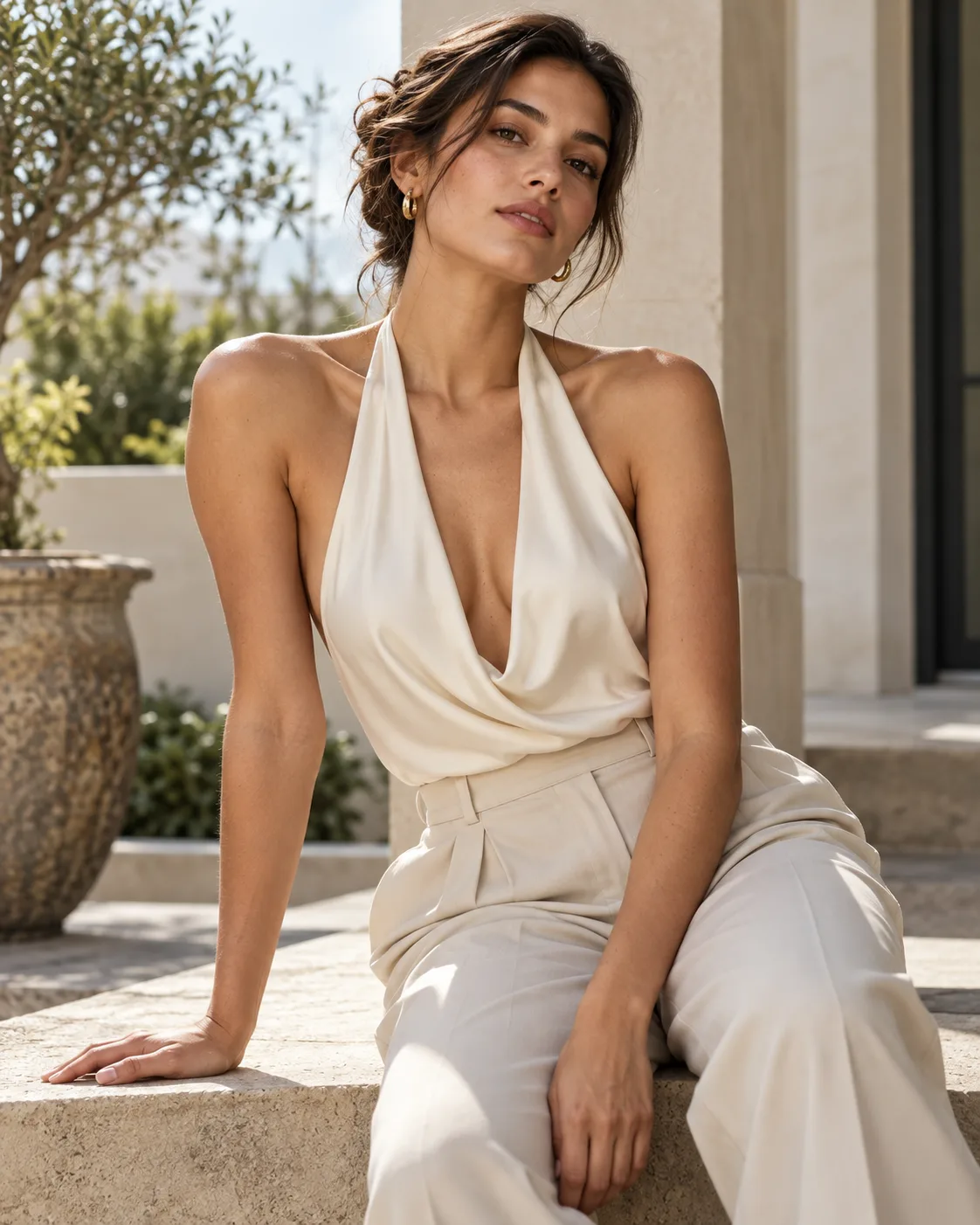
A halter top is defined by how it connects around or behind the neck, leaving more of the shoulders and upper back exposed.
It can be:
fitted
cropped
fluid
backless
structured
So “halter” describes the upper construction, not the overall silhouette.
A high-neck halter can feel sleek and minimal, while a deep-cut or open-back version becomes much more evening-focused. The shoulder exposure also changes what works underneath.
The key idea: halter tells you how the top is anchored around the neck; fit, length, and fabric determine the rest of the look.
11. Tube / Strapless Top
 Pin it
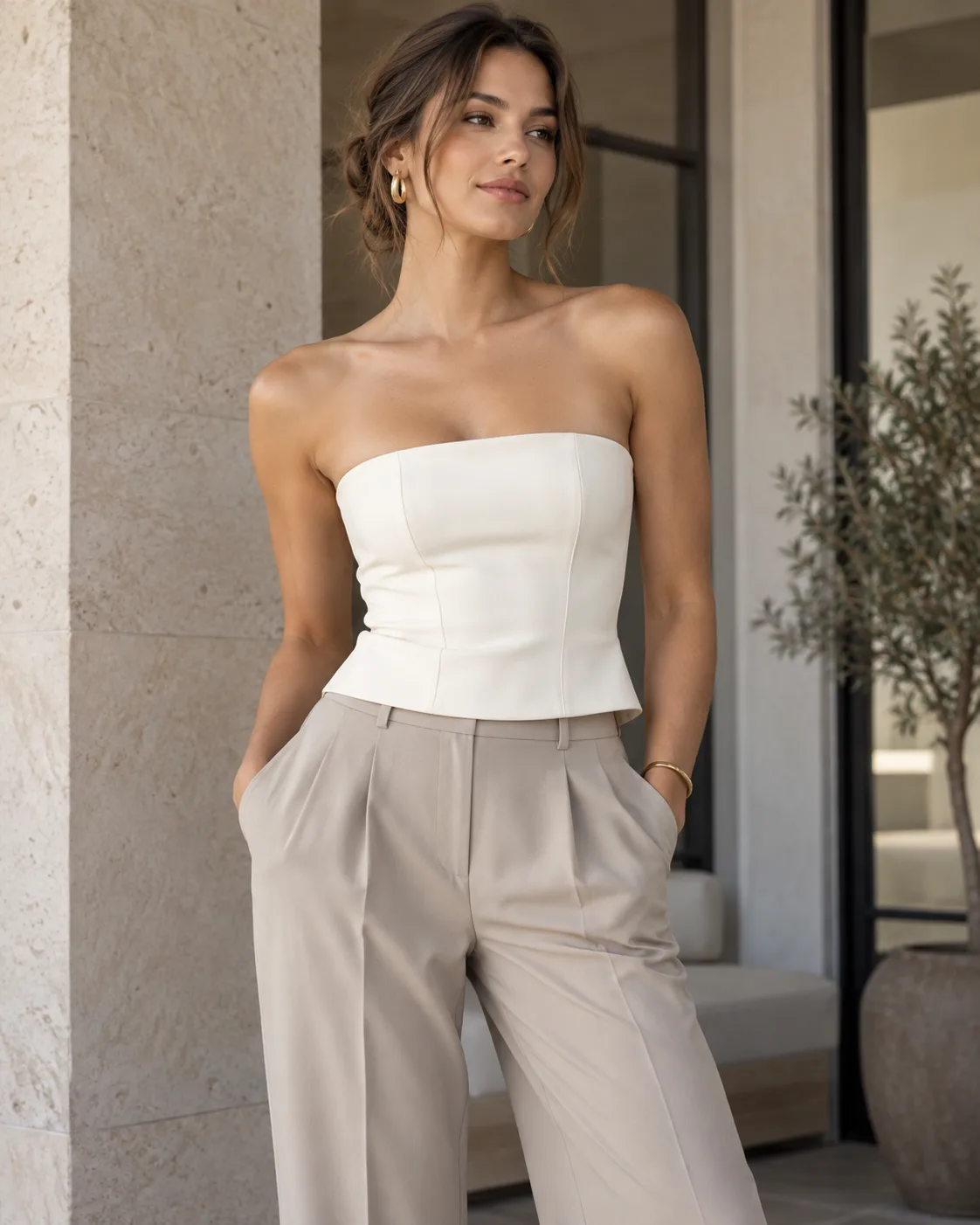
A tube or strapless top is defined by the absence of shoulder straps.
That means the garment has to stay in place through:
elastic
structured fabric
internal grip
boning
built-in cups
a secure upper edge
A soft knit tube top behaves very differently from a structured strapless corset top, even though both expose the shoulders.
That is why strapless describes the upper construction, not the fit or level of support.
If the top relies on built-in cups or internal shaping, our Do You Need a Bra Under a Padded Blouse guide helps determine whether the garment can support itself.
The key idea: strapless tells you what is missing at the shoulders; the structure underneath decides whether the top actually stays secure.
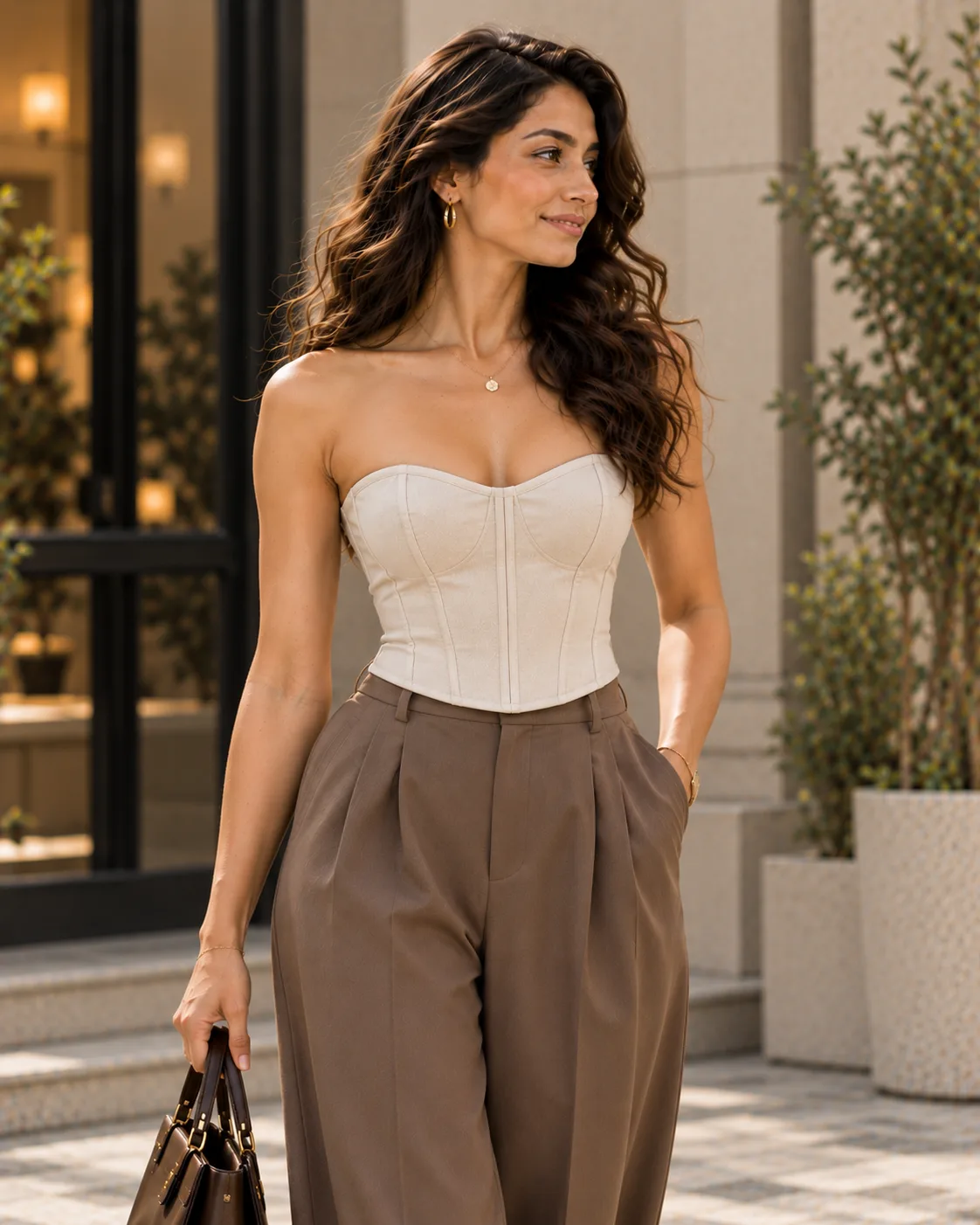
12. Corset / Bustier Top
 Pin it
A corset or bustier top is defined by internal structure, not simply by being fitted.
Common features include:
shaped cups
panel seams
boning or reinforced sections
a defined waist
firm fabric
A corset-inspired top may only borrow the look, while a true structured bustier does more to hold and shape the garment.
That distinction matters when choosing what to wear underneath. Some styles already contain enough support to work on their own, while others mainly provide shape.
The key idea: corset and bustier tops are defined by structure; how much support they provide depends on what is actually built inside.
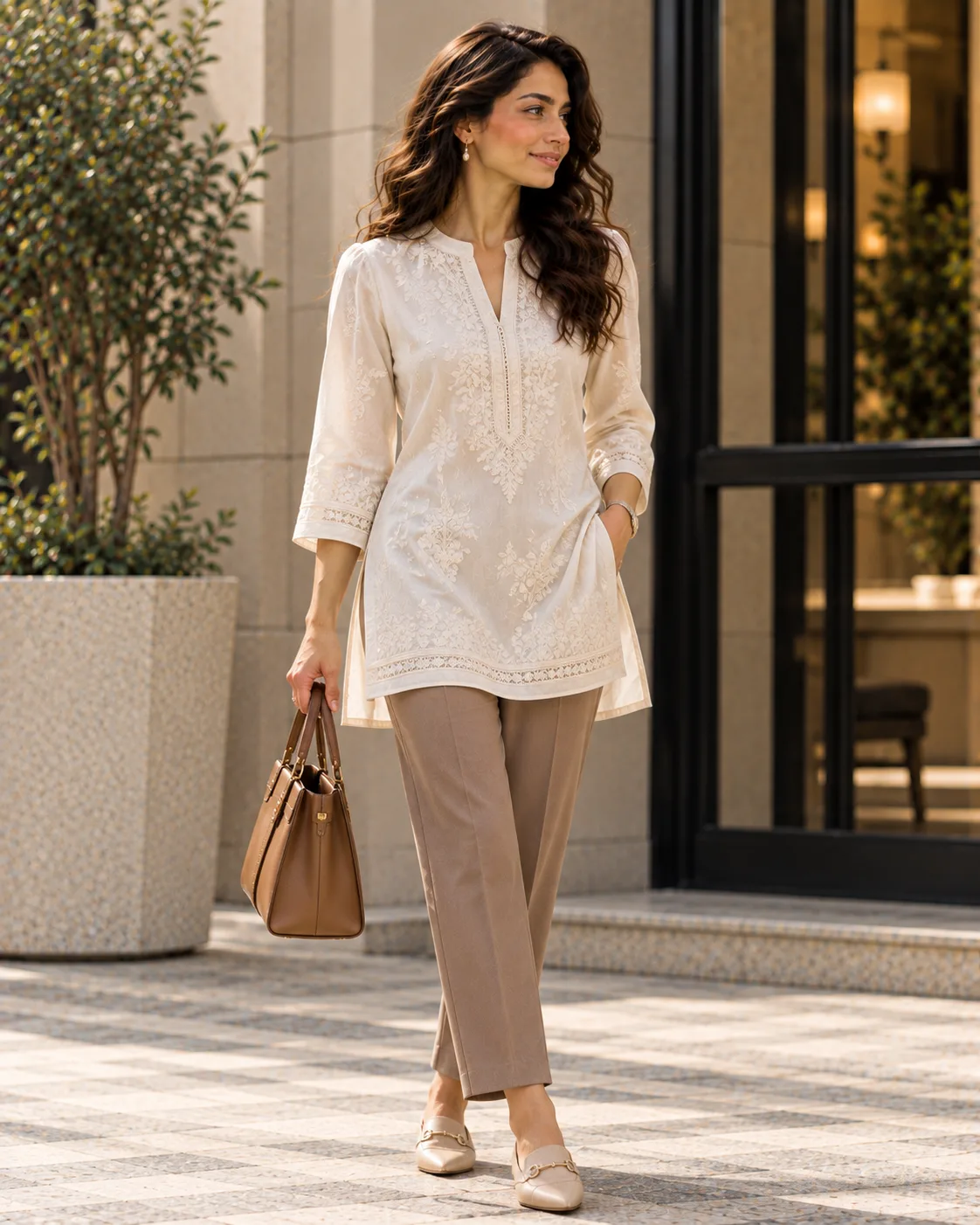
13. Tunic
 Pin it
A tunic is defined mainly by length.
It usually extends well below the waist, often reaching the upper thigh or beyond, but stops short of becoming a dress.
Tunics can be:
straight
oversized
fitted
shirt-style
knit
embroidered
What matters most is proportion. Because the top already adds length, it usually works best with cleaner bottoms such as straight trousers, leggings, slim jeans, or controlled wide-leg shapes.
In Indian wardrobes, kurtis often overlap with the tunic category, though the construction and styling language can be different. Our What Bra to Wear Under a Kurti or Kurta is useful when longer tops bring fabric, layering, or visibility issues into the outfit.
The key idea: tunic describes a longer top proportion; the cut, fabric, and neckline determine the actual style.
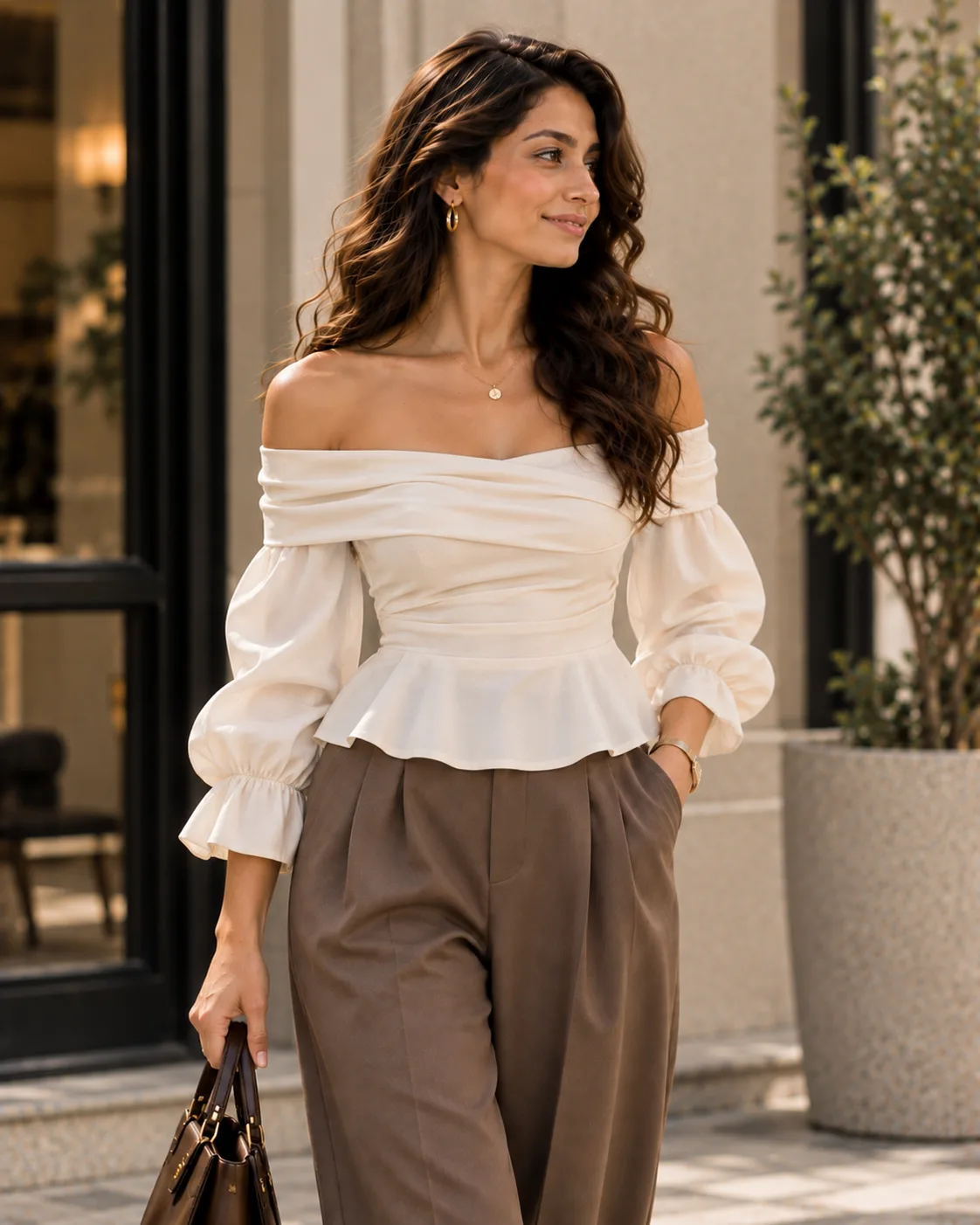
14. Off-Shoulder Top
 Pin it
An off-shoulder top sits below the shoulders, leaving the collarbone and upper shoulder line exposed.
It can be:
fitted
ruched
peplum
cropped
loose and gathered
What matters is how the neckline stays in place. Some rely on elastic; others use structured construction.
The key idea: off-shoulder describes neckline placement; the rest of the top can still vary completely in fit, length, and structure.
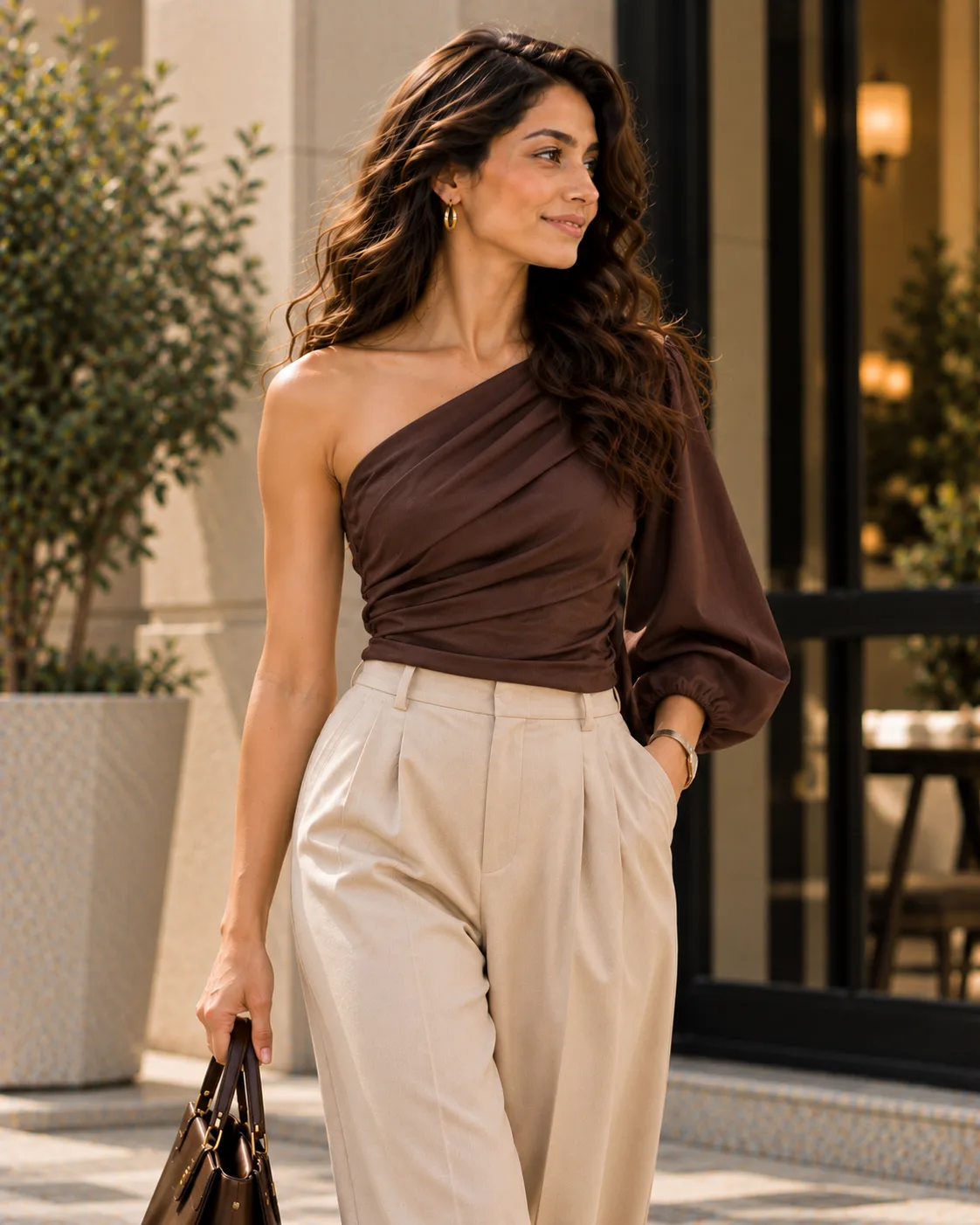
15. One-Shoulder / Asymmetric Top
 Pin it
A one-shoulder or asymmetric top creates interest by making the upper line intentionally uneven.
That can come from:
one exposed shoulder
a diagonal neckline
a single sleeve
asymmetric draping
uneven straps
The asymmetry does most of the visual work, so the rest of the outfit usually looks stronger when it stays relatively clean.
The key idea: asymmetry describes the imbalance of the upper construction, not one fixed fit or length.
Tops That Are Easy to Confuse
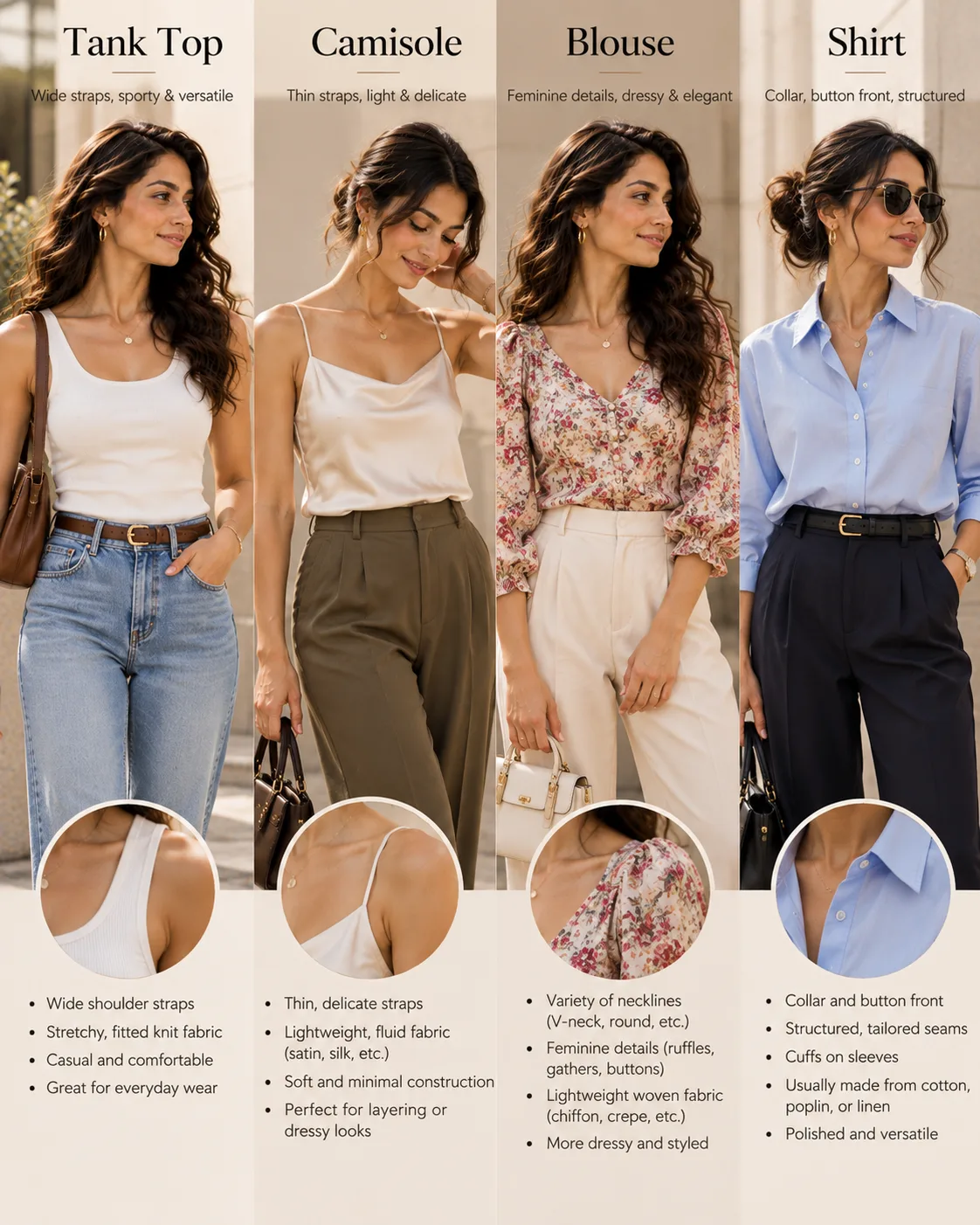 Pin it
Tank vs Camisole
A tank top usually has wider shoulder coverage and more substantial fabric.
A camisole tends to use thinner straps, lighter fabric, and a more delicate construction.
Shirt vs Blouse
A shirt usually relies on clearer tailoring details such as a collar, button front, and cuffs.
A blouse is a broader category and can be softer, draped, gathered, or structured.
Crop Top vs Corset Top
Crop describes length.
Corset describes structure.
A corset top can be cropped, but not every crop top has corset construction.
Halter vs One-Shoulder
A halter connects around or behind the neck.
A one-shoulder top creates an asymmetric line across the upper body.
The easiest way to separate similar tops is to ask: Is the name describing length, neckline, fit, or construction?
Final Thoughts
Top names become much easier to understand once you stop treating them as one-dimensional categories.
A top can be cropped in length, halter at the neckline, fitted through the body, and structured like a corset — all at the same time.
That is why the most useful questions are:
Where does it end?
What happens around the shoulders and neckline?
How does it fit the body?
What gives it structure?
Once you read tops through those four details, choosing what works with jeans, skirts, trousers, or layered outfits becomes much more intuitive.
The goal is not to memorise every top name. It is to understand what is actually creating the style.