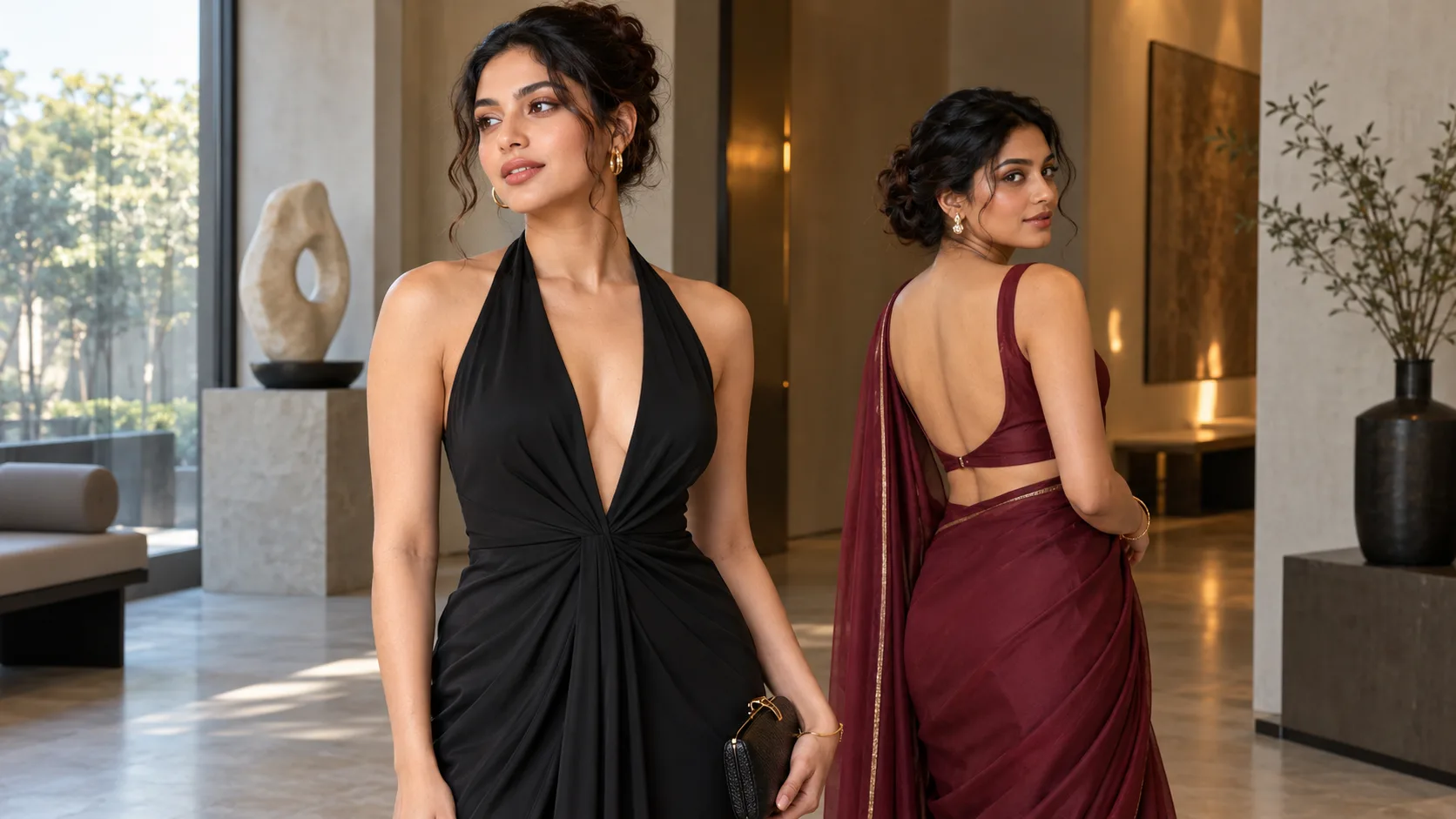
A deep neckline and a low back can look like the same styling problem until you actually put the outfit on.
A plunging V-neck top may hide the bra band perfectly but reveal the centre of the cups. A low-back dress can look completely secure from the front while exposing the band across the back. And some outfits — especially open-back blouses, party tops, saree blouses, and structured festive pieces — leave so little fabric around the body that a conventional bra has almost nowhere to sit.
That is why the useful question is not simply: “What bra should I wear with a backless outfit?”
It is: “Which part of my usual bra is this outfit exposing?”
Bras to wear with Indian Saree Blouse
If the problem is at the centre front, you may need a lower gore or plunge construction.
If the cup edge is appearing along a wide neckline, the issue is different.
If the band is sitting above a low back, changing the straps alone will not fix it.
And if the outfit is cut very low at both the front and back, the better solution may come from the garment itself — through built-in cups, structured lining, or internal support — rather than from trying to force a conventional bra underneath.
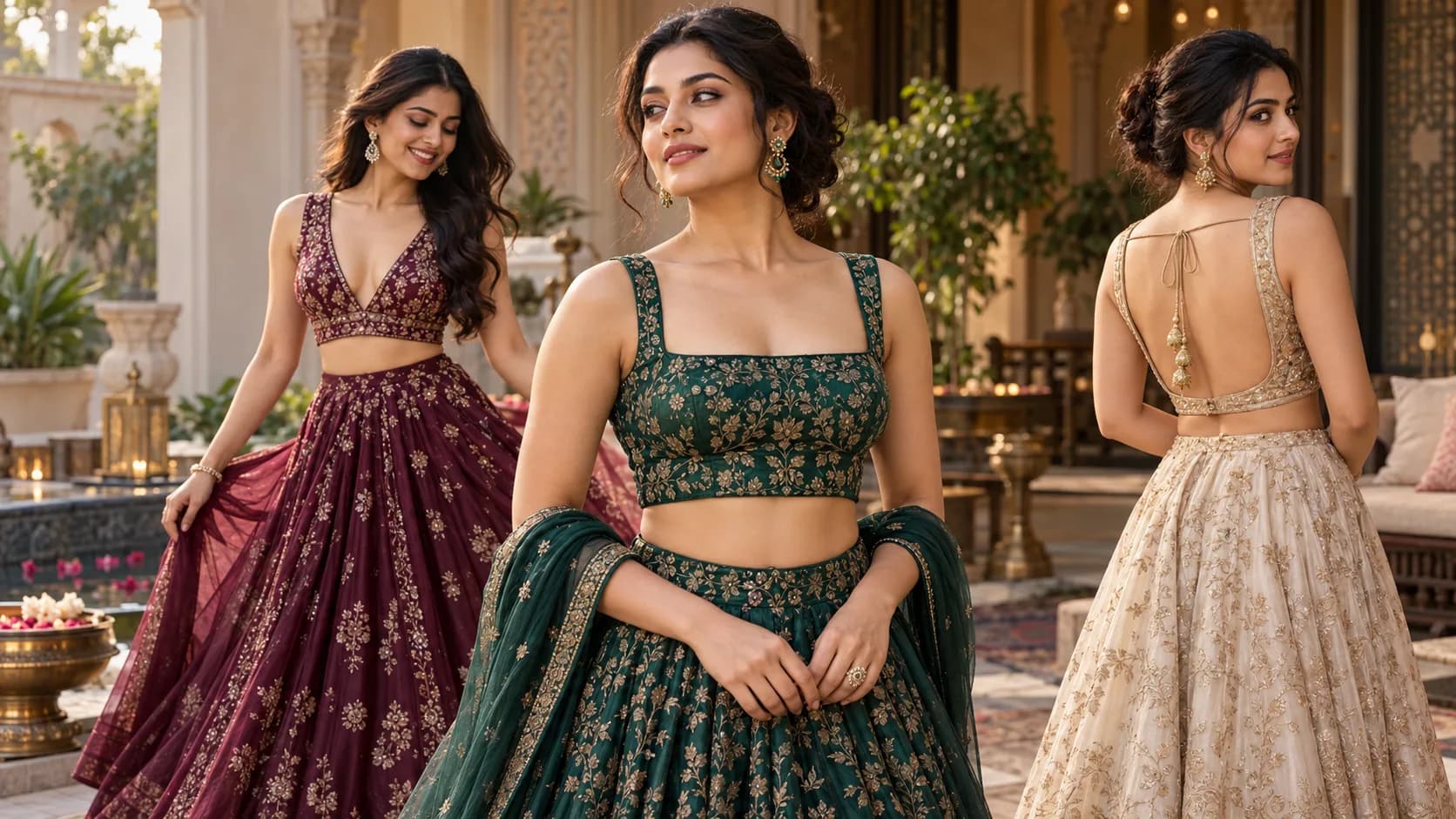
This guide breaks those situations apart so you can choose support based on the actual cut of the outfit, whether you are styling a deep-V top, evening dress, low-back party look, saree blouse, lehenga blouse, or another open-neckline piece.
Because with difficult necklines, the cleanest solution usually starts with understanding where the fabric ends — and where your bra still needs somewhere to go.
1. Deep V Front, Normal Back: Find the Point Where the Bra Appears
 Pin it
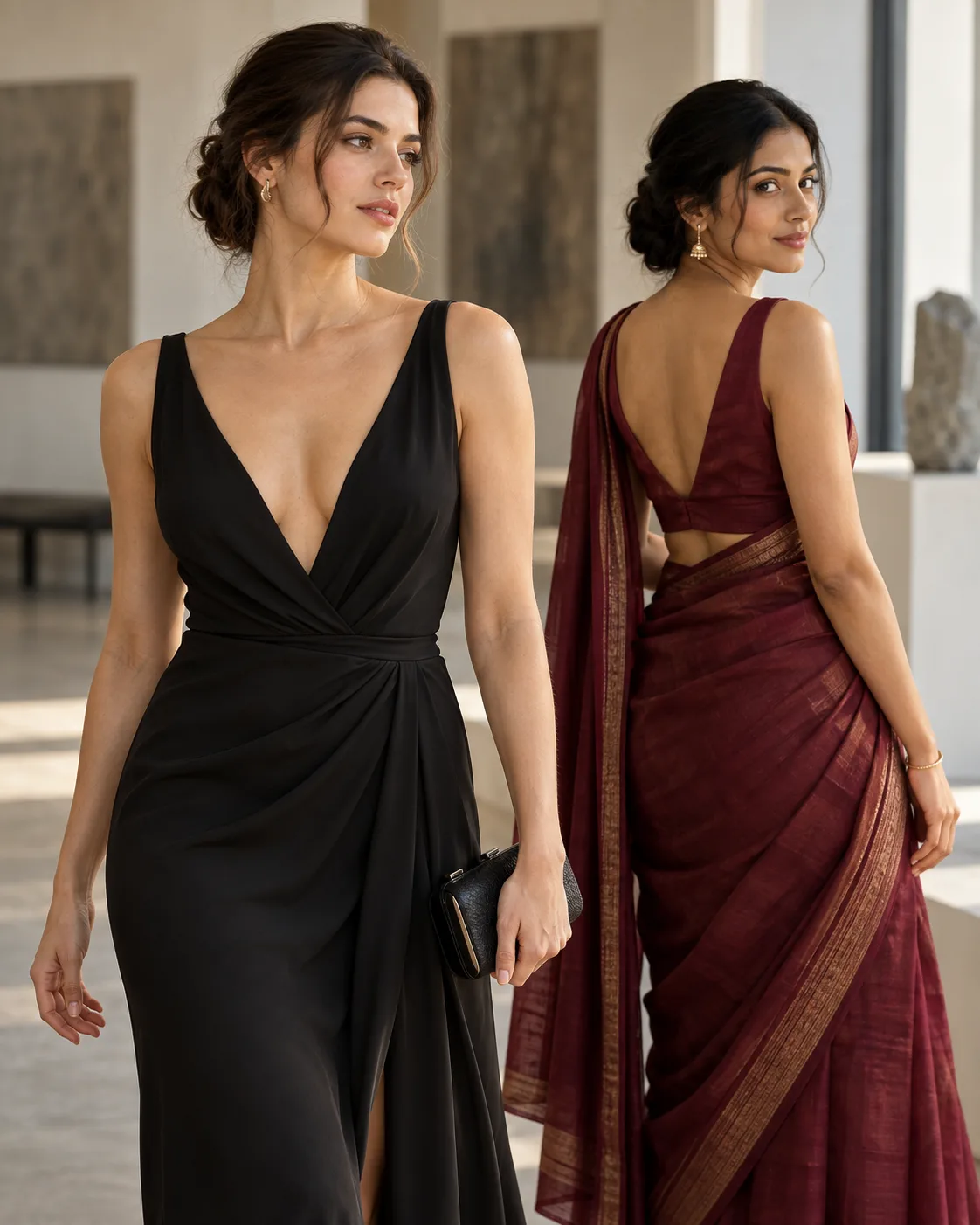
A deep V-neck does not become difficult because it is “deep.”
It becomes difficult at the exact point where the neckline drops below the part of your bra that was meant to stay covered.
That sounds obvious, but it changes how I would choose the solution.
Imagine two outfits with almost the same V.
One exposes the small bridge between the cups.
The other keeps the centre hidden but cuts across the upper edge of the cups.
They may look similar on a hanger, yet they are not asking for the same bra.
For the first outfit, a deep-plunge bra is usually the place to start because its centre gore sits significantly lower than that of a regular T-shirt or full-coverage bra.
That can work especially well under:
plunging evening tops
wrap-style dresses
deep-V bodysuits
low-cut party tops
deep-front saree or lehenga blouses with otherwise conventional backs
But I would not buy or switch to a plunge bra purely because the neckline has a V shape.
Put your normal bra on first.
Then put on the actual outfit and look at the centre front.
Where does the blouse or top stop, and where does the bra begin?
If the only thing breaking the neckline is the bridge between the cups, you have identified a genuine centre-gore problem. A lower plunge construction directly addresses it.
If the bra centre is already hidden and you can still see part of the cup higher up, going deeper at the centre may achieve almost nothing.
That is where generic neckline charts stop being particularly useful.
The neckline needs to be read against the actual geometry of the bra underneath it.
There is another practical detail worth checking: how the V behaves when you move.
Stand normally, then sit down and lean forward slightly — the kind of movement you might make at dinner, at your desk, or while reaching for something.
Some necklines stay exactly where you expect them to.
Others open considerably more once the fabric relaxes.
That means a bra that technically disappears while you are standing may still enter the neckline during normal wear.
For a deep-front outfit with a completely ordinary back, I would generally prefer to keep the benefit of a conventional band whenever possible. You still have fabric at the back to hide it, so there is little reason to complicate the entire support system if the only problem exists at the centre front.
The useful distinction is: Do not ask how deep the neckline is. Ask which piece of the bra crosses into it.
That tells you far more about what needs to change.
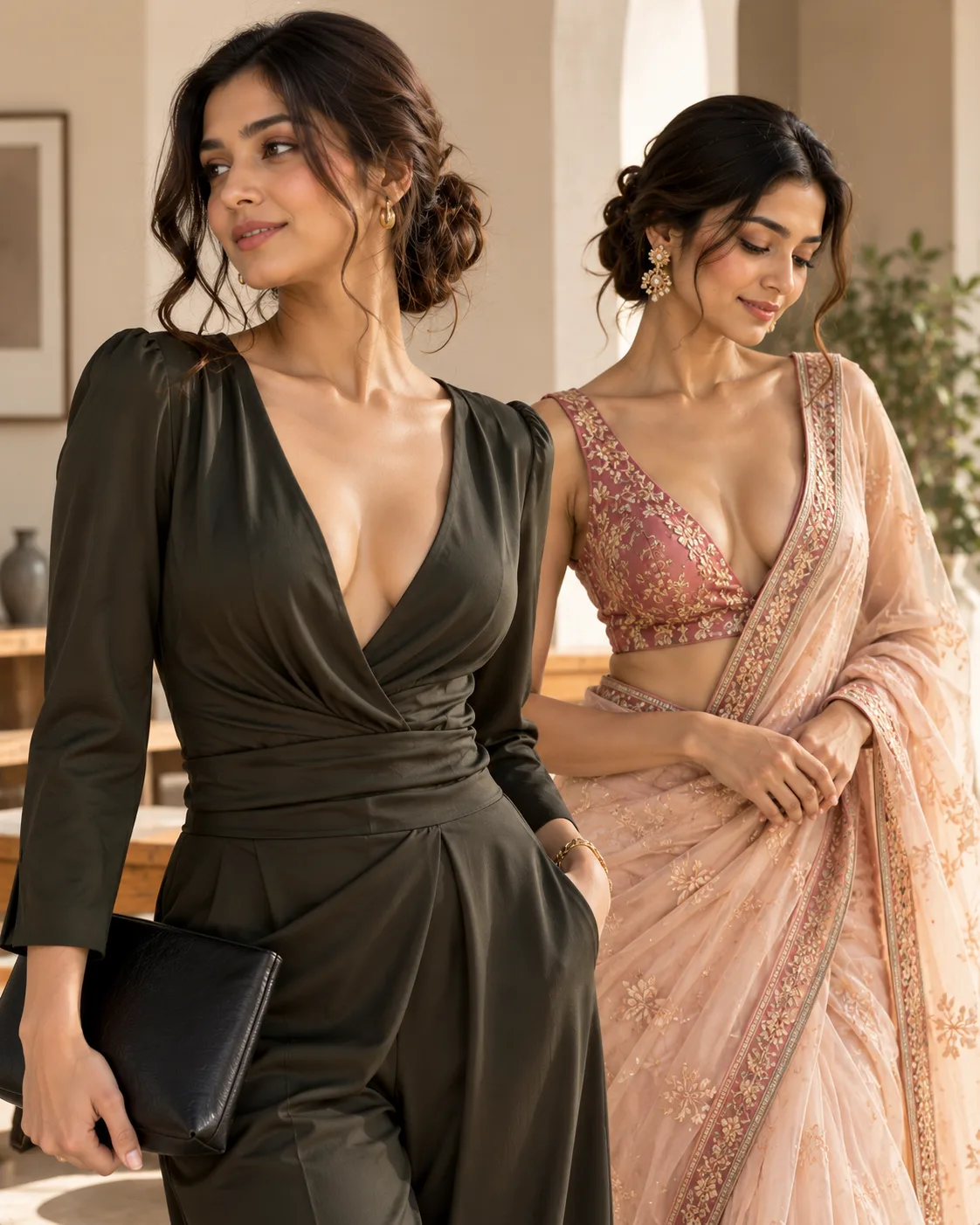
2. Wide Deep Necklines: The Cup Edge Can Be the Real Problem
 Pin it
Some necklines do not reveal the centre of the bra at all.
They reveal the top or outer edge of the cup.
That is a different problem.
Think of:
wide scoop necks
broad sweetheart tops
low square-neck dresses
wide-cut saree blouses
fitted corset-style party tops
certain structured lehenga blouses
In these outfits, the centre gore may be sitting perfectly low enough.
The bra still shows because the neckline travels farther outward across the chest than the cup shape does.
This is why a plunge bra is not automatically the answer.
A plunge can solve depth at the centre while still leaving too much cup visible near the top or sides.
The first thing I would check is not the neckline label.
I would trace the actual line of the garment.
Where does it pass in relation to the bra cup?
If the blouse covers the centre but clips across the upper edge of the cup, you are dealing with a cup-shape mismatch, not a centre-depth problem.
That is where lower-coverage constructions such as a demi or balconette can sometimes work better, depending on how wide and low the neckline actually sits.
But again, I would not treat those names as automatic prescriptions.
Two balconette bras can have very different cup heights.
Two “square-neck” tops can sit several centimetres apart from each other.
The garment and the bra still need to be compared directly.
One useful trick is to put the outfit on over the bra and gently mark, with your finger, the exact point where the neckline touches or crosses the cup.
Then remove the top and look at that position on the bra itself.
That gives you a much more precise answer than guessing from the mirror.
It also helps you avoid a common mistake: switching to a deeper bra when what you actually needed was a lower or differently shaped cup edge.
This distinction matters especially for international eveningwear, corset-inspired tops, and fitted square-neck dresses, but the same issue appears regularly in Indian blouses with broad necklines.
So before changing the entire bra style, ask: Is the problem happening in the middle — or along the cup line?
That one question can completely change the solution.
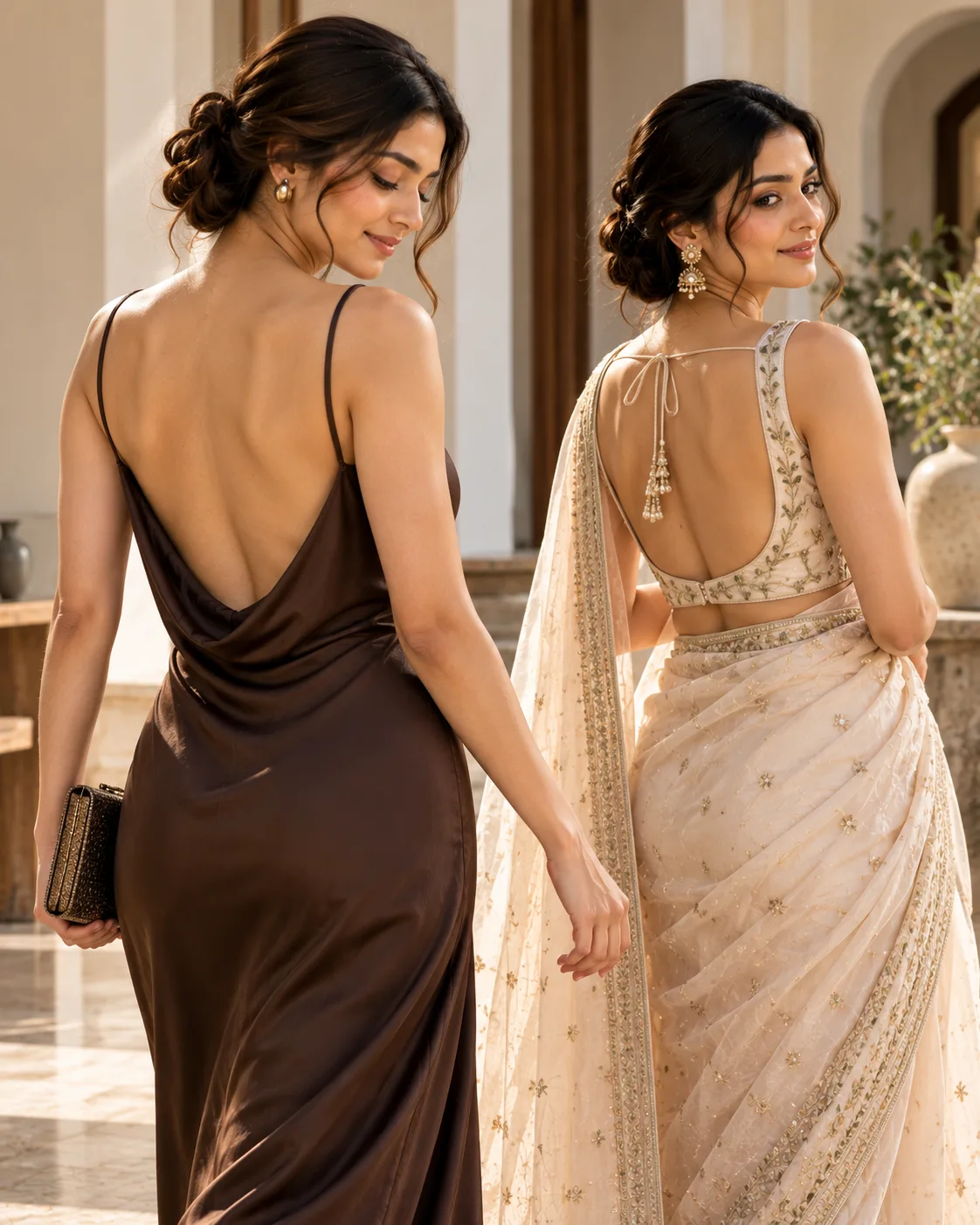
3. A Low Back Is Mostly a Band Problem
 Pin it
A low-back outfit creates a very different issue from a deep neckline.
The cups may fit perfectly. The straps may be hidden. The front can look completely clean.
And then you turn around.
If the bra band sits above the back of the dress, blouse, or top, changing the cup shape will not solve anything.
This is where low-back or convertible solutions become relevant.
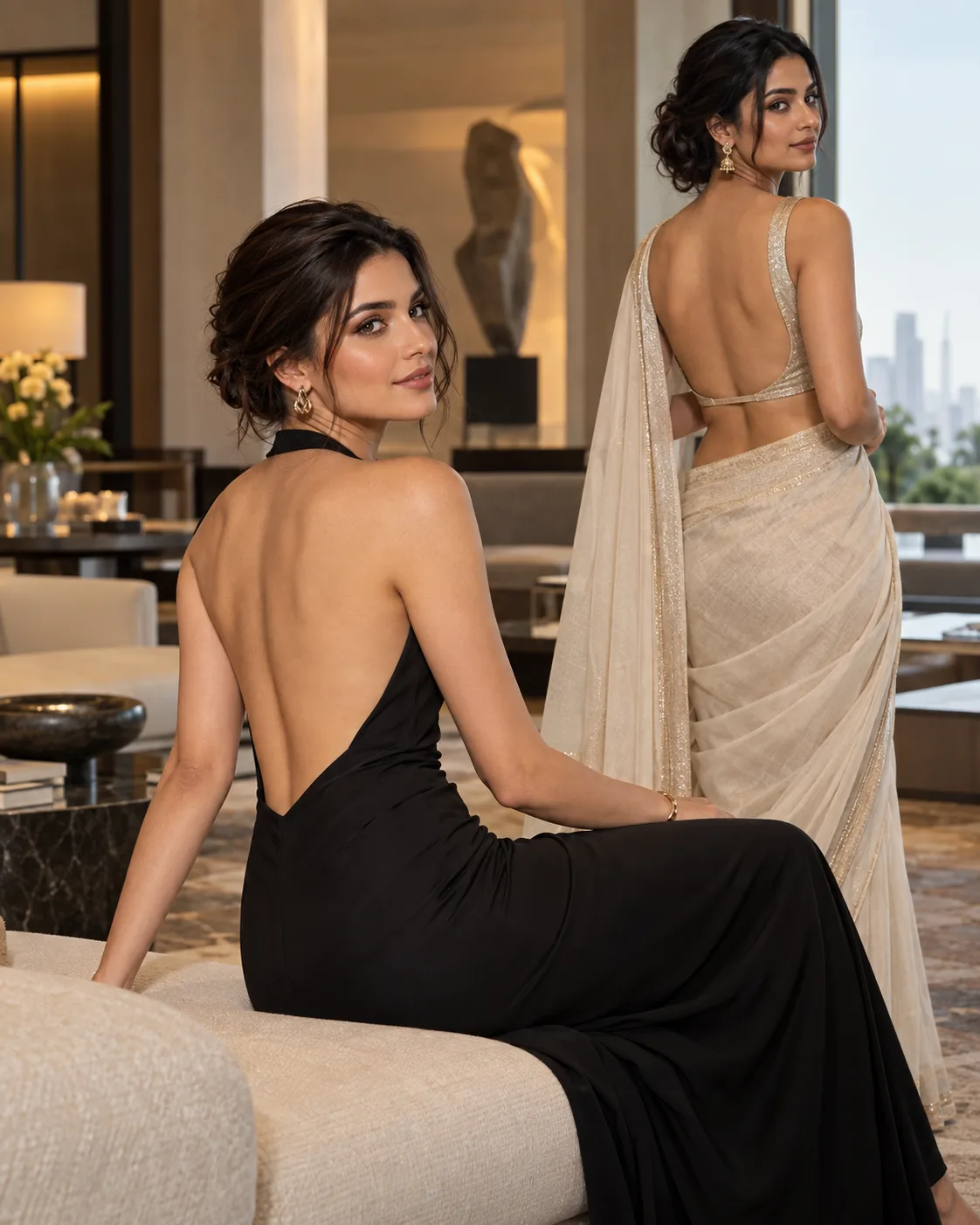
A low-back converter can sometimes pull the band downward enough to disappear under a moderately low back. A purpose-built low-back bra can do the same more cleanly, depending on the outfit.
But I would be cautious with very dramatic backs.
The lower the garment drops, the harder it becomes to keep a conventional band both hidden and supportive.
That is why I would first ask: How much lower does the outfit sit than your normal bra band?
A small difference may be fixable.
A very deep open back may not be.
And that matters whether you are wearing a low-back evening dress, summer top, saree blouse, or lehenga choli.
The key distinction is simple: a deep front is usually a cup-and-gore problem; a deep back is usually a band problem.
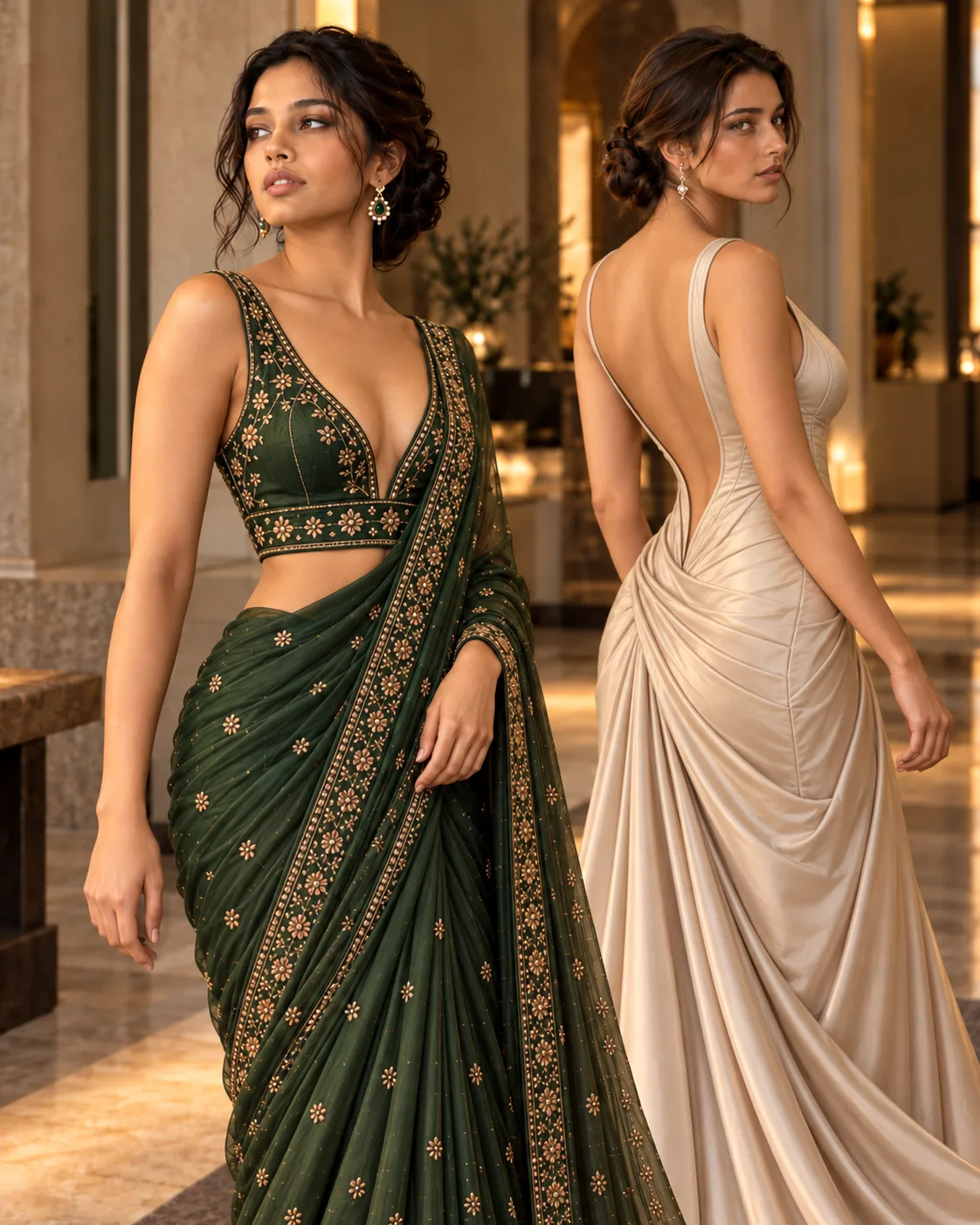
4. Deep Front + Deep Back: When the Blouse Has to Do More
 Pin it
This is the point where conventional bra solutions start running out of room.
If an outfit has both:
a plunging front
and a very low or open back
then almost every part of a normal bra has somewhere to become visible.
The centre can show at the front.
The band can show at the back.
The straps may have nowhere clean to sit.
At that stage, trying to find an increasingly complicated bra can make the outfit harder rather than easier.
This is where I would start looking at the construction of the garment itself.
A well-made deep-front, low-back blouse or dress can sometimes rely more on:
built-in cups
structured lining
shaped seams
internal support panels
boning where the design allows it
That is especially relevant for:
backless evening dresses
corset-inspired tops
deep-cut saree blouses
structured lehenga blouses
open-back partywear
The key is not whether the garment is “padded.”
Padding alone does not automatically mean support.
What matters more is whether the outfit has enough internal structure to hold its shape and stay secure when you move.
That distinction becomes important because a thin foam cup inside a very soft blouse may add coverage without actually replacing what a bra band normally does.
So before searching for another specialty bra, ask a different question: Is this outfit designed to support itself?
If the answer is yes, a separate bra may be unnecessary.
If the answer is no, the outfit may need alteration or better internal construction rather than a more complex undergarment.
At a certain point, the cleanest solution is not better camouflage.
It is better garment design.
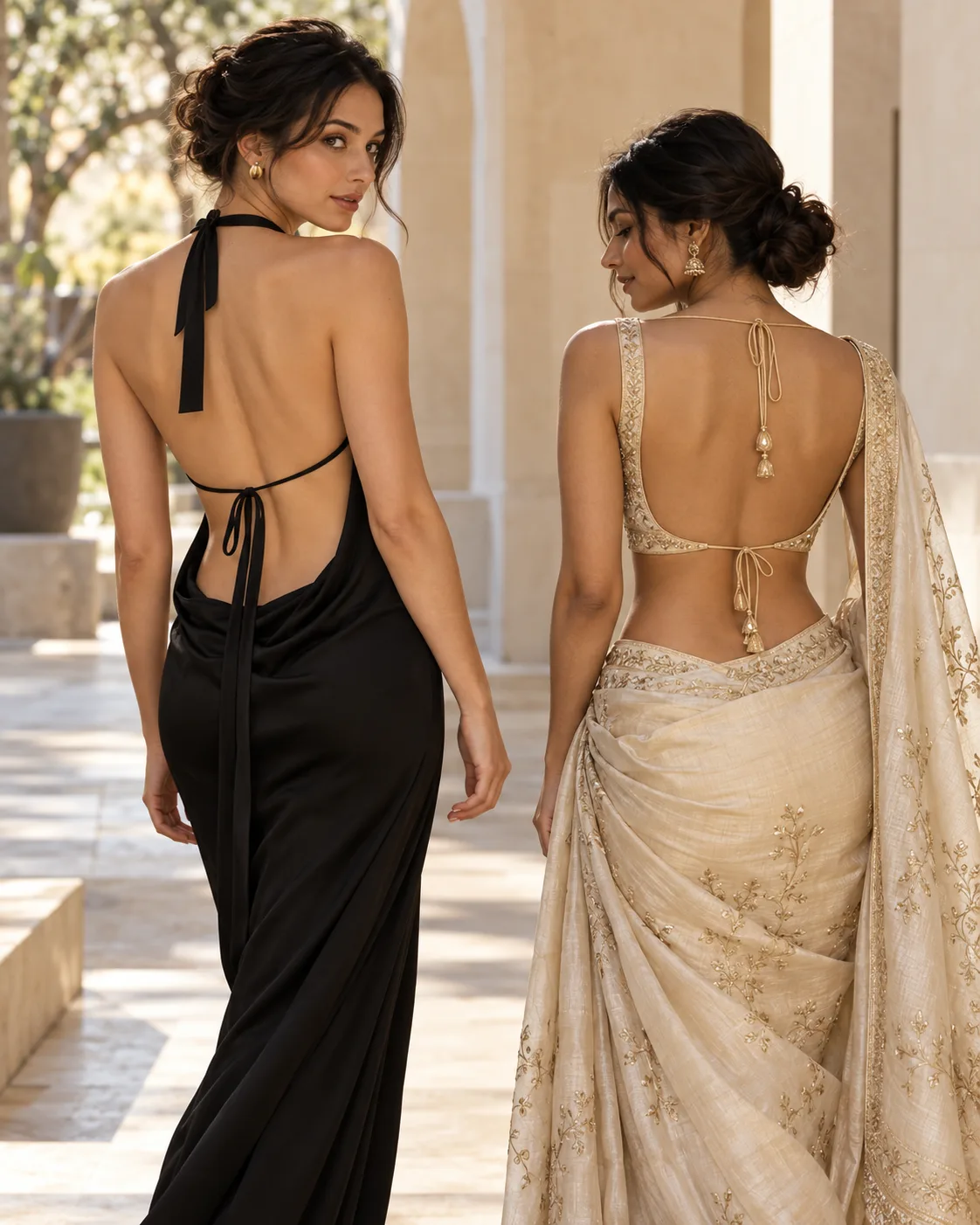
5. Tie-Back and Open-Back Blouses: Sometimes the Band Has Nowhere to Go
 Pin it
Some backless outfits are not just “low.”
They are open almost completely across the back.
Think of:
dori-tie saree blouses
open-back lehenga cholis
halter tops with narrow back panels
tie-back party tops
dresses held together by only a few straps or fabric bands
In these outfits, the issue is not that the bra band sits slightly too high.
It is that the garment gives the band almost nowhere to exist at all.
That changes the decision.
A low-back converter may help when the back is only moderately lower than normal, but it cannot make a full bra band disappear from a blouse that is open across most of the back.
This is where built-in support, structured cups, or garment alterations usually make more sense.
The same principle applies internationally.
A backless summer dress and an open-back saree blouse may look very different, but from a support point of view they can create the same problem: too little fabric at the back to hide conventional bra construction.
Before buying a specialty bra, look at the back of the garment itself.
If there is only a narrow tie, slim waistband, or small side panel, assume that a normal bra band will be difficult to conceal.
That is often the clearest signal that support needs to come from the outfit rather than from underneath it.
6. What About Adhesive Bras?
 Pin it
Adhesive bras are useful, but they solve a narrower problem than many guides suggest.
They can work well when you need:
coverage without a visible back band
some shaping under a backless dress
a clean look under an open-back top
support where conventional straps or bands would show
But they are not automatically a substitute for a regular bra.
The main thing to understand is that an adhesive style does not have the same kind of band anchoring the body.
That means the result can depend heavily on:
bust size
cup design
garment structure
how much movement is involved
how long you are wearing the outfit
For a fitted backless dress that already has some structure, adhesive cups may simply provide coverage and a cleaner shape.
For a very soft, loose, or low-cut outfit, they may not create the same stability you would expect from a conventional bra.
I would also separate coverage from support.
Those are not always the same thing.
If the outfit already holds the bust well and you mainly want a discreet layer, an adhesive option may be enough.
If the garment itself offers almost no structure, expecting adhesive cups to do all the work can be disappointing.
So I would treat them as one tool, not the default answer.
The better question is: Does this outfit need coverage, shaping, support — or all three?
Once you know that, it becomes much easier to decide whether an adhesive bra is actually the right solution.
7. When Built-In Cups Are the Better Choice
 Pin it
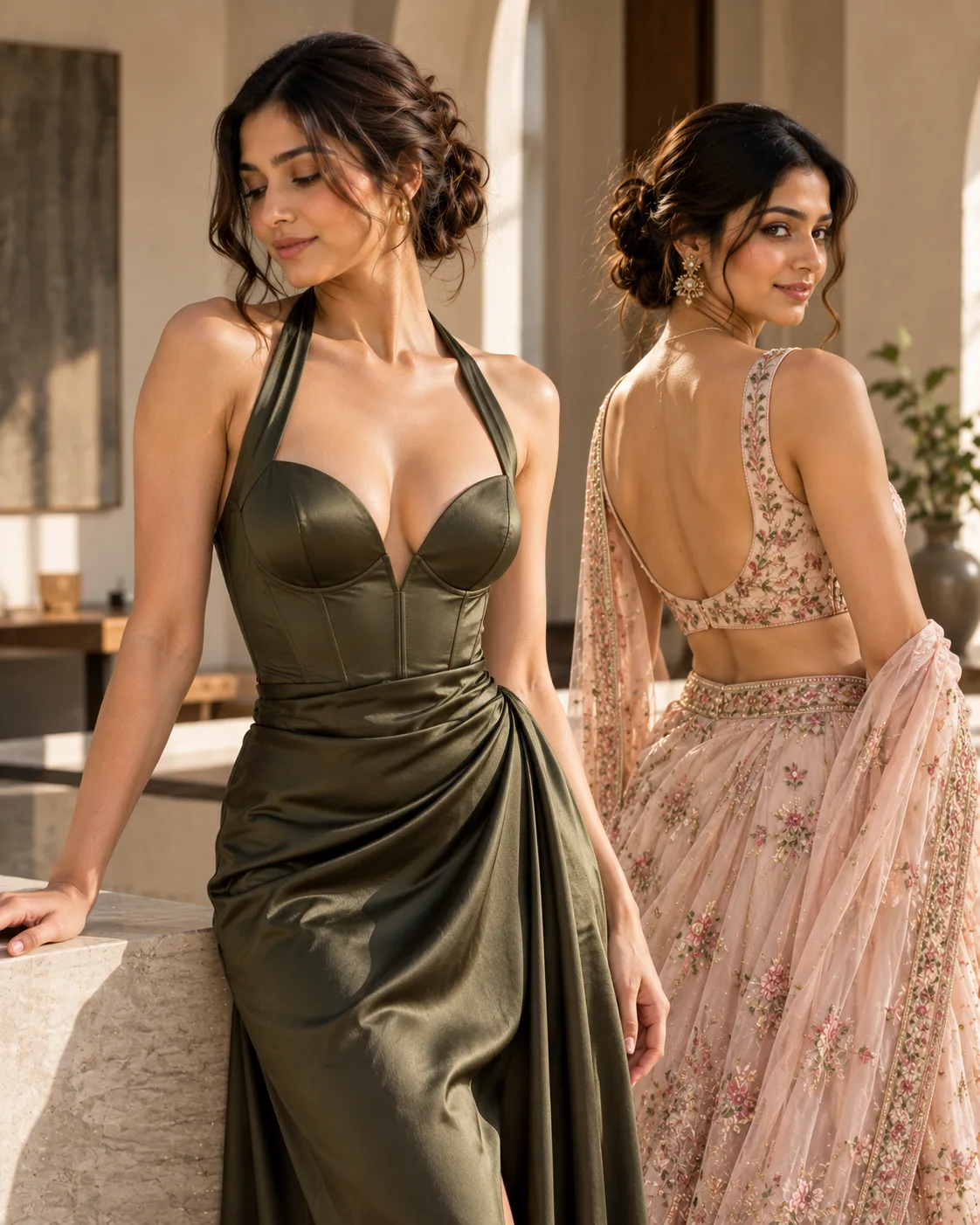
Built-in cups make the most sense when the outfit leaves very little space for conventional bra construction.
That can happen with:
very low backs
open-back dresses
deep-front blouses
halter styles
structured saree or lehenga blouses
corset-inspired tops
But I would look beyond the word “padded.”
A thin foam cup can add coverage and shape without providing much actual support.
A better-built garment may combine cups with:
supportive lining
shaped seams
internal panels
boning or structured fabric
That difference matters.
If the blouse already holds its shape securely when you move, adding another bra underneath may simply create extra bulk or visible edges.
If it collapses, shifts, or feels unstable, the presence of cups alone does not necessarily solve the problem.
This is where the next NomadSoul guide goes deeper: Do You Need a Bra Under a Padded Blouse? Built-In Cups Explained.
For now, the useful question is: Are the cups merely adding coverage, or is the garment actually built to support you?
The Front–Side–Back Test
Before deciding that you need a new bra, check the outfit from three angles.
Front
Look for:
centre gore showing inside a deep V
cup edges crossing the neckline
straps appearing near the shoulders
If the problem is here, you are usually dealing with cup shape, neckline depth, or strap placement.
Side
Turn slightly and check:
cup exposure near the armhole
side wing visibility
the band rising above the garment
This angle often reveals problems that look completely fine from the front.
Back
Now check:
whether the bra band sits above the outfit
whether strap hardware is visible
whether a converter actually stays hidden
This is especially important with low-back dresses, open-back tops, and saree or lehenga blouses.
The point of the test is not to make the outfit perfect from every microscopic angle.
It is to identify which part of the bra is actually conflicting with the garment.
Once you know that, the solution becomes far more precise — and you are much less likely to buy a specialty bra that fixes the wrong problem.
Final Thoughts
The hardest part of styling a deep-neck or backless outfit is usually not finding a “special bra.”
It is identifying exactly where your normal bra stops working with the garment.
If the centre shows, look at plunge construction.
If the cup edge appears, look at cup shape.
If the back band is exposed, the problem is happening behind you.
And if the outfit is cut so low at both the front and back that conventional bra construction has nowhere to hide, the better answer may be built into the garment itself.
That logic works whether you are wearing a plunging evening top, an open-back dress, a saree blouse, or a structured lehenga choli.
The cleanest solution is the one that solves the actual conflict between the outfit and the bra — without adding more complexity than the clothes need.