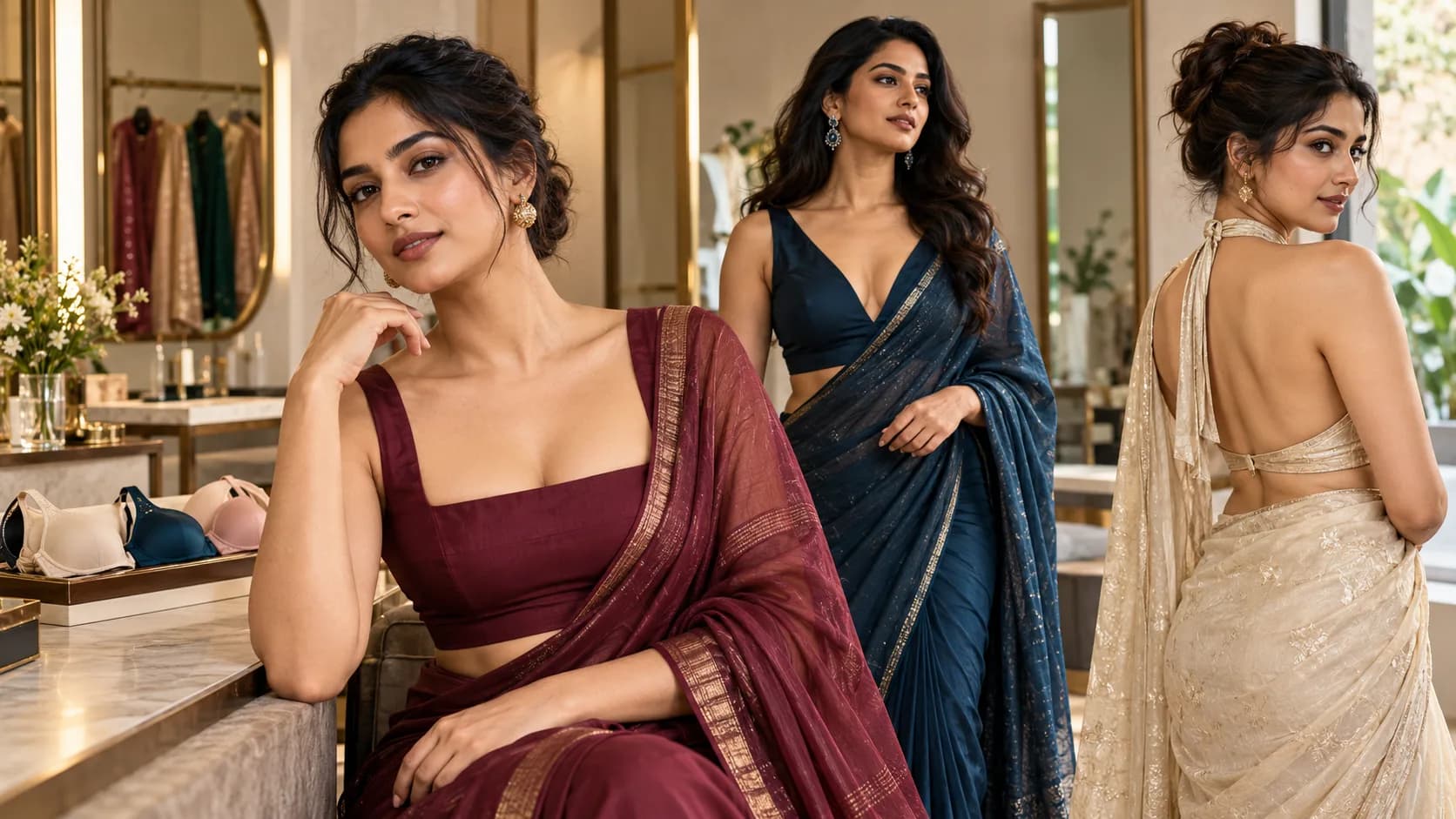
What Bra to Wear With a Lehenga Blouse: 7 Styles Explained
The right bra under a lehenga blouse depends on much more than how low the neckline is. Back depth, shoulder straps, embroidery, blouse structure, and how much movement the outfit needs to handle all matter. This guide breaks down seven common lehenga blouse styles and the bra solutions that usually work best with each one.
A lehenga blouse can look perfectly secure while you’re standing in front of the mirror — and then behave completely differently once you start walking, sitting, dancing, or moving through a long event.
That’s why choosing a bra for a lehenga blouse is not just about hiding straps or matching the neckline.
The blouse itself may be heavily embroidered, closely fitted, cropped, backless, deeply cut, or built with cups and boning. Some styles need a smooth everyday bra underneath. Others work better with a plunge, strapless, or convertible design. And once the back gets very low, the cleanest solution may be support built directly into the blouse rather than a conventional bra at all.
The useful way to think about it is to look at four things:
the neckline, the shoulder shape, the back, and how much structure the blouse already has.
Then add one more question that matters much more with lehengas than with many everyday outfits:
Will this still feel secure once I actually start moving?
The seven situations below cover some of the most common lehenga blouse and choli designs, along with the bra solutions that usually make the most sense underneath them.
Because the right foundation shouldn’t only look invisible.
It should stay invisible after three hours, a full dinner, and a round on the dance floor.
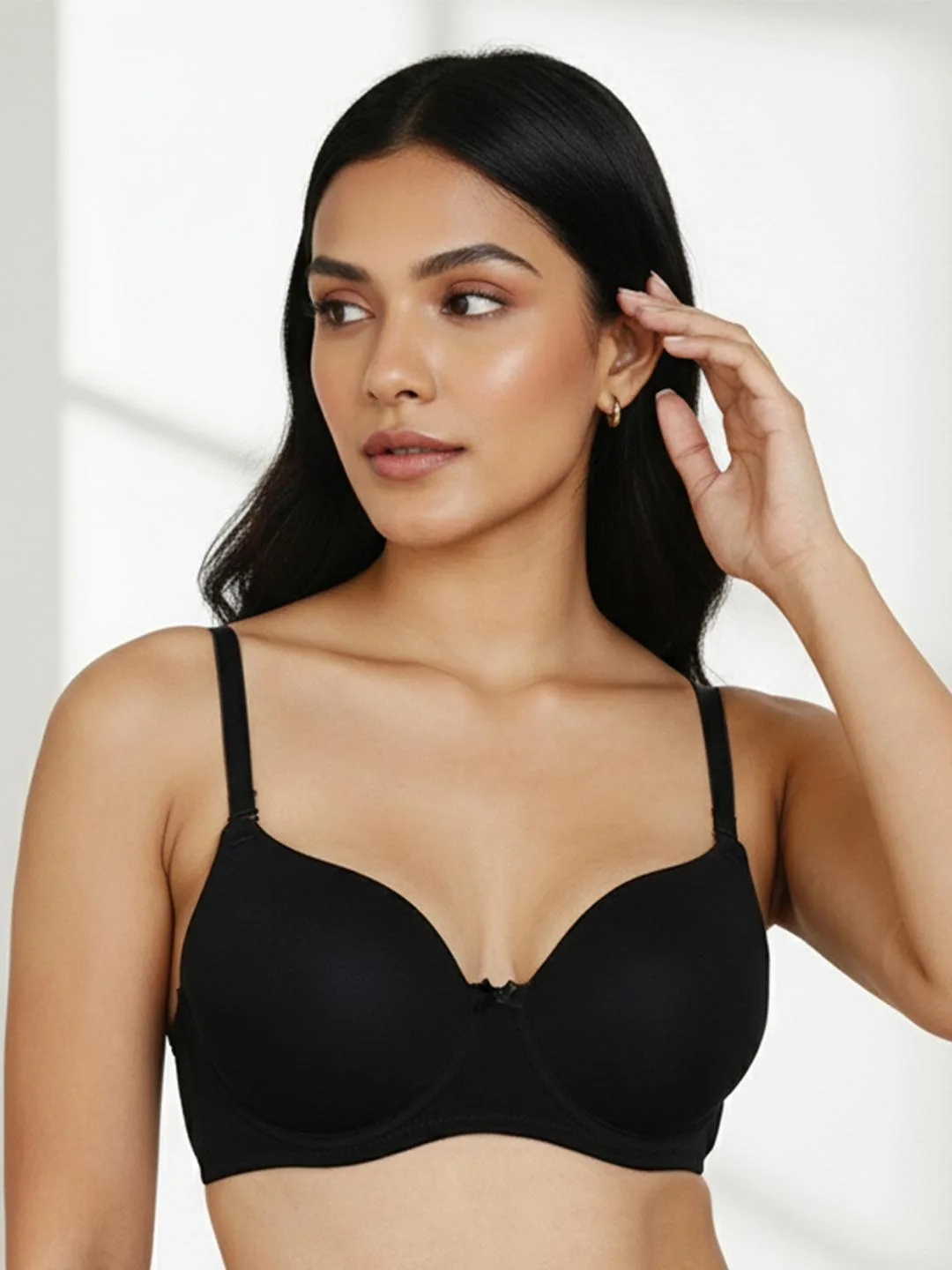
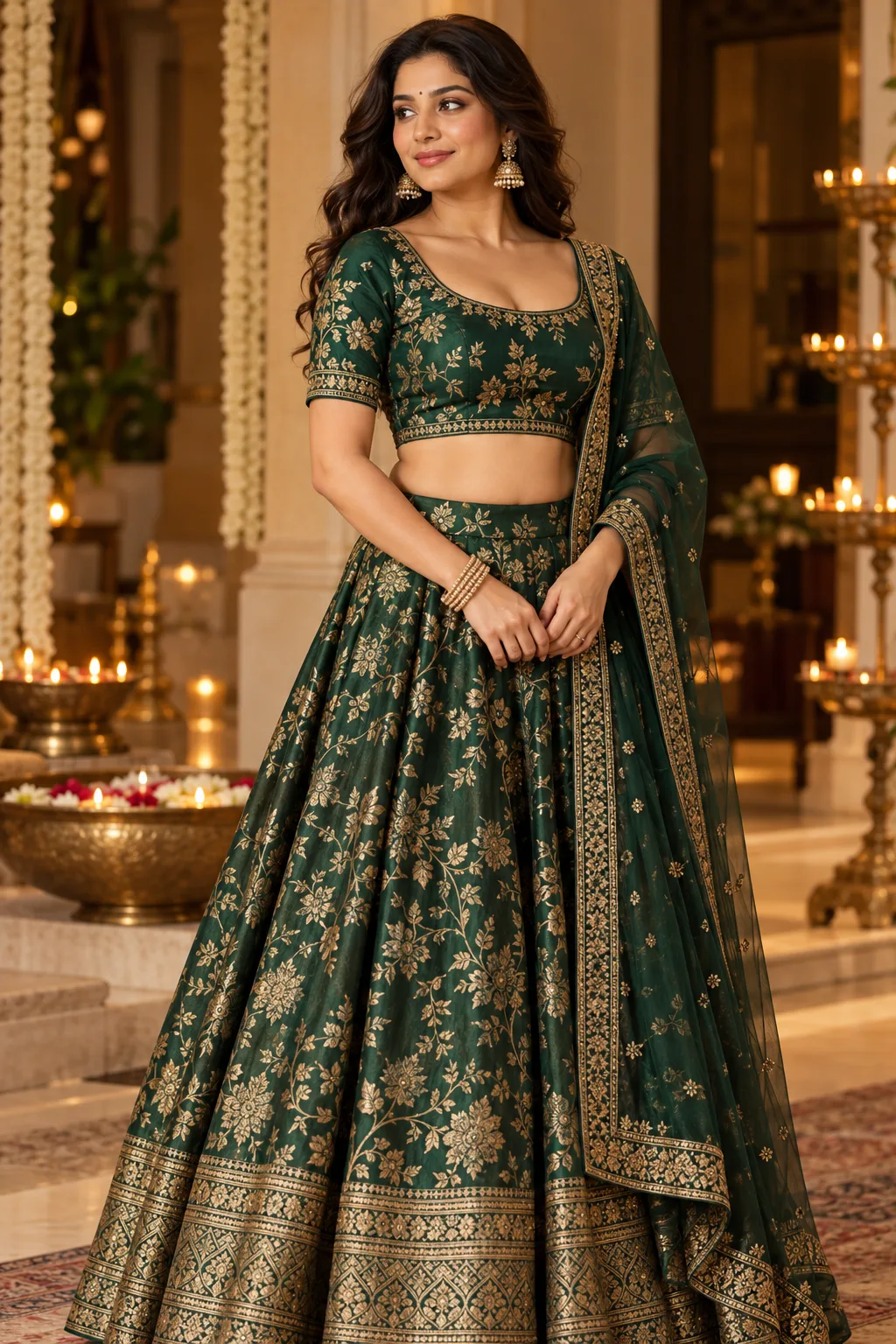
If your lehenga blouse has a moderate neckline, standard shoulder straps, and a full back, a smooth T-shirt bra or seamless bra is usually the easiest place to start.
That works especially well when the blouse is fitted but not unusually low-cut.
The main thing is keeping the foundation quiet underneath the fabric.
With silk, satin, crepe, or a closely fitted blouse, lace and heavy seams can sometimes show more than expected. A smooth cup usually gives a cleaner finish.
If the choli is heavily embroidered or lined, texture becomes less of a concern because the blouse itself is already doing more visually.
I’d still check three things:
does the top edge of the bra stay below the blouse neckline?
do the straps sit comfortably inside the shoulder line?
does the band remain hidden at the back?
If all three work, there’s no real reason to complicate the outfit.
This is also where the distinction between a T-shirt bra and a full-coverage bra matters. A full-coverage style may feel secure, but if the blouse neckline sits lower, the cup edge can show even though the bra otherwise fits well.
So for a regular fitted lehenga choli, I’d prioritise smoothness and neckline compatibility over extra structure.
If you want a broader breakdown of these constructions, our 15 Types of Bras Every Woman Should Know explains the differences between T-shirt, seamless, full-coverage, balconette, plunge, strapless, and other common styles.
The simplest rule here is: if the blouse is conventional, the bra solution can be conventional too.
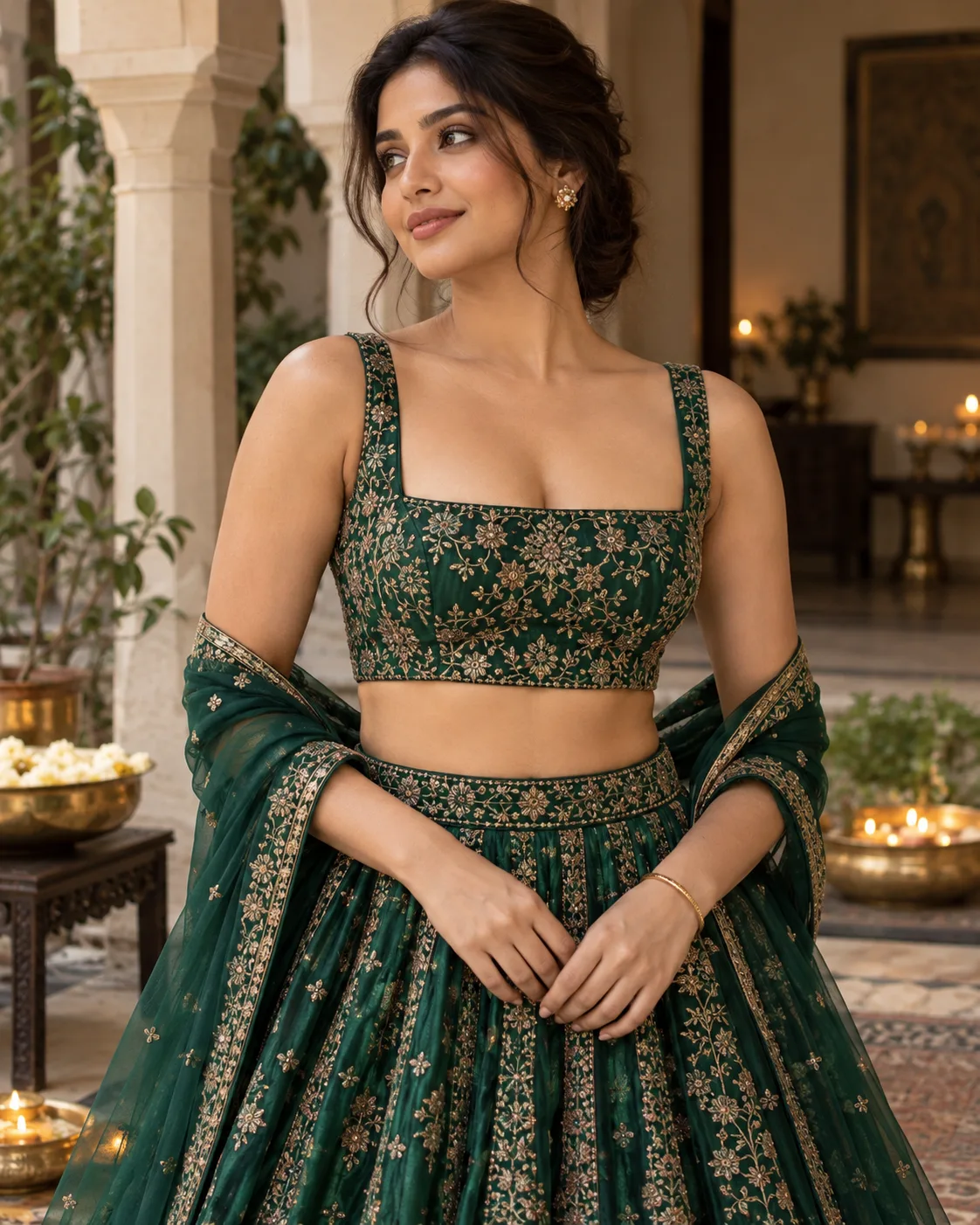
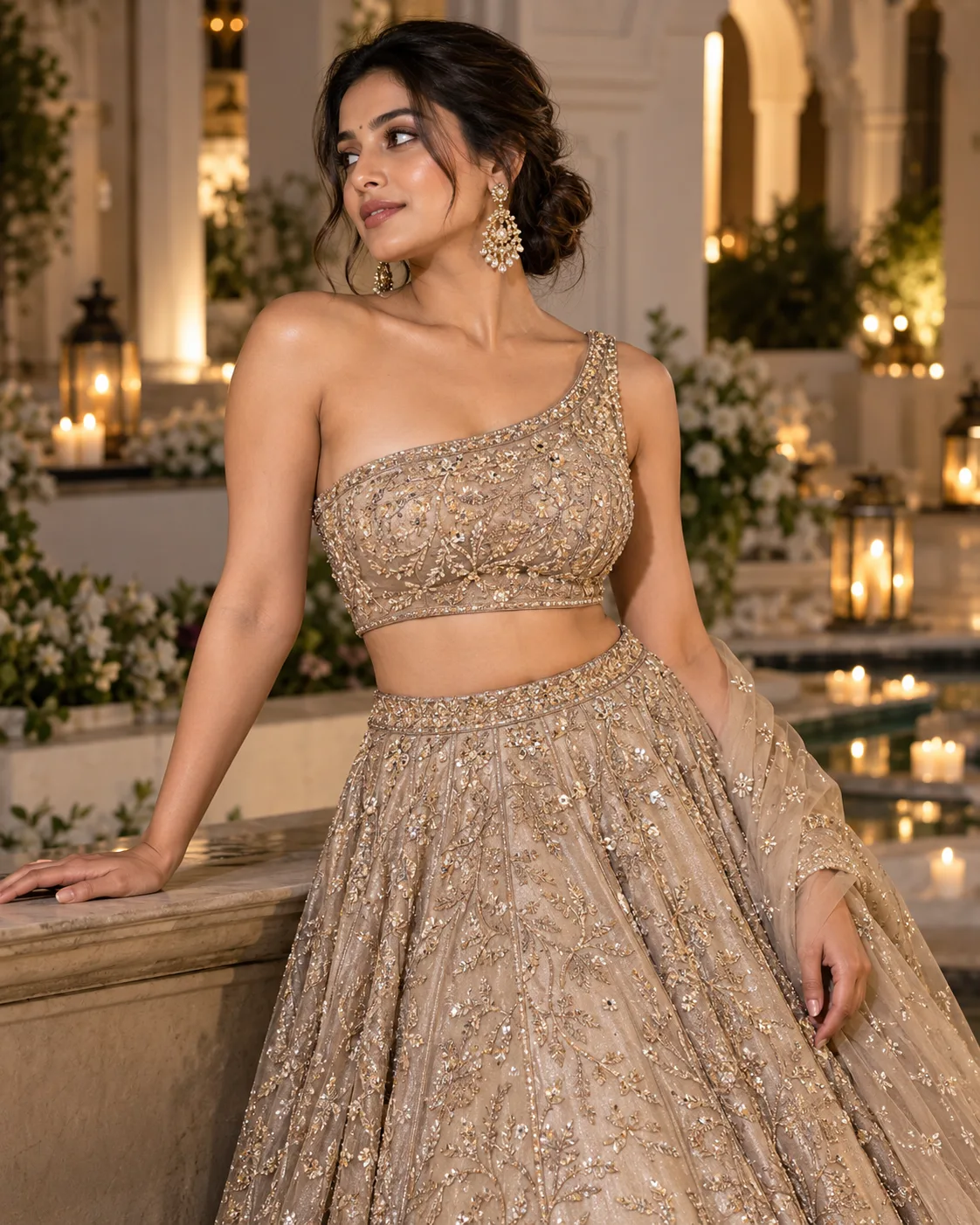
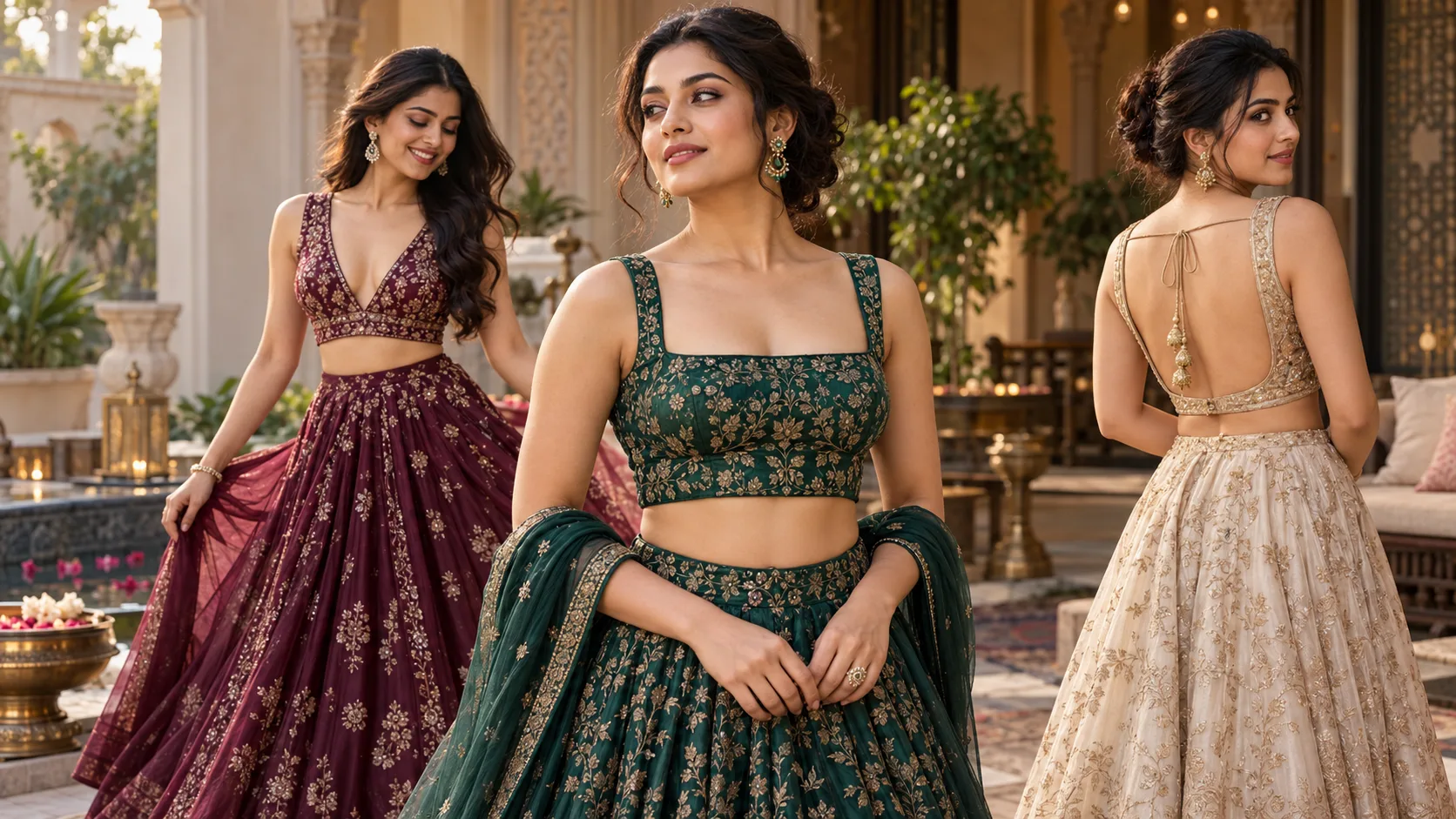
A square-neck lehenga blouse can look beautifully structured, but it leaves less room for a high bra cup to hide.
That’s why a balconette or demi-cup bra is often a better match than a full-coverage style.
A balconette usually has a lower, more horizontal cup line with wider-set straps, which tends to follow the shape of a square neckline more naturally.
A demi bra can work too because it simply gives you less upper-cup coverage.
The difference matters:
balconette works especially well when the neckline is wide
demi can be enough when the neckline is mainly lower rather than dramatically wider
With lehenga blouses, I’d also pay attention to the shoulder width.
Some square-neck cholis have quite narrow shoulder panels, so even a balconette strap can sit too far out. If that happens, a convertible style with repositioned straps may work better.
For heavily embroidered blouses, the bra texture usually matters less because the surface detail hides small seams. But with plain silk, velvet, satin, or fitted brocade, a smoother cup will usually look cleaner.
And because lehenga blouses tend to be more structured than everyday tops, it’s worth checking the neckline while moving — not just while standing still.
Raise your arms and turn slightly. If the blouse shifts and suddenly reveals the bra edge, the cup may still be sitting too high.
The useful rule is: the straighter and wider the neckline, the lower and wider the bra should sit beneath it.
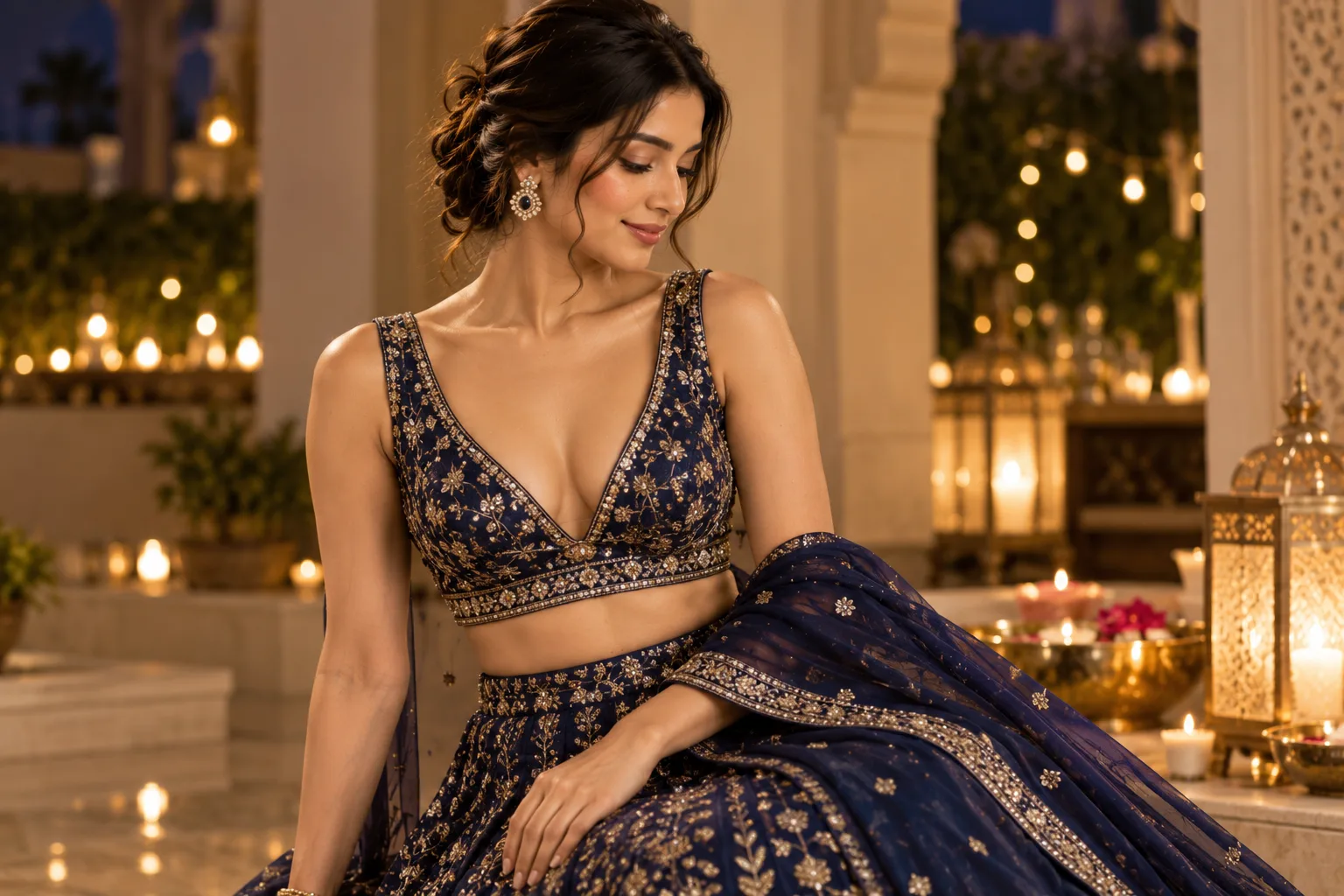
With a deep V-neck lehenga blouse, the main challenge is usually the centre of the bra showing through the neckline.
That’s where a plunge bra makes the most sense.
A plunge bra has a lower centre gore, which gives the blouse more room to dip in the middle without exposing the bra underneath.
This is especially useful with:
deep V cholis
wrap-inspired lehenga blouses
crossover necklines
lower-cut evening designs
What matters most here is the centre depth, not simply how much of the breast the cup covers.
A demi bra may still sit too high in the middle, while a plunge is specifically designed to drop lower between the cups.
I’d also look at how wide the V is.
If the neckline is both very deep and very open at the sides, a standard plunge may still show near the cup edge. In that case, the blouse itself may need more built-in structure or a different internal foundation.
With lehenga blouses, that becomes even more important because the top is often fitted closely and expected to stay secure while you move.
So once the blouse is on, don’t just look straight ahead.
Turn, sit, raise your arms, and check whether the neckline shifts enough to reveal the bra.
If you want a deeper breakdown of this problem, our What Bra to Wear With a Deep-Neck or Backless Blouse guide will cover how front depth and back depth require different solutions.
Sleeveless is actually one of the easiest lehenga blouse styles to overcomplicate.
You see bare shoulders and immediately think strapless bra. But often, you don’t need one.
Put the blouse on first and look at the shoulder line.
If the blouse straps are reasonably wide and the armholes aren’t cut too deep, a regular smooth bra may disappear perfectly well underneath. In that case, there’s no benefit in switching to something more complicated.
The issue starts when the blouse gets narrower.
A delicate shoulder strap, racerback-inspired cut, or deeper armhole can expose a regular bra in places you didn’t notice while looking at the blouse on a hanger.
That’s when a convertible bra becomes useful.
You might only need to move the straps slightly inward or cross them at the back so they sit inside the blouse construction.
And if the armhole is the problem rather than the shoulder?
That’s different.
A bra with very wide side wings may peek through even when the straps are hidden. Look for a smoother, more compact side profile instead of automatically changing the cup style.
With heavily embroidered lehenga blouses, I’d also do a movement test before the event. Lift your arms as though you’re dancing, reach forward, and turn your torso. Narrow shoulder cuts can shift more than they appear to while standing still.
So for this blouse, I wouldn’t begin by asking:
“Which bra is best for sleeveless?”
I’d begin by finding exactly where your current bra becomes visible.
Strap showing? Reposition it.
Side showing? Change the side construction.
Cup showing? Then rethink the neckline and cup shape.
That makes the solution much more precise—and usually much simpler.
This is less about the cups and more about where the straps are allowed to go.
A halter blouse, for example, can leave a perfectly good everyday bra looking completely wrong simply because the straps cut across exposed shoulders.
That’s where a multiway or convertible bra earns its place.
For a halter neckline, the straps can often be reconfigured around the neck.
For a one-shoulder blouse, some convertible bras can be adjusted asymmetrically so the support follows the blouse rather than cutting across it.
The useful part is flexibility.
You don’t necessarily need a completely different bra for every unusual blouse. Sometimes the same convertible style can cover:
halter
racerback
crossed straps
one-shoulder
strapless
depending on how the attachment points are designed.
But I would check the back before deciding you’re done.
A halter blouse can have a perfectly hidden front and still expose the regular bra band behind. If the back is also low or unusually shaped, the bra may need a different configuration—or the blouse may need to provide more of its own support.
This is also a section where built-in cups become especially useful with heavily structured lehenga blouses.
A well-made halter choli with internal cups and a secure underbust can sometimes look cleaner than trying to engineer a separate bra underneath it.
So with this style, I’d think in this order:
Where do the blouse straps go? Where does the back end? How much support is already built in?
Once those three things are clear, the bra choice usually becomes much easier.
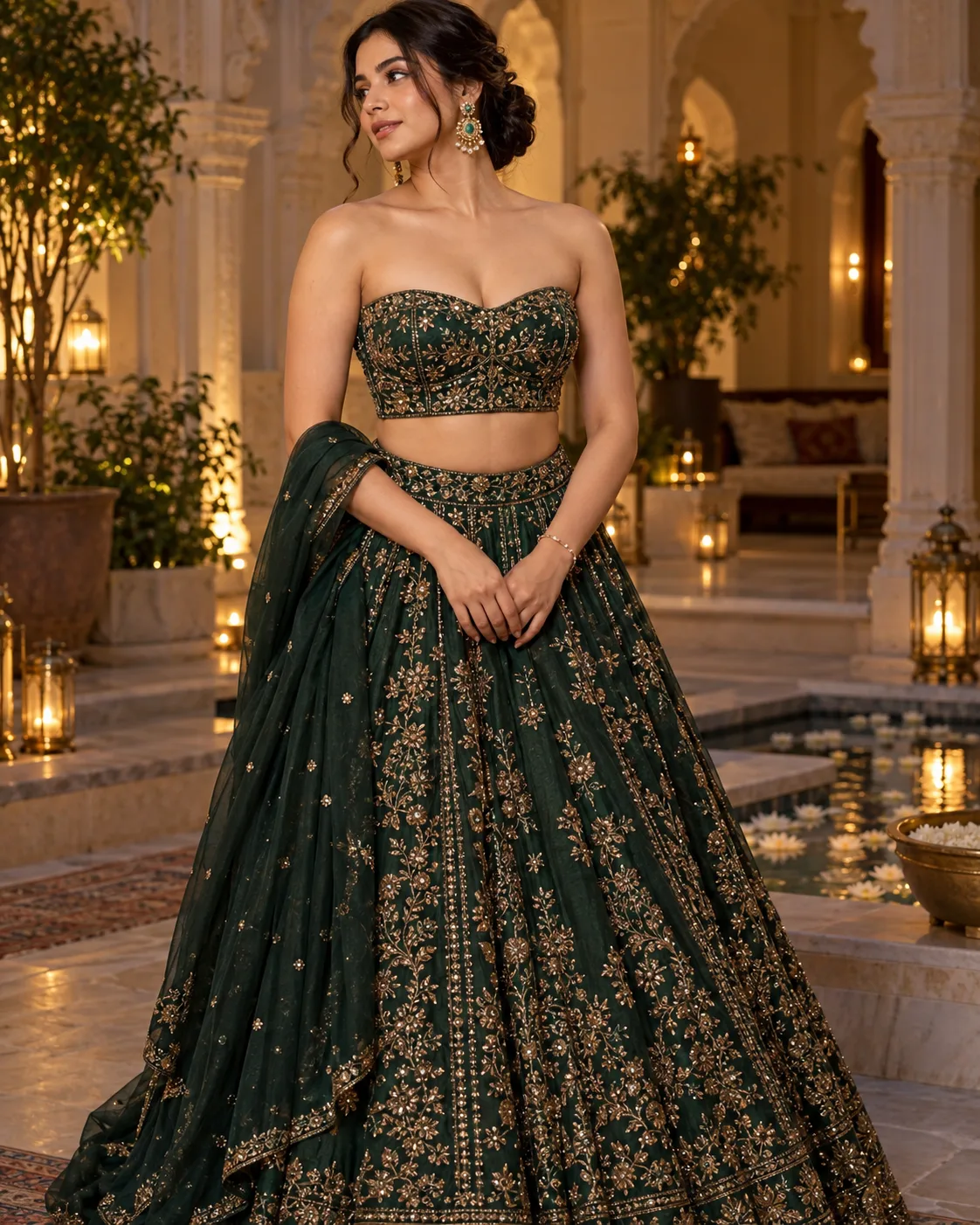
With a strapless or off-shoulder lehenga blouse, the most important question is not really which bra you pick.
It’s what is actually holding the outfit in place.
If you’re using a separate strapless bra, the band becomes far more important because there are no shoulder straps helping with support. It should feel secure enough that you are not pulling it up every twenty minutes.
But lehenga blouses often have something everyday tops don’t: much more internal structure.
A well-made blouse may already include:
fitted cups
firm lining
shaping seams
boning
a secure underbust fit
In that situation, adding a bulky strapless bra underneath can sometimes create more problems than it solves.
The blouse may sit better on its own.
I’d decide between the two by trying the outfit both ways before the event.
Wear the blouse with the strapless bra first. Sit down, lift your arms, twist slightly, and take a few quick steps. Then try the blouse using only its built-in structure if that is how it was designed.
Whichever version stays smoother, more secure, and requires less adjustment is probably the better answer.
Also check the upper edge from the side. A bra can be technically hidden from the front but still create a ridge or visible line beneath a tightly fitted off-shoulder blouse.
For highly structured festive cholis, this is one of the few situations where less underneath can sometimes give you a cleaner result.
The blouse should feel secure enough that you can forget about it once the celebration starts.
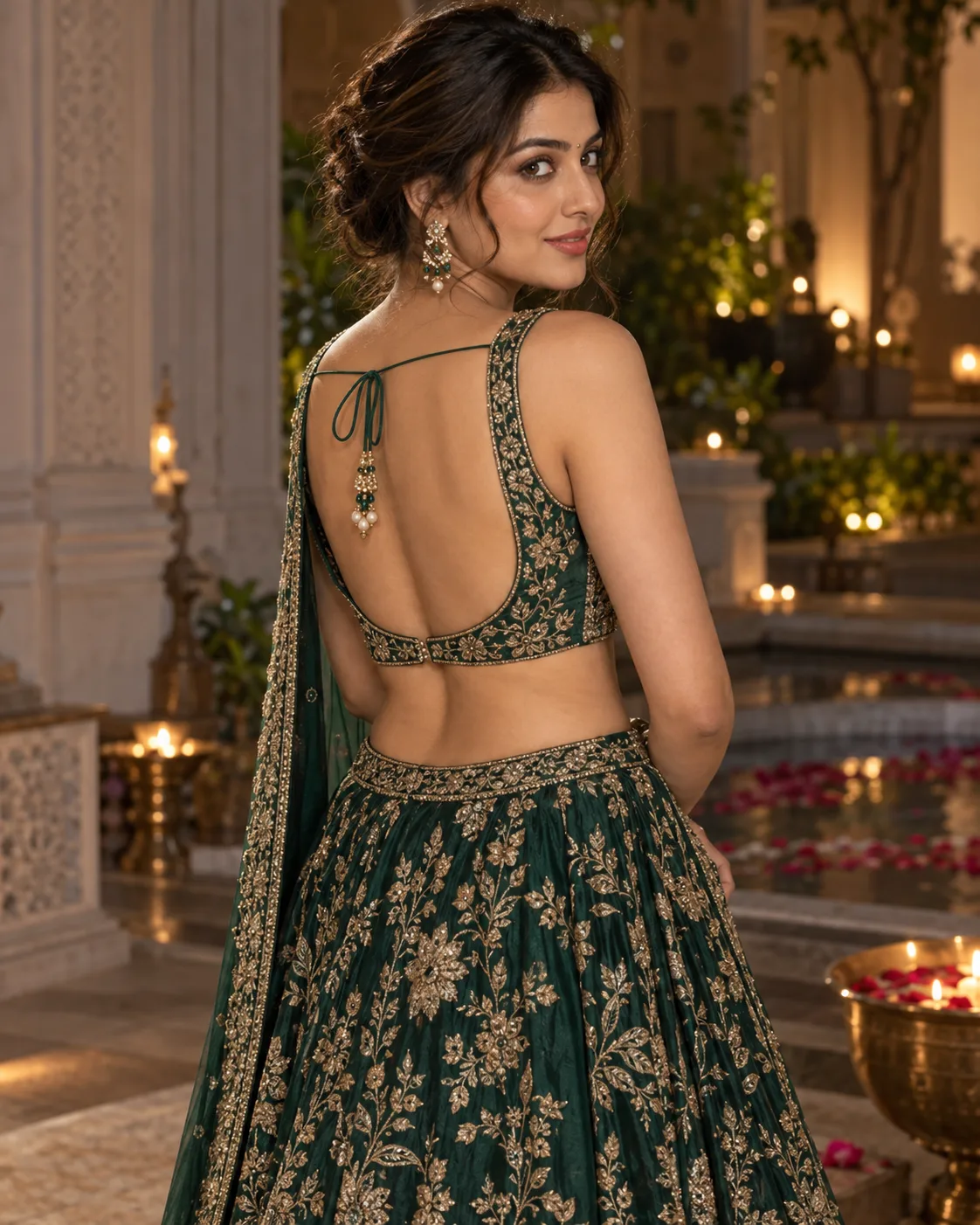
This is the point where a normal bra often stops being the most useful thing to think about.
If the lehenga blouse has a very low back, the problem is not the cup shape. It is the band.
You can hide a plunge cup under a deep front. You can reroute straps under a halter. But if the blouse exposes most of the back, there may simply be nowhere for a conventional bra band to sit.
That’s why I’d solve this before the blouse is finished, not after.
A good tailor can build support into the blouse through:
sewn-in cups
firmer lining
shaping seams
boning
secure side panels
stronger shoulder or tie construction
That usually gives a cleaner result than trying to force a regular bra underneath a design that was never meant to hide one.
For a moderately low back, a low-back or convertible bra may still work. But once the cut becomes truly backless, built-in support is often the neater option.
There’s another detail I’d check too: the sides.
Some low-back cholis also dip under the arms. In that case, even if the back band is hidden, the side of the bra can still show.
So this blouse needs to be judged in three views: front, side, and back.
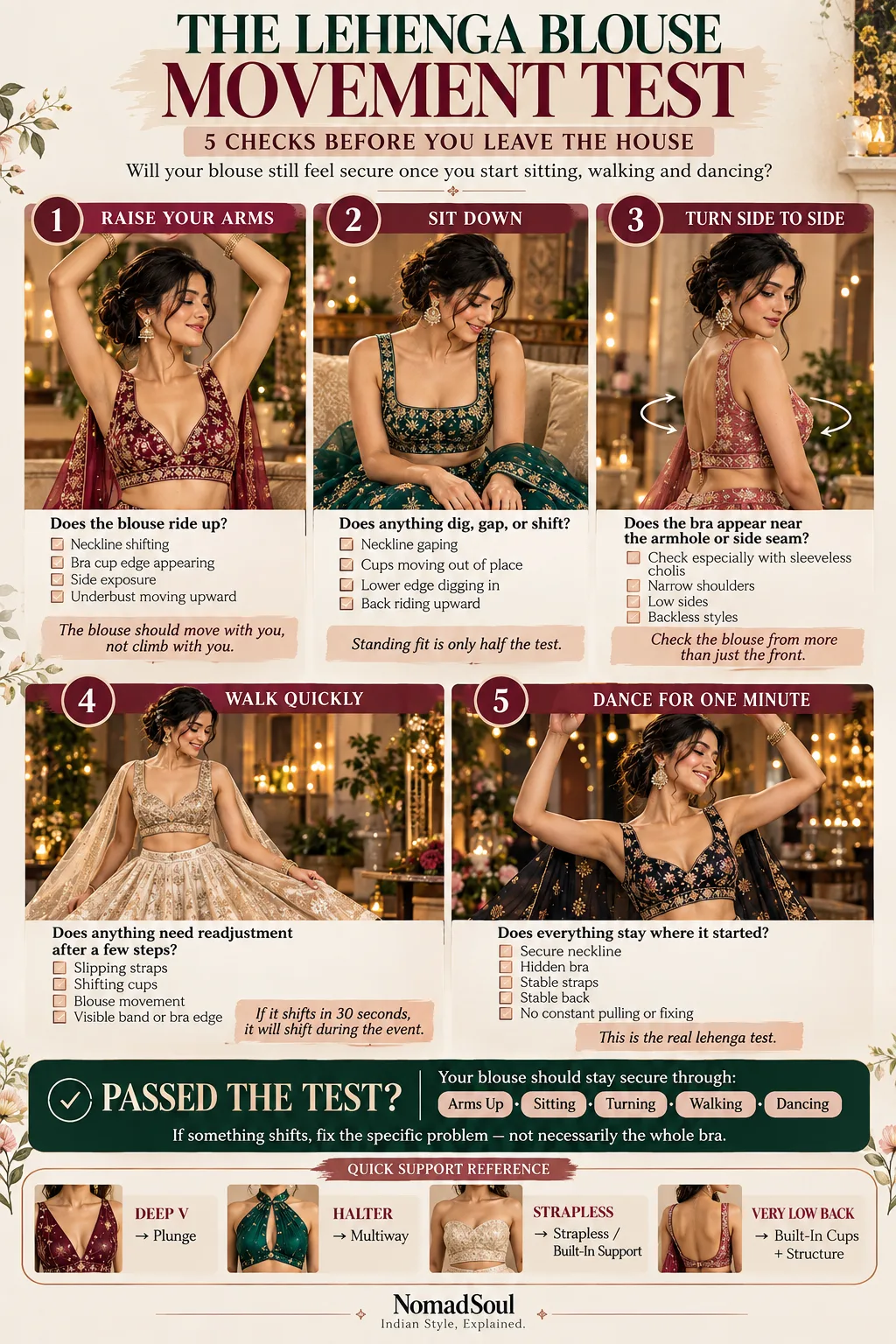
And because lehengas are usually worn for long events, I’d do the movement test before committing to the final fit. Walk, sit, raise your arms, and turn fully.
A backless blouse can look perfect in a static mirror and still shift once you start dancing.
Do You Need a Bra Under a Padded Blouse?
What If the Lehenga Blouse Is Already Padded?
“Padded” can mean very different things in a lehenga blouse.
Sometimes it simply means a thin foam cup has been stitched into the lining so the blouse looks smoother. In other cases, the blouse has proper shaped cups, a firm underbust, boning, and enough internal structure to work almost like a foundation garment on its own.
Those are not the same thing.
If It Only Has Thin Padding
Think of this mainly as coverage and shape.
The blouse may still rely on your body and the outer fit for support, so you may prefer a bra underneath if the neckline and back allow one.
This is especially common with ready-made festive blouses where “padded” sounds more substantial than the construction actually is.
If the Cups Are Structured
This is different.
A blouse with well-shaped cups, secure seams, and a firm fit through the underbust may already be doing much of what a separate bra would normally do.
In that case, adding another bra underneath can sometimes make the blouse:
bulkier
tighter
more visible at the edges
harder to fit correctly
If There Is Boning
Boning can make a big difference in strapless, off-shoulder, corset-inspired, and backless cholis.
It helps the blouse hold its shape vertically, so the support is coming from the garment construction rather than just from foam cups.
That is why some deeply cut lehenga blouses work beautifully without a conventional bra even though a simple padded blouse would not.
If the Pads Are Removable
Removable pads are usually the least useful clue.
They can add coverage and a little shape, but they don’t tell you much about how secure the blouse will feel.
The real test is the blouse itself.
Put it on and ask:
does the underbust feel secure?
do the cups stay in the right place?
does the blouse shift when you raise your arms?
does the neckline stay where it started?
does it still feel stable when you sit and move?
If the answer is yes, you may not need anything extra.
If the blouse still feels dependent on constant adjustment, the fact that it is “padded” doesn’t really solve the problem.
That’s the distinction worth remembering: padding changes coverage and shape; structure determines whether the blouse can support itself.
If you only want the short version, use this as your starting point.
Regular fitted choli → T-shirt bra or seamless bra
Square-neck blouse → Balconette or demi-cup bra
Deep V-neck blouse → Plunge bra
Sleeveless or narrow-shoulder blouse → Smooth bra with hidden straps, or a convertible bra
Halter blouse → Multiway bra in a halter configuration
One-shoulder blouse → Convertible bra
Strapless or off-shoulder blouse → Strapless bra, unless the blouse has enough built-in support
Moderately low-back blouse → Low-back or convertible solution depending on the cut
Very low-back or backless choli → Built-in cups and structured blouse support
Heavily padded blouse → Check whether the padding is actually supported by structured cups, seams, or boning before deciding whether you need another bra
And then do one final check:
Can you sit, walk, raise your arms, and dance without anything shifting or becoming visible?
If yes, the solution is doing its job.
If not, don’t assume you need a completely different bra. Sometimes the better fix is a strap adjustment, a lower cup, a smoother side profile, or better support built into the blouse itself.
Final Thoughts
The right bra for a lehenga blouse is not always the most specialised one.
Sometimes a smooth everyday bra works perfectly. Sometimes the neckline needs a plunge, the shoulder line needs a convertible strap, or the blouse needs a strapless foundation underneath.
And sometimes the cleanest solution is no separate bra at all.
That becomes especially true with very low-back, backless, halter, or heavily structured cholis where built-in cups, boning, lining, and a secure underbust can do more than trying to hide a conventional bra inside the blouse.
The most useful way to approach it is to look at the blouse in layers:
What does the neckline expose? Where can the straps go? How low is the back? How much support is already built in? And does everything stay in place when you actually move?
That last question matters most.
A lehenga outfit should survive sitting, walking, dancing, and several hours of celebration without turning the blouse into something you keep checking.
So instead of looking for one “best bra for lehenga blouses,” choose the solution that works with the specific construction in front of you.
If you can put the lehenga on, move normally, and stop thinking about what is underneath it, the foundation is probably doing exactly what it should.
 Pin it