Introduction
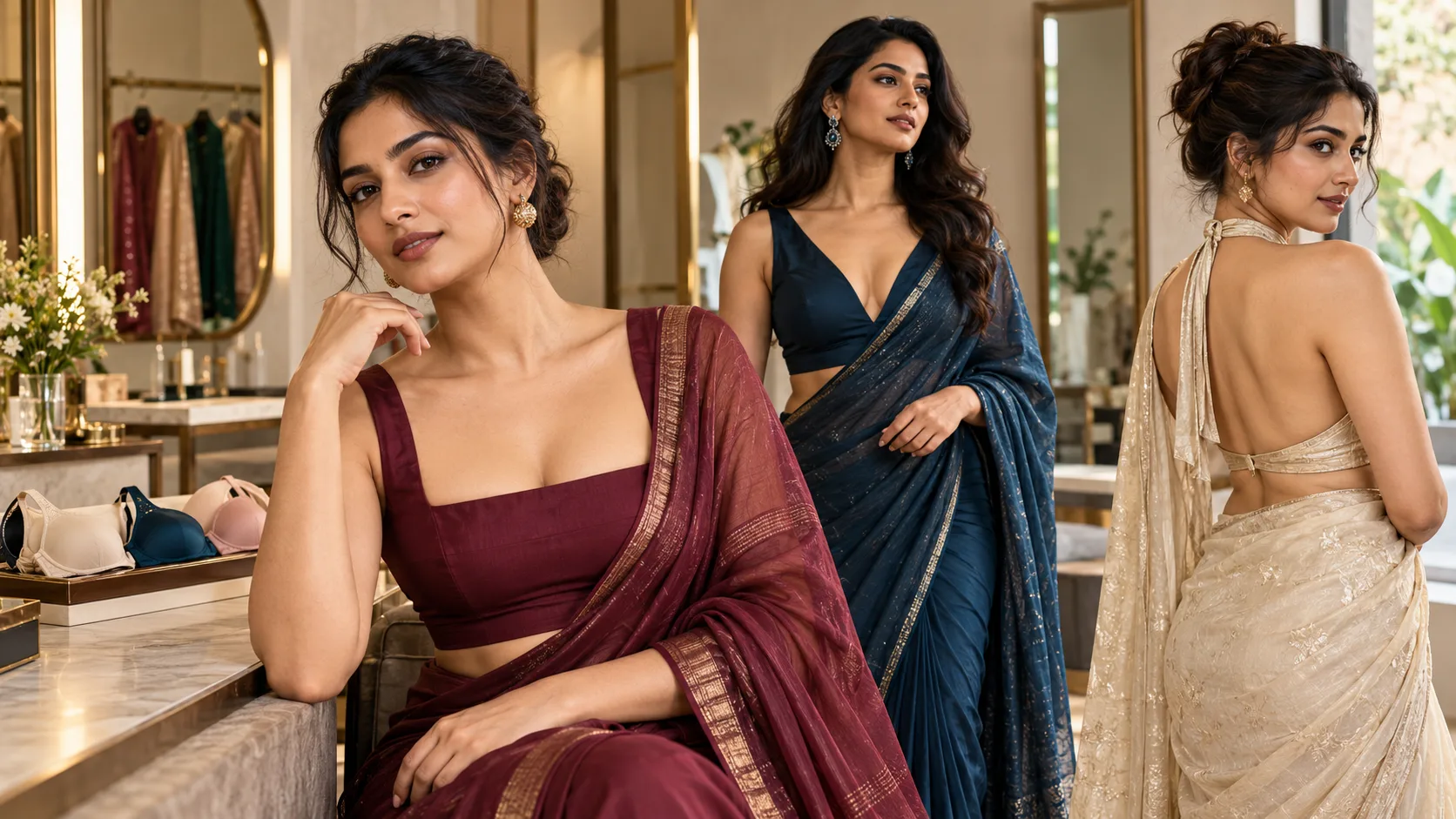
Choosing a bra for a saree blouse is rarely about the saree itself.
The real question is what the blouse is doing.
A traditional fitted blouse with a regular neckline may work perfectly well with a smooth everyday bra. A square-neck blouse can expose the top edge of a fuller cup. A deep V needs more space through the centre, while a halter or backless blouse creates an entirely different problem with straps and the back band.
Fabric matters too.
A heavily embroidered blouse can hide seams and texture that would be obvious beneath a plain satin or sheer blouse. A structured blouse with built-in cups may need very little underneath, while a lightly lined blouse can behave more like a regular fitted top.
That’s why there isn’t one universal best bra for a saree blouse.
The easiest way to choose is to look at five things first:
the neckline, the back, the straps, the fabric, and how much structure the blouse already has.
Once you understand those details, deciding between a T-shirt bra, balconette, plunge, strapless, convertible, or another style becomes much easier.
The eight situations below cover some of the most common saree blouse designs and explain what usually works underneath them — without assuming that every woman, blouse, or bra fits exactly the same way.
1. Regular Fitted Saree Blouse
 Pin it
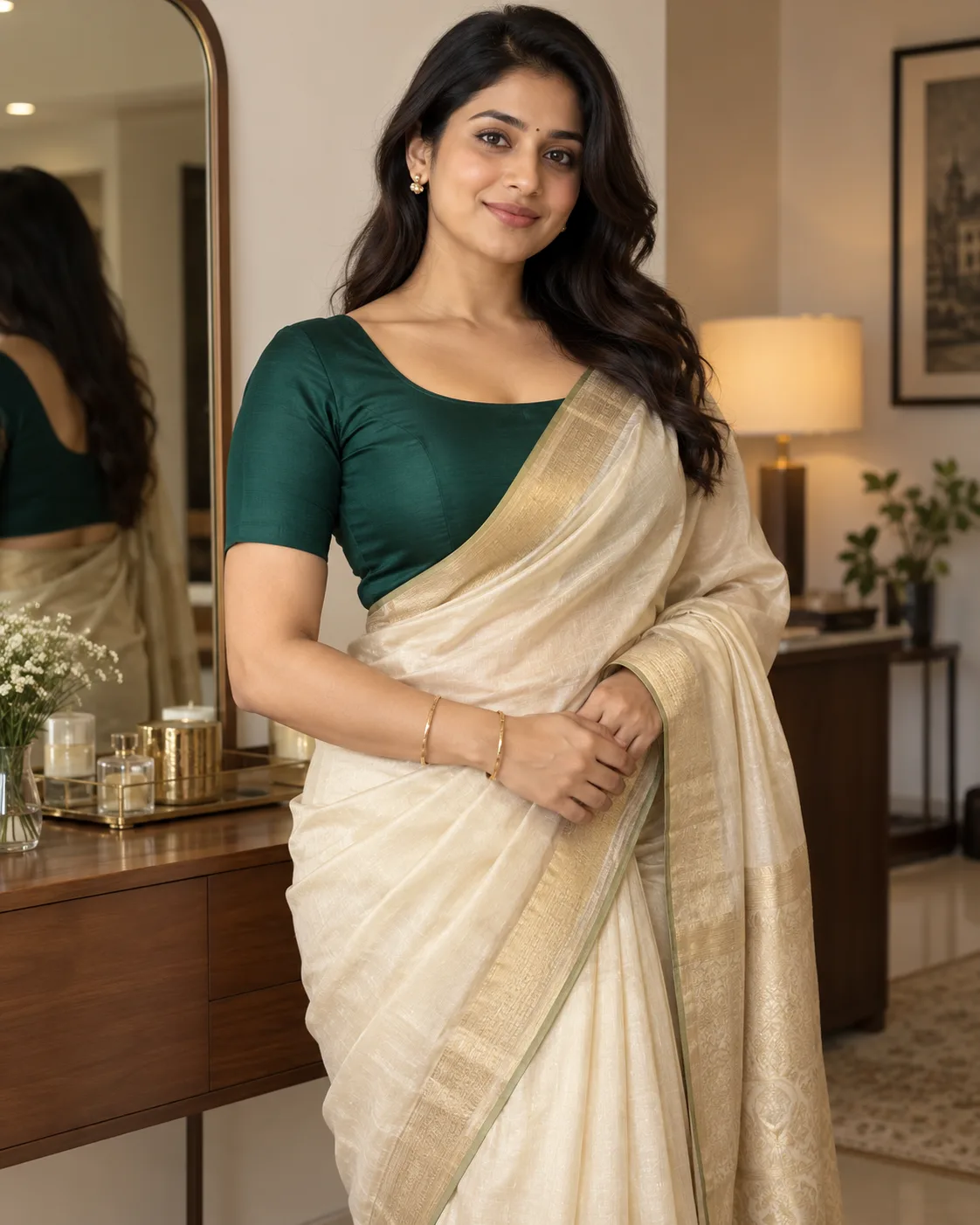
If your saree blouse has a regular neckline, standard sleeves, and a full back, you usually don’t need anything complicated underneath.
A smooth T-shirt bra or seamless bra is often the easiest choice because it sits quietly under the blouse without adding visible lines or texture.
This works especially well with blouses made from:
cotton-silk
satin
plain silk
crepe
lightly structured fabrics
If the blouse is heavily embroidered or lined, the bra matters even less visually because the fabric already disguises seams and texture.
What I’d pay attention to instead is fit.
The bra cup shouldn’t rise above the blouse neckline, and the straps should sit comfortably inside the shoulder line. If either one is peeking out, the issue may be the cut of the blouse rather than the bra itself.
For very fitted blouses, smoother cups usually look cleaner than lace-heavy styles.
If you want a deeper breakdown of the different types of bras and what each construction is designed to do, our bra-style guide explains the differences between T-shirt, seamless, balconette, plunge, wireless, and other common options.
The main idea here is simple: if the blouse is straightforward, the bra can be too.
2. Square-Neck Saree Blouse
 Pin it
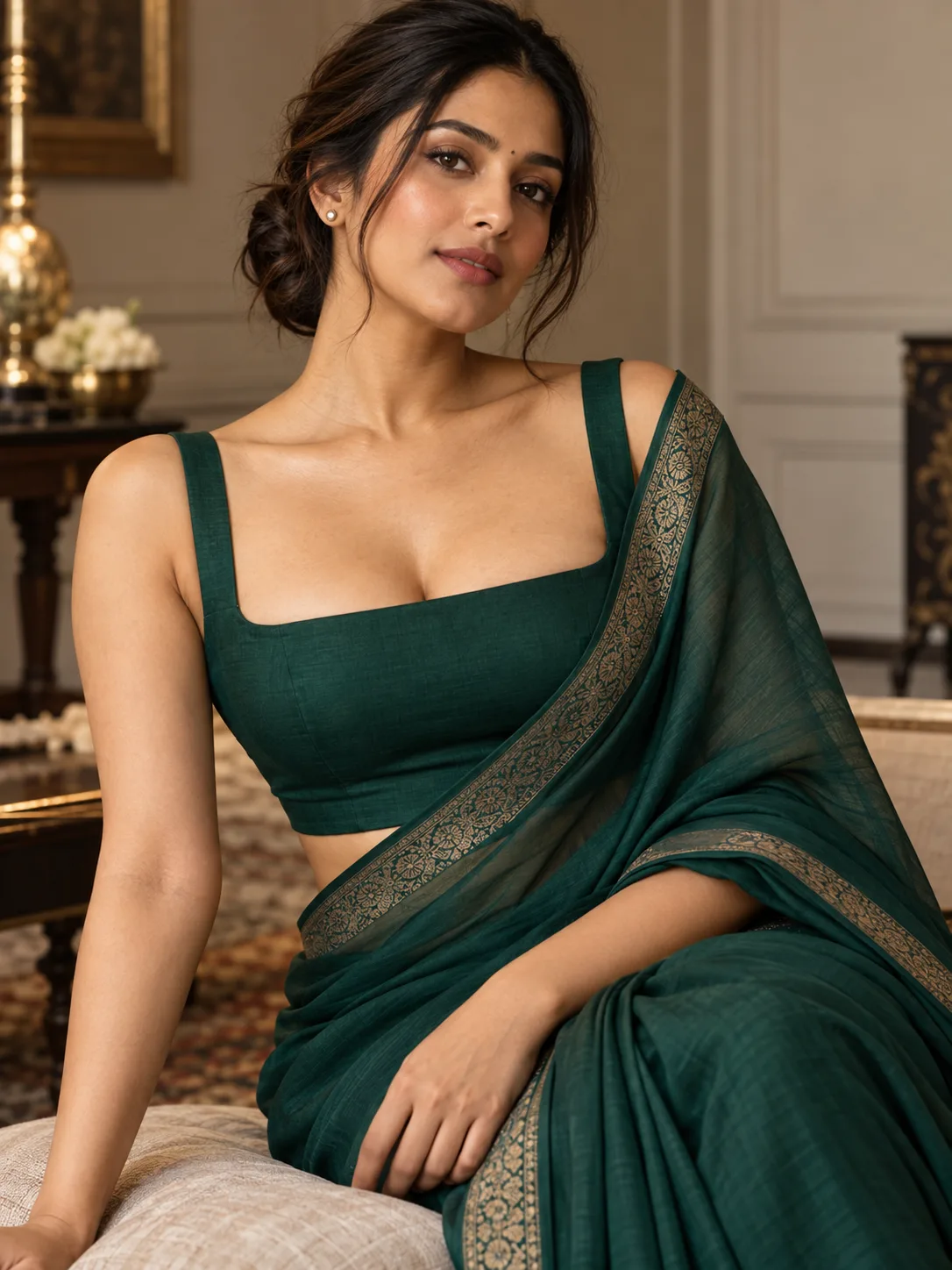
A square-neck saree blouse can expose more of the upper chest than a regular blouse, which is where a full-coverage bra sometimes starts to show.
This is usually a better place for a balconette or demi-cup bra.
A balconette works well because the cup line tends to sit lower and more horizontally, while the straps are often positioned farther apart. That shape can follow the wider neckline more naturally.
A demi bra can also work because it simply gives you less upper-cup coverage.
The difference is small but useful:
balconette = wider neckline and wider-set straps
demi = lower cup coverage
Which one works better depends on the exact blouse cut.
If the square neckline is very wide, strap placement matters more. If it is deeper but not especially wide, a demi style may be enough.
I’d also keep the bra smooth if the blouse fabric is fitted or plain. Lace, embroidery, and prominent seams can show through more easily than you expect.
If you want a clearer comparison between these constructions, our Types of Bras and Bra Styles guide breaks down balconette, demi, and plunge bras in more detail.
The main thing to check is simple: the top edge of the bra should stay comfortably below the square neckline instead of competing with it.
3. Deep V-Neck Saree Blouse
 Pin it
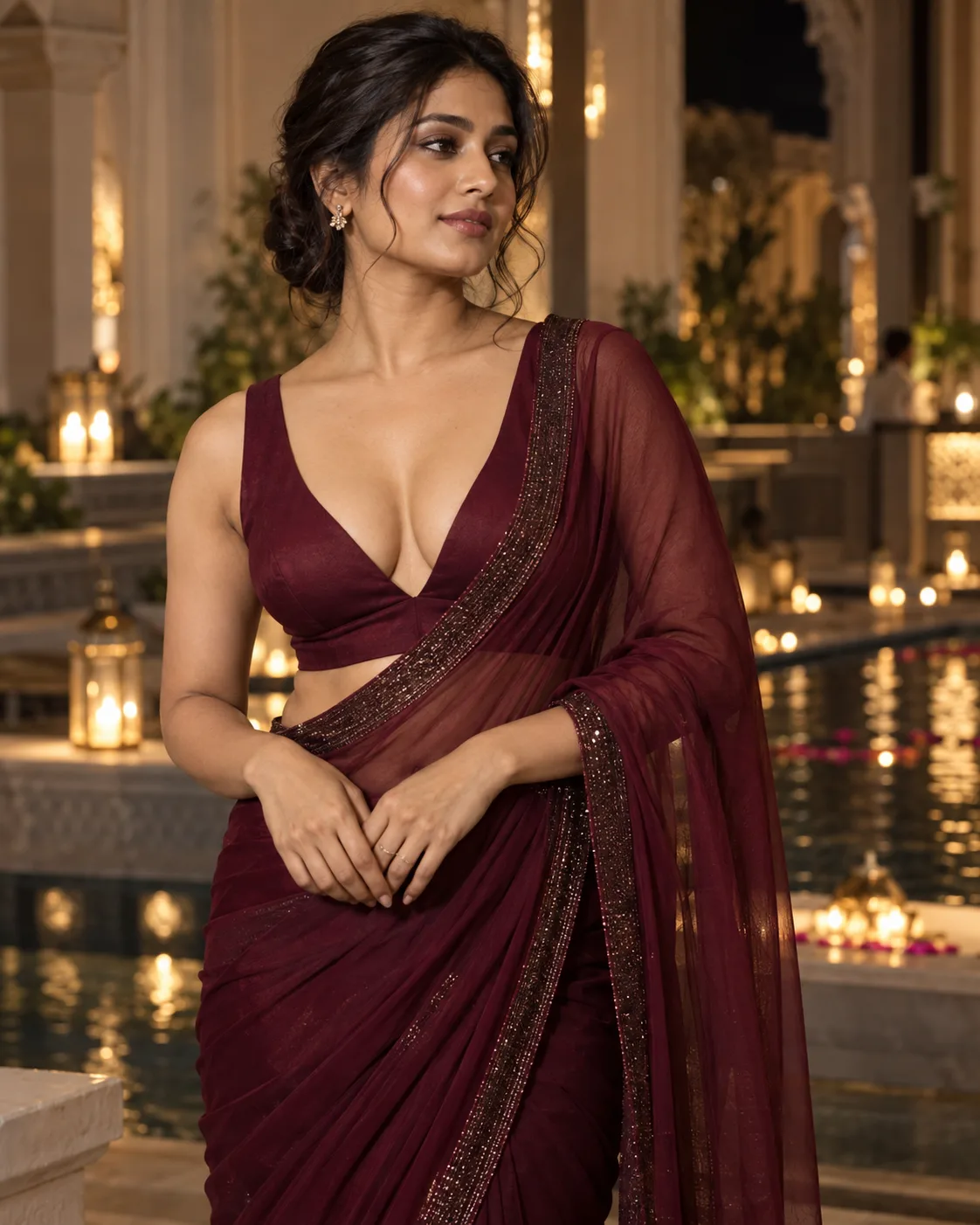
With a deep V-neck saree blouse, the problem is usually not the cup height — it’s the centre of the bra showing between the cups.
That’s where a plunge bra becomes useful.
The centre gore sits much lower than on a standard bra, which gives the blouse more room to dip in the middle without exposing the bra underneath.
This works especially well with:
deep V-neck blouses
crossover blouse designs
wrap-inspired saree blouses
lower-cut evening blouses
One thing I wouldn’t assume is that every plunge bra is heavily padded.
Some are lightly lined, some are unlined, and some have more structured cups. The important feature is the low centre, not how much lift the bra creates.
I’d also check how wide the V is.
If the blouse is both very deep and very wide, a standard plunge may still show at the sides or near the top of the cup. In that case, the blouse construction itself may need to do more of the work.
For smooth silk, satin, or fitted blouses, keep the bra surface relatively clean so seams or lace don’t show through.
The simplest rule here is: if the blouse drops low in the centre, the bra needs to drop low in the centre too.
4. Sleeveless Saree Blouse
 Pin it
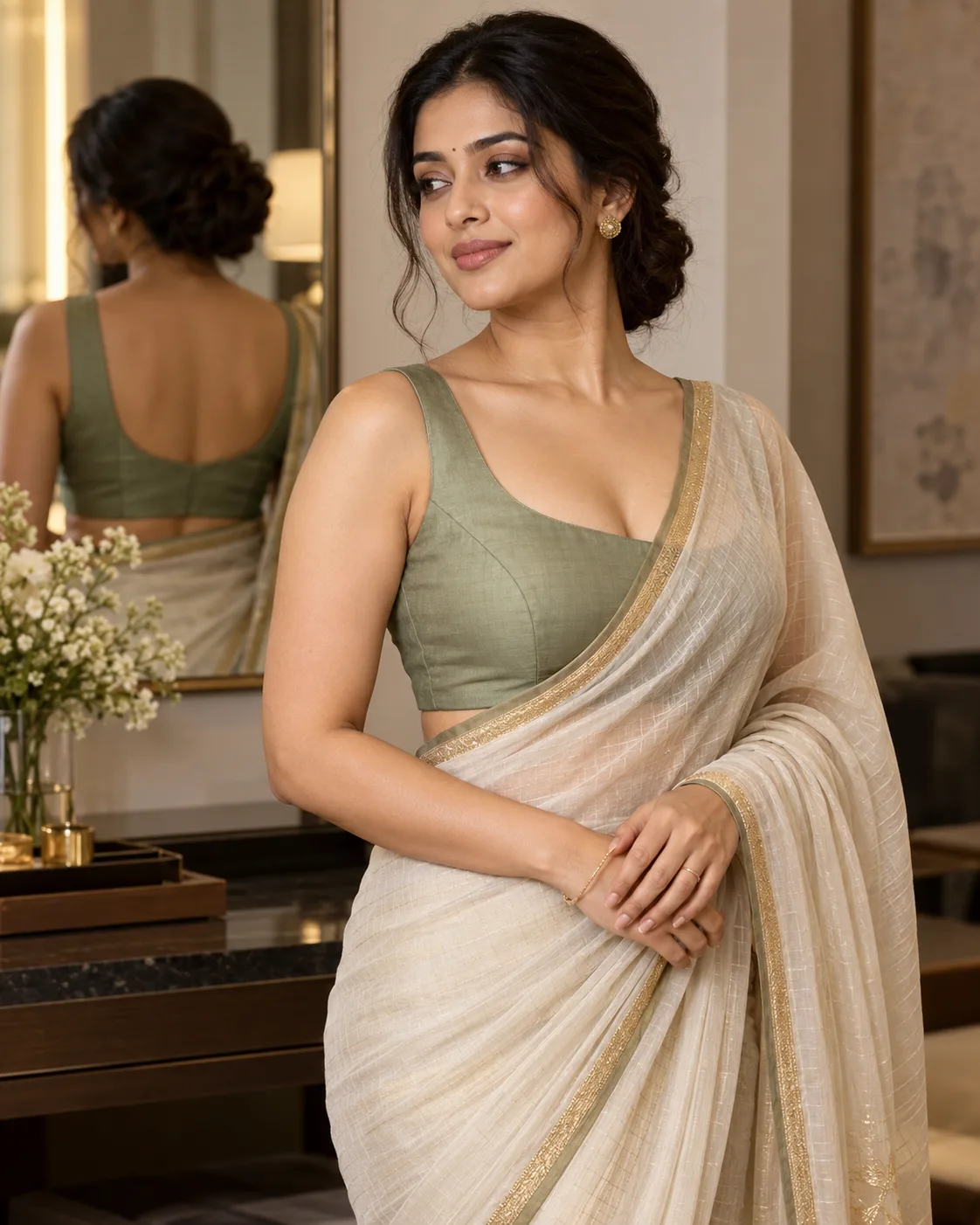
A sleeveless saree blouse does not automatically require a strapless bra.
What matters more is how the shoulder line, neckline, and armhole are cut.
If the blouse has a regular neckline and the straps sit well inside the shoulder line, a smooth T-shirt bra may work perfectly well.
If the neckline is lower or wider, a demi or balconette bra may sit more neatly underneath.
If the blouse has narrow shoulders or deeper armholes, a convertible bra can be more useful because the straps can sometimes be repositioned so they stay hidden.
This is why I’d check three things before changing bras:
are the shoulder straps visible?
does the bra show near the armhole?
does the cup edge sit above the blouse neckline?
If none of those are happening, you may not need a specialised style at all.
For very fitted sleeveless blouses, I’d also keep the bra surface smooth. Lace or raised seams can become noticeable through silk, satin, or stretch fabrics.
The main takeaway is simple: with a sleeveless blouse, solve the part that is actually showing — the strap, the cup edge, or the side of the bra.
Don’t switch to a strapless style unless the blouse really requires it.
5. Halter-Neck Saree Blouse
 Pin it
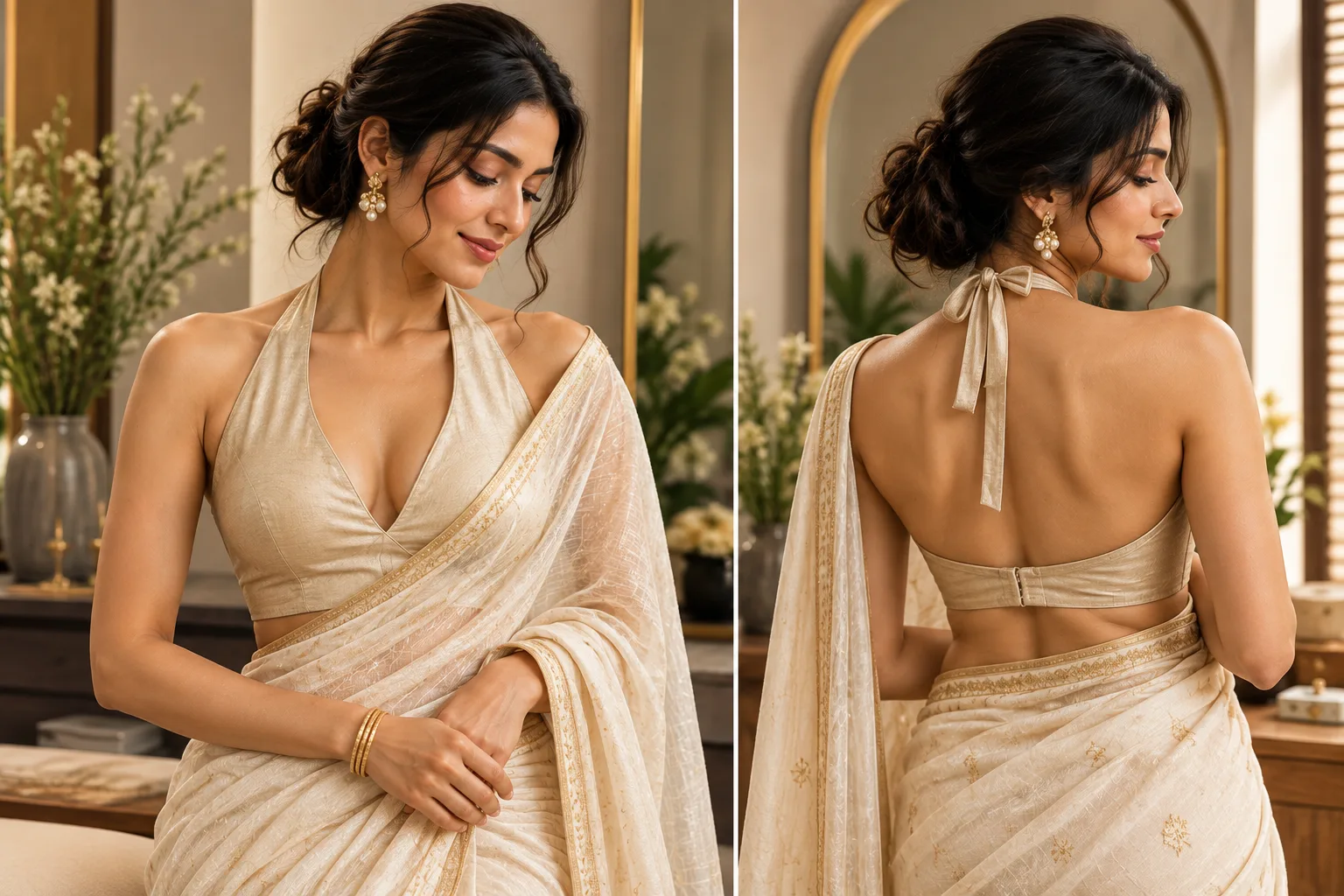
With a halter-neck saree blouse, the biggest issue is usually where the bra straps sit.
Standard shoulder straps can easily show outside the blouse line, so a multiway or convertible bra is often the most practical option.
Depending on the bra, you may be able to wear the straps:
around the neck in a halter configuration
crossed at the back
repositioned closer to the centre
or removed completely if the bra is designed to work strapless
The exact choice depends on how the blouse is cut.
A high halter blouse with a full back may only need the straps rearranged. A lower or more open design may require a different cup shape as well.
I’d also check the back before assuming a convertible bra solves everything. Some halter blouses are cut low behind, which means the back band can become just as visible as the straps.
If the blouse is very structured or already has built-in cups, you may not need a conventional bra underneath at all.
The useful rule is: with a halter blouse, check the straps first — then the back, then the neckline.
That order usually tells you what kind of bra solution you actually need.
6. Strapless or Off-Shoulder Saree Blouse
 Pin it
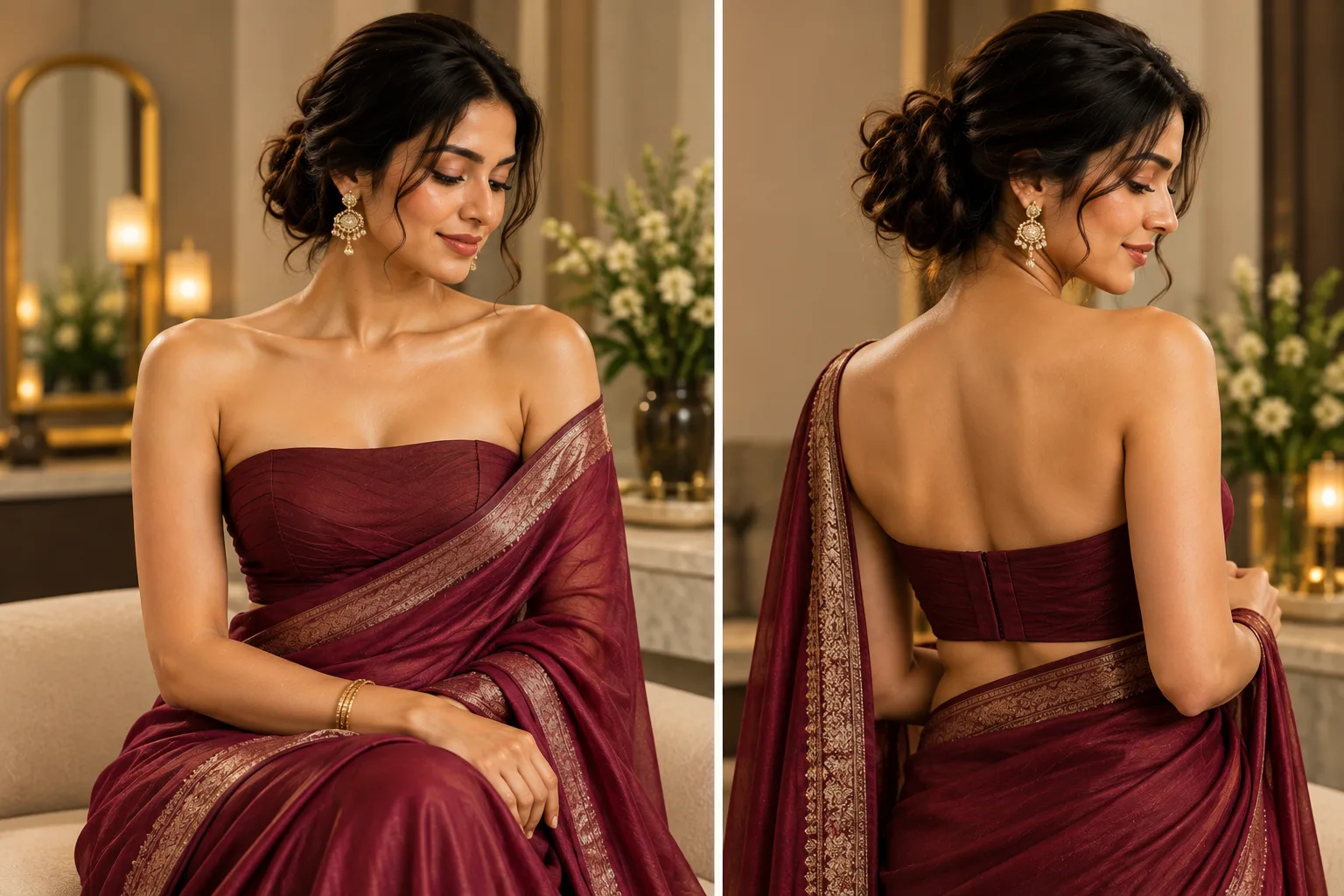
A strapless or off-shoulder saree blouse removes the easiest place to hide bra straps, so a strapless bra is usually the most straightforward option.
The important part here is not just that the straps are gone.
The band has to do much more of the work.
That means the bra should feel secure enough to stay in place without constant pulling or adjustment. A firmer band, supportive side structure, and grip along the edges can all help depending on the design.
This works well with:
strapless saree blouses
off-shoulder blouses
Bardot-style necklines
some asymmetric blouse designs
I’d also check the height of the cups before wearing the blouse out.
Some strapless bras sit relatively high, which can become visible above a lower-cut blouse even though the straps themselves are hidden.
If the blouse has a very low neckline as well as exposed shoulders, you may need a strapless style with a lower centre rather than a standard full-coverage version.
And if the blouse already has strong built-in structure, sewn-in cups, or supportive boning, you may find that the blouse itself is doing most of the work.
The simplest rule is: when the shoulders are bare, make sure the bra can stay secure without relying on the shoulders at all.
7. Backless or Very Low-Back Saree Blouse
 Pin it
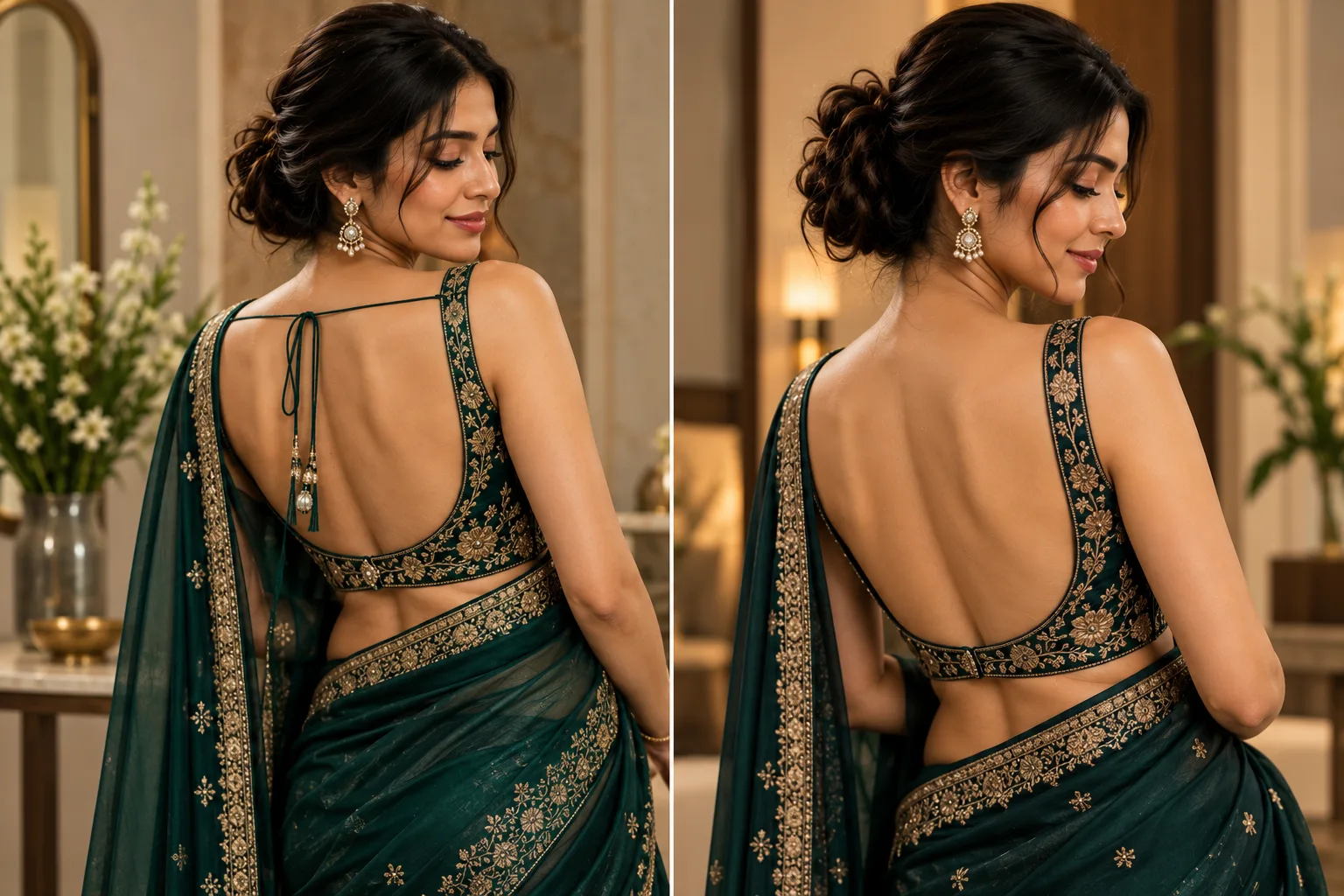
A backless saree blouse is where regular bra advice starts to break down.
If the blouse drops very low at the back, a standard bra band may simply sit too high to stay hidden. In that case, switching cup styles won’t solve the problem because the issue is the back band itself.
Depending on the blouse, possible solutions can include:
sewn-in cups
a more structured or lined blouse
low-back bra designs
convertible bra configurations
supportive blouse construction with boning or shaping
The exact solution depends heavily on how low the back goes and how much structure the blouse already has.
For a moderately low back, a convertible or low-back style may work.
For a truly backless blouse, I’d think about support while the blouse is being made or altered, rather than trying to hide a conventional bra afterwards.
This is especially useful for festive or occasion blouses because the tailor can often build the support into the garment more cleanly than an additional layer underneath.
I’d also check the sides. Some backless blouses are cut low under the arms as well, which can expose the side of a bra even if the back band is technically hidden.
So with this style, the useful question is not simply:
“Which bra works with a backless blouse?”
It’s:
“How much of the blouse is actually available to hide and support a bra?”
The lower and more open the blouse becomes, the more important the blouse construction itself is.
8. Sheer or Light-Coloured Saree Blouse
 Pin it
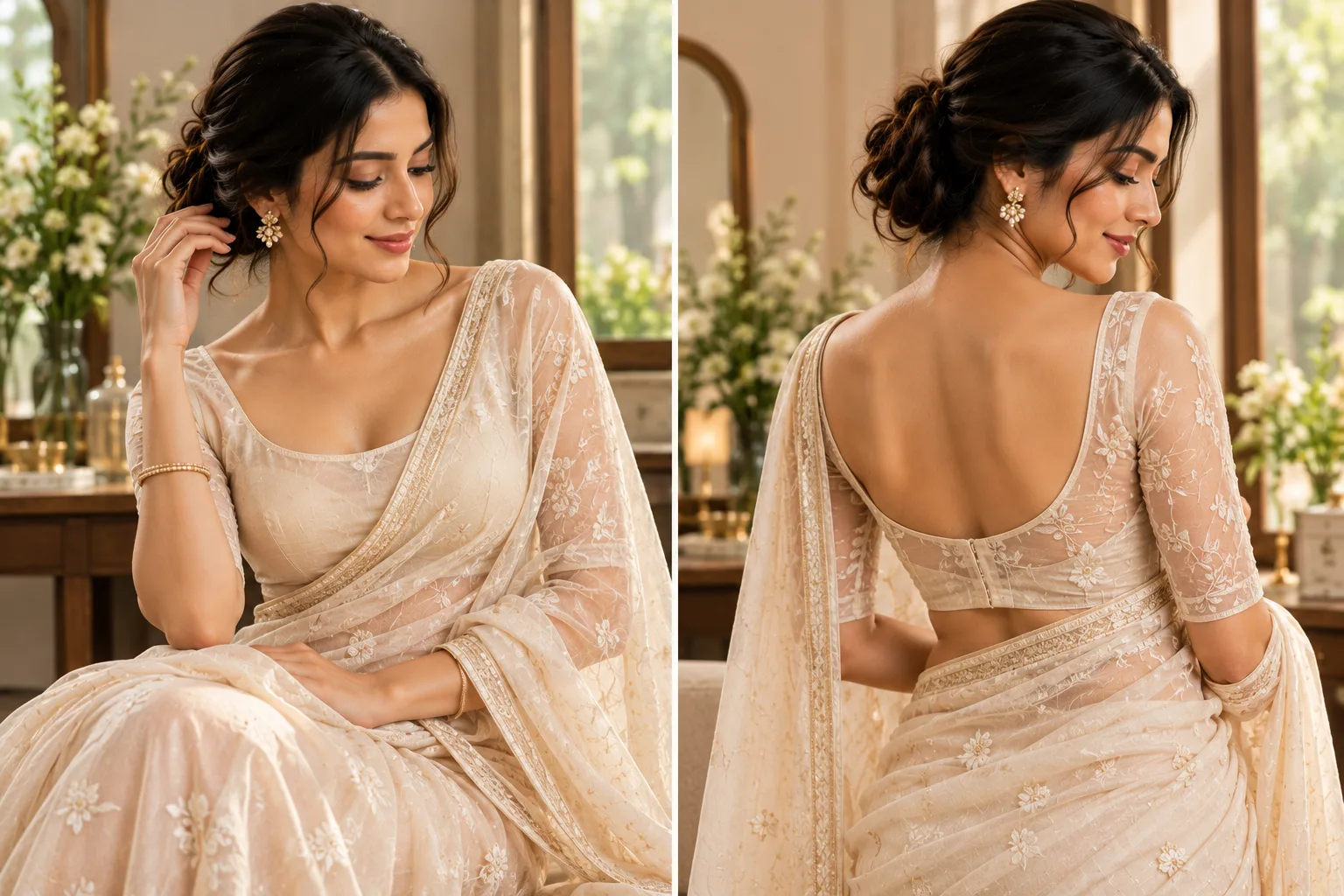
With a sheer, white, ivory, or very light saree blouse, the biggest issue is often not the shape of the bra.
It’s whether you can see it.
A smooth skin-tone bra or seamless bra is usually the easiest starting point because it reduces both colour contrast and visible texture underneath the fabric.
This matters especially with:
white cotton blouses
ivory Chanderi
organza
light georgette
sheer sleeves or panels
thin silk blends
One common mistake is assuming that a white bra will disappear under a white blouse.
It often doesn’t.
White underwear can create a noticeable contrast beneath light fabric, while a shade closer to your skin tone may blend much more naturally.
Texture matters too.
Lace, embroidery, raised seams, and decorative cup edges can become surprisingly obvious under smooth or slightly transparent fabric. If the blouse is already delicate, I’d keep the bra underneath visually quiet.
There are exceptions, of course. If the blouse has deliberate sheer panels and the underlayer is meant to be part of the design, contrast can be intentional. But in that case, it should look like a styling decision rather than something accidentally showing through.
For very sheer blouses, lining may ultimately be the cleaner solution. A tailor can add partial or full lining while preserving the overall design of the blouse.
The easiest rule is: if the fabric reveals what’s underneath, choose either something that disappears or something that looks deliberately visible — not something halfway between the two.
What If the Saree Blouse Already Has Cups?
A blouse with built-in cups can make bra styling much easier — but only if the blouse is actually structured well enough to support and shape on its own.
Not all “padded blouses” are built the same way.
Some simply have thin foam cups stitched into the lining. Others use firmer cups, shaping seams, boning, or a more structured inner layer that does much more of the work.
That difference matters.
Lightly Padded Blouse
If the blouse only has thin padding, you may still prefer to wear a bra underneath depending on the fit, support, and how secure the blouse feels.
The padding may mainly prevent show-through rather than provide meaningful structure.
Fully Structured Blouse
If the blouse has well-fitted cups, a secure underband area, shaping seams, or boning, you may not need a separate bra at all.
This is especially useful with:
backless blouses
halter blouses
strapless designs
deep-neck blouses
corset-inspired saree blouses
In these cases, the blouse itself effectively becomes the foundation garment.
Removable Cups
Some blouses use removable pads rather than sewn-in structured cups.
These can help with coverage and shape, but they don’t automatically replace the support of a bra.
How well they work depends on the fit of the blouse itself.
Fit Matters More Than the Word “Padded”
A padded blouse that is too loose around the bust can still shift.
A beautifully fitted, lightly structured blouse may feel much more secure even with less padding.
So don’t judge it only by whether the product description says “padded.”
Look at:
how closely the blouse fits
whether the cups sit in the right place
whether the underbust feels secure
whether anything moves when you raise your arms
whether you can sit, walk, and bend comfortably
For very open blouse designs, I’d actually decide on the bra situation before the blouse is stitched or altered.
That gives the tailor the chance to adjust cup placement, lining, back depth, and structure around how you intend to wear it.
The useful distinction is: padding gives coverage and shape; structure is what makes a blouse capable of functioning without a separate bra.
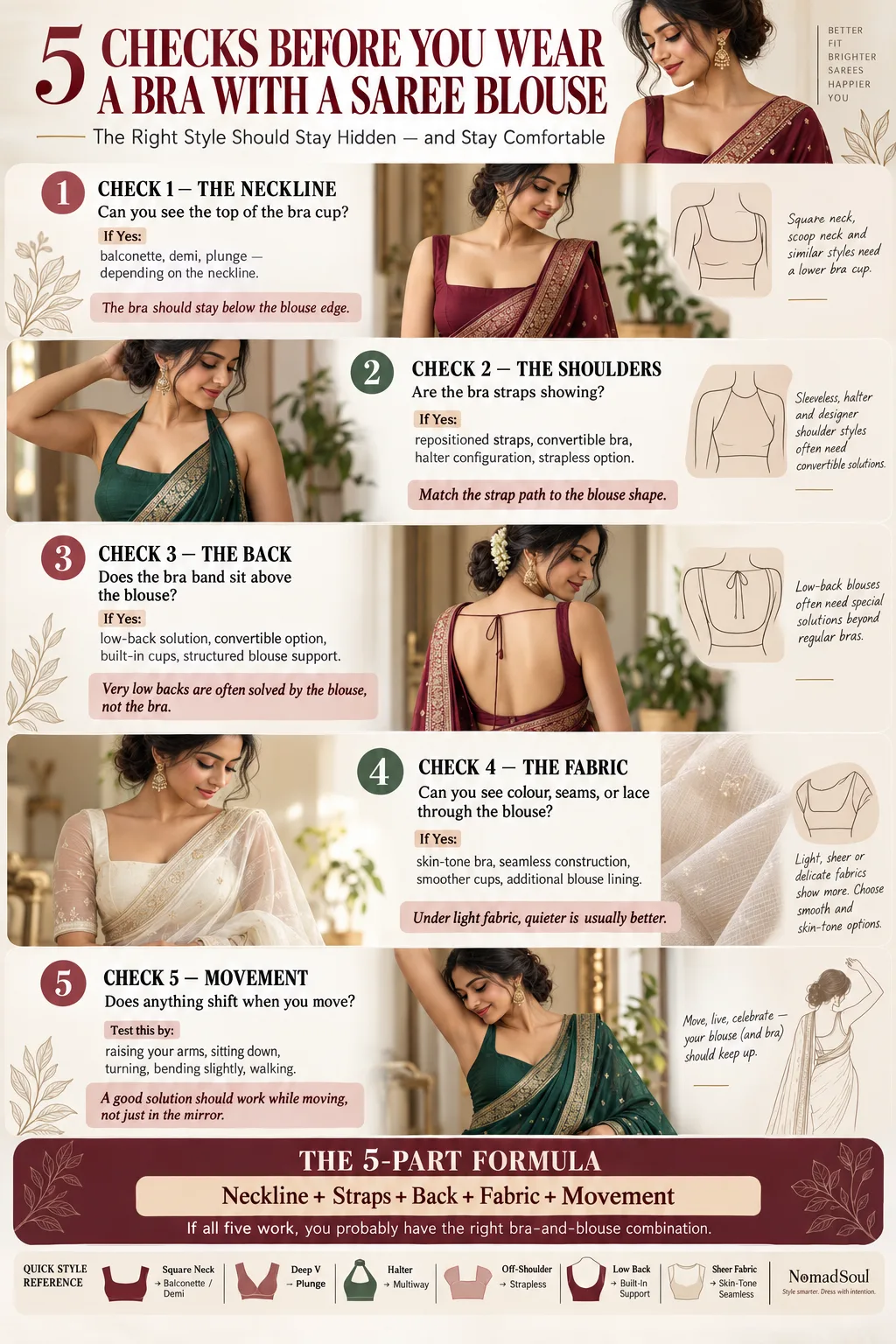
5 Things to Check Before Choosing a Bra for a Saree Blouse
 Pin it
Before deciding that you need a special bra, put the blouse on and check exactly what is going wrong.
That usually tells you which part of the bra needs to change.
1. Does the Bra Show Above the Neckline?
Look at the blouse from the front while standing naturally.
If the cup edge is visible above a square, scoop, or deep neckline, you may need:
a demi bra
a balconette
a plunge style
or a lower-cut cup
The solution depends on where the blouse is exposing the bra.
2. Are the Straps Visible?
Check the shoulders as well as the area close to the neckline.
If the blouse is sleeveless, halter, asymmetric, or cut unusually around the shoulders, standard straps may sit outside the fabric.
This is where a convertible or multiway bra can be more useful than simply changing the cups.
3. Does the Back Band Sit Above the Blouse?
Turn around or use a mirror to check the back.
A beautiful low-back blouse can be ruined visually if a regular bra band is sitting several centimetres above it.
If that happens, the answer may be:
a low-back design
a convertible solution
or support built directly into the blouse
With very low backs, blouse construction is often the cleaner option.
4. Can You See Seams, Lace, or Colour Through the Fabric?
This matters particularly with:
white blouses
light silk
satin
Chanderi
organza
fitted smooth fabrics
If texture is showing, switch to something smoother.
If colour is showing, a bra closer to your skin tone may blend better than bright white under pale fabric.
5. Can You Actually Move Comfortably?
This is the check people often forget.
Raise your arms.
Sit down.
Turn your torso.
Lean forward slightly.
Walk around for a minute.
The bra and blouse should stay where they are without constant pulling, repositioning, or checking.
A bra may technically disappear under the blouse while you’re standing still and still be the wrong choice if everything shifts as soon as you move.
That’s why the final test isn’t just:
“Can I see the bra?”
It’s:
“Can I wear this saree for several hours without thinking about what’s underneath it?”
If the answer is yes, you’ve probably found the right combination.
Final Thoughts
The easiest way to choose a bra for a saree blouse is to stop thinking in terms of one “best” option.
A regular fitted blouse may work perfectly well with a smooth T-shirt bra. A square neckline can suit a balconette or demi style. A deep V usually needs a lower centre, while halter, strapless, and backless blouses are often more about strap placement and blouse construction than cup shape alone.
Fabric changes things too.
A heavily embroidered blouse can hide seams that would be obvious under satin or organza, and a well-structured blouse with built-in cups may not need a separate bra at all.
So before buying anything new, look at the blouse itself.
Check the neckline, back, shoulder line, fabric, and how much support is already built in. Then choose the bra that solves the specific problem you actually have.
That approach is much more useful than memorising rules — and it makes modern saree blouses far easier to style.
The best result is usually the one you stop noticing once the saree is on.