
A padded blouse can look surprisingly reassuring on a hanger.
You see the cups, feel the foam, and assume the support question has already been solved.
Then you put it on.
The cups may give shape, but the blouse still shifts when you raise your arms. The neckline may sit differently once you move. Or the bodice may feel secure enough that adding a separate bra underneath only creates extra bulk and visible edges.
That is why I would not decide whether to wear a bra under a padded blouse by looking at the padding alone.
The more useful question is: What is actually holding the cups in place?
A thin foam cup sewn into soft fabric can provide coverage without doing much to stabilize the bust.
A structured blouse with relatively modest padding may perform very differently if those cups are anchored into a firm underbust, shaped seams, supportive side panels, or a bodice that holds its form.
The same logic applies beyond Indian wear.
A padded saree blouse, lehenga choli, corset-style top, evening dress, bustier, or crop top may all contain cups — but those cups do not automatically perform the same job.
So in this guide, we are not going to ask whether a blouse is simply padded or unpadded.
We are going to look at three things instead: what the cups do, what supports them, and what happens when you move.
Because whether you need a bra underneath has much more to do with the construction of the garment than with how thick the padding feels.
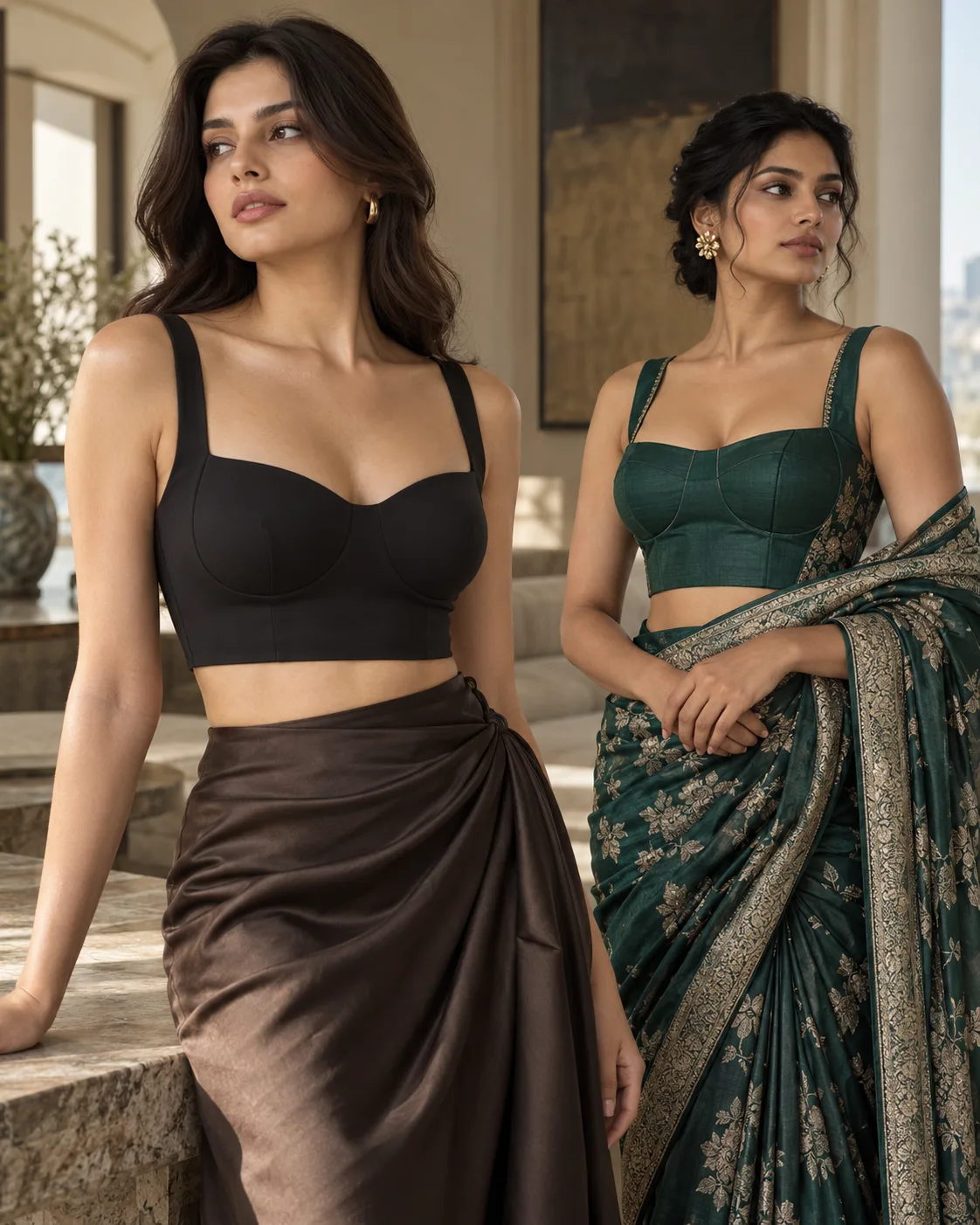
1. First, Separate Padding From Support
 Pin it
A padded blouse can do four different things, and they are easy to confuse.
It can add:
coverage
shape
smoothing
support
The first three can come from foam alone.
The fourth usually needs more.
That is the distinction worth paying attention to.
A thin moulded cup can make the bust look more even under a saree blouse, corset top, lehenga choli, or evening dress. It can also reduce show-through and give the garment a cleaner shape.
But that does not tell you whether the blouse can actually hold itself securely once you start moving.
For that, look beyond the cup.
A garment begins to behave more like built-in support when the cups are connected to something stable:
a firm underbust
structured lining
supportive side panels
shaped seams
a close-fitting bodice
boning or another internal reinforcement
If you want to understand how those features compare with the support systems used in conventional bras, our 15 Types of Bras Every Woman Should Know guide explains how different bra constructions handle coverage, shaping, anchoring, and support.
Without that structure, the padding may simply be sitting inside the garment rather than doing much of the supporting.
This is why two blouses can both be sold as “padded” and feel completely different once worn.
One may stay secure without a bra.
The other may provide only shape and coverage while still depending on a separate bra for stability.
The easiest way to think about it is: padding changes what the cup looks and feels like; structure changes what the garment can actually do.
That difference matters much more than the thickness of the foam.
2. The Press Test
 Pin it
Before you even put the blouse on, you can learn a lot from how it behaves in your hands.
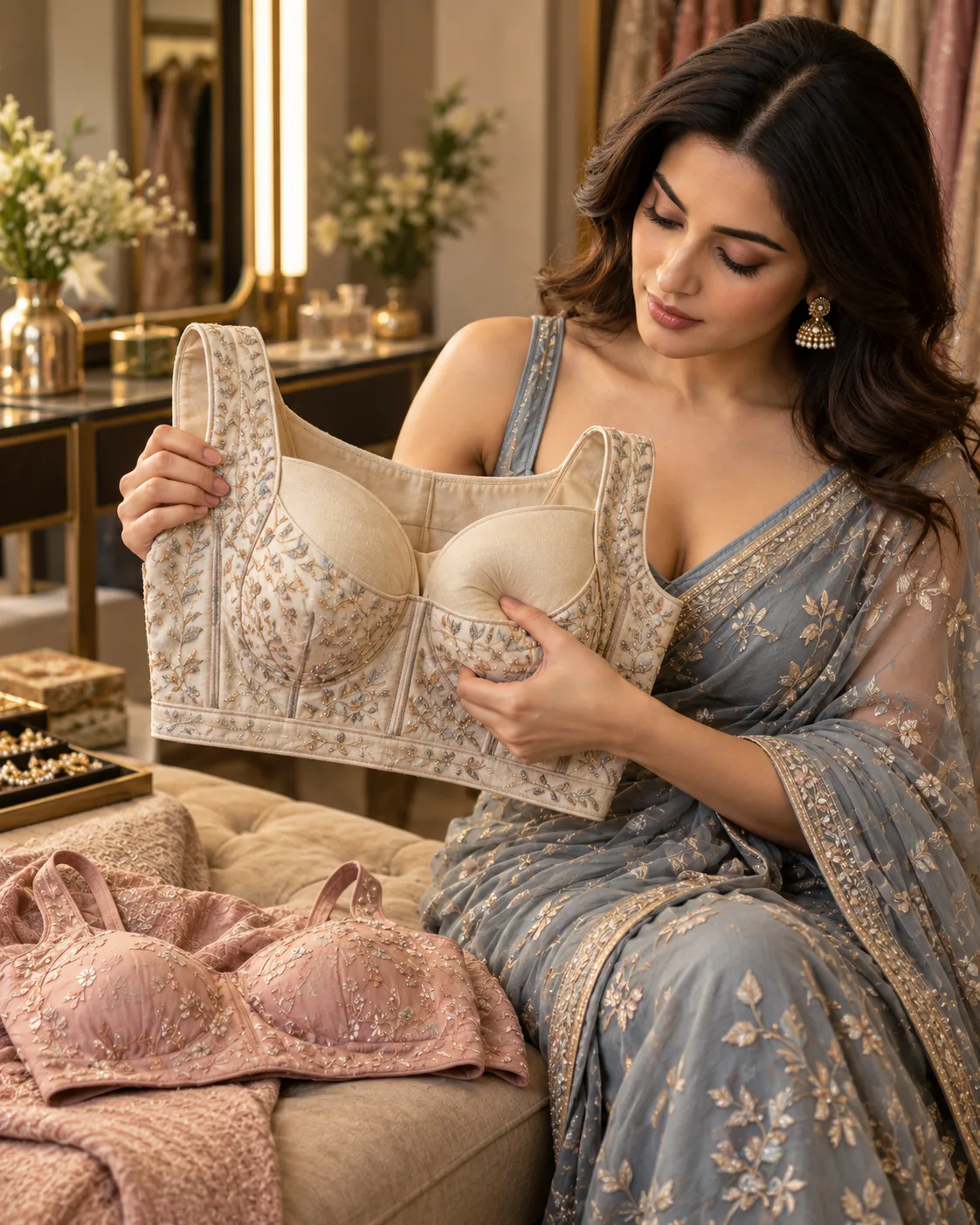
Hold the garment at the side seams and gently press the cups inward.
Now watch what happens.
If the cups spring back into shape and the bodice around them stays firm, the garment has some structure working with the padding.
If the cups collapse easily and the fabric underneath folds with them, the padding is probably doing more for shape and coverage than for actual support.
Then check the lower edge of the bodice.
Does the under-bust area feel stable?
Does the blouse keep its form when you hold it by the sides?
Or does everything soften and fold as soon as you stop supporting it with your hands?
That difference tells you a lot.
A structured evening top, corset-style blouse, or well-built lehenga choli may feel almost architectural even before you wear it.
A lightly padded crop top, by comparison, might have cups sewn into very soft fabric with almost nothing anchoring them underneath.
Both are technically “padded.”
They are not doing the same job.
This distinction becomes especially important with outfits that leave little room for a conventional bra. Our guide to What Bra to Wear With a Deep-Neck or Backless Top or Blouse explains when the garment itself may need to provide more of the support because normal straps, cups, or bands would otherwise become visible.
I would also look at the side panels.
If the cup is surrounded by firm fabric, shaped seams, or a stable side section, the garment has a better chance of holding its position on the body.
If the cup seems to float inside thin fabric, it may still need a bra underneath depending on the fit.
The useful question is not: “How thick is the padding?”
It is: “What happens to the garment when the cup is pressed and the fabric has to hold its shape on its own?”
That is a much better clue to whether the blouse can realistically support itself.
3. Look at What Is Under the Cup
 Pin it
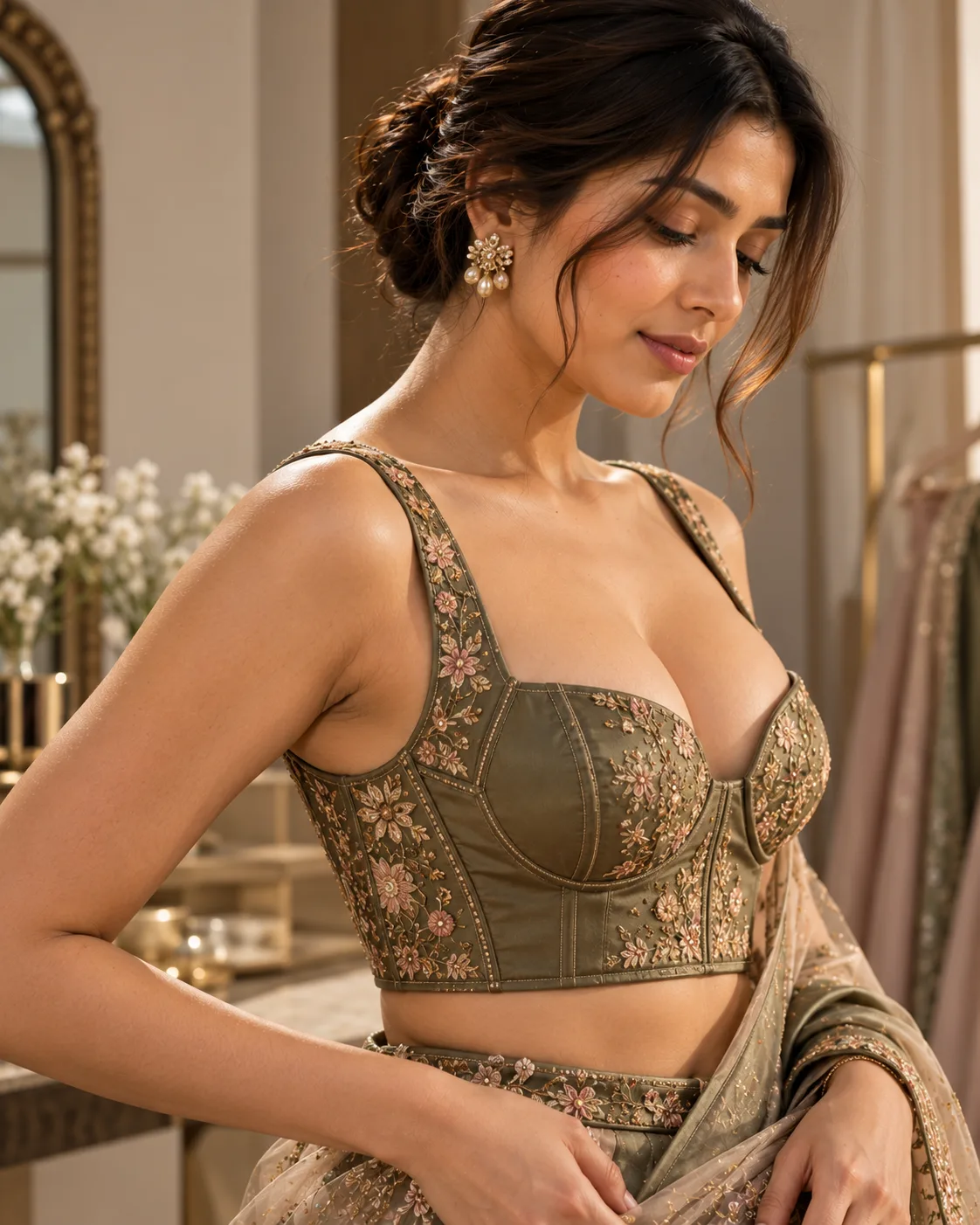
A built-in cup can look substantial and still do very little if there is nothing underneath it to hold it in place.
So once you have checked the cup, look lower.
Ask what is happening at the under-bust.
That is where a garment starts to reveal whether it is simply padded or actually engineered to support.
A cup that is anchored into:
a firm lower band
stable lining
structured side panels
shaped seams
supportive fabric
boning or internal reinforcement
behaves very differently from a cup sewn into a soft piece of fabric with no resistance around it.
This is especially noticeable in garments like:
corset-inspired tops
formal dresses
bustier tops
structured saree blouses
lehenga cholis
tailored festive blouses
The important thing is not whether the cup feels thick.
It is whether the cup is connected to something that can carry tension.
That is why I like to think of it this way: a cup floating inside soft fabric is not the same as a cup anchored into a bodice.
If the lower section of the garment stays firm when you gently pull or move it, the blouse has more chance of supporting itself.
If everything stretches, collapses, or shifts together, the padding may mainly be there for shape.
This is also where a lot of ready-made garments can be misleading.
They may include visible cups and still behave more like a regular top with foam inserted inside.
There is nothing necessarily wrong with that.
It just means you should not assume that “built-in cups” automatically means “built-in bra.”
The real support often lives around and below the cup, not inside it.
4. The Movement Test
 Pin it
A padded blouse should not earn your trust while you are standing perfectly still.
Put it on without a bra first, then move the way you actually will when wearing it.
Raise your arms.
Sit down.
Turn from side to side.
Bend slightly.
Walk across the room.
If it is an occasion outfit, take a few quicker steps or mimic the kind of movement you would make while dancing.
Now pay attention to what changes.
Does the blouse stay anchored under the bust?
Do the cups remain in the same position?
Does the neckline gap when you move?
Does the whole bodice ride upward?
Do you suddenly feel the need to pull or adjust it?
A genuinely supportive garment should not require constant supervision.
This test is especially useful for a lehenga blouse, saree blouse, corset top, or formal dress because these pieces are often worn for hours — not for the thirty seconds you spend checking them in the mirror.
And here is the part I would pay most attention to: Does the garment return to the same position after you move?
A blouse may shift slightly when you raise your arms. That is normal.
The problem is when it stays displaced, gaps, collapses, or needs to be manually repositioned.
If the cups and bodice remain secure through ordinary movement, that is strong evidence that the garment itself is doing meaningful work.
If everything starts moving independently, the padding may be giving you shape without giving you enough stability.
The mirror tells you how the blouse looks.
Movement tells you whether you can actually trust it.
5. When Wearing a Bra Underneath Can Make the Fit Worse
 Pin it
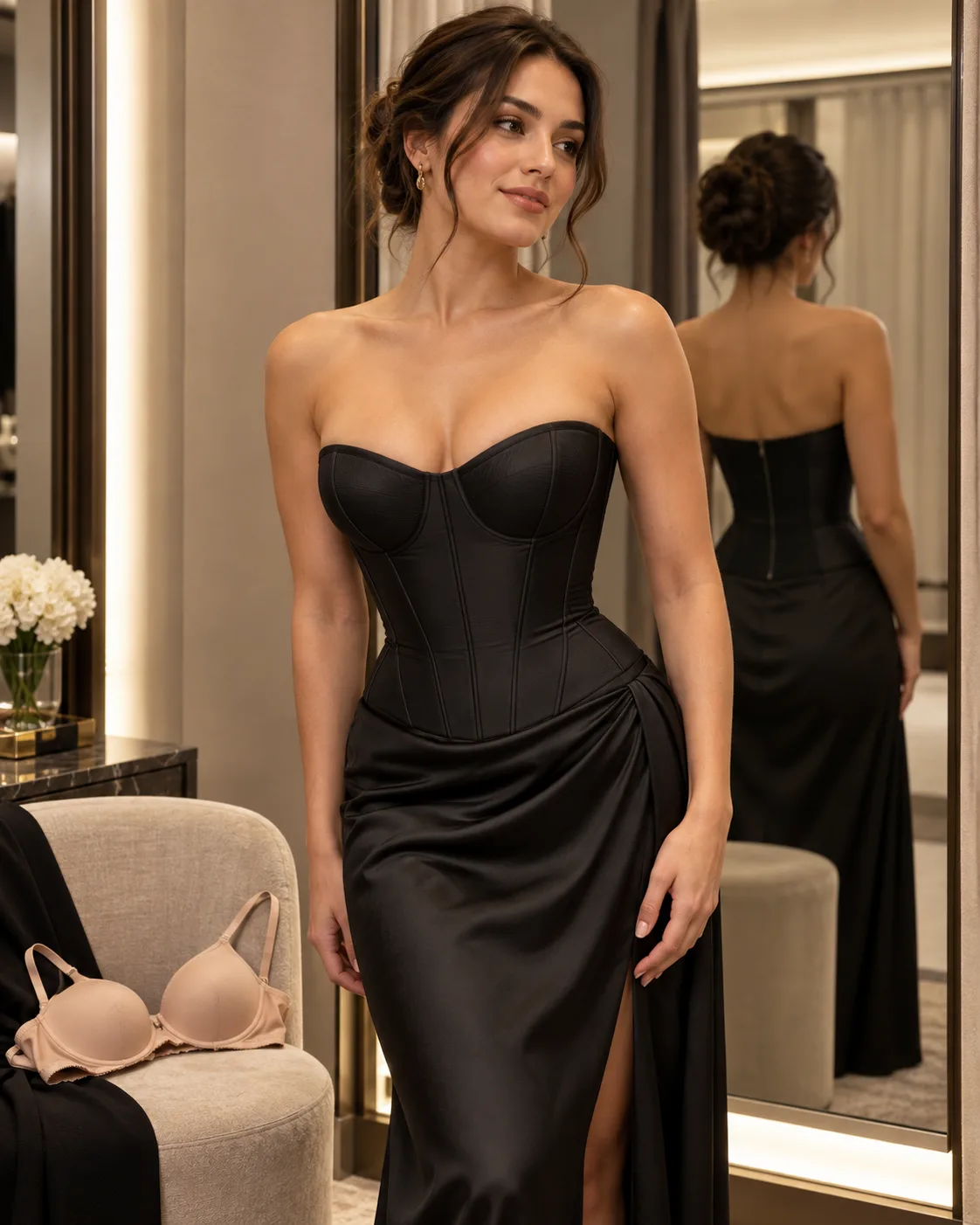
More layers do not always mean more support.
Sometimes a padded blouse has been cut to sit directly against the body, and adding a bra underneath changes the entire fit.
You may notice:
the bust area suddenly feels too tight
the neckline sits higher than intended
cup edges become visible
the blouse pulls across the front
straps or bands appear where the garment was designed to stay clean
the silhouette looks bulkier than it did without the extra layer
This is especially common with:
corset-style tops
structured evening dresses
fitted crop tops
padded saree blouses
lehenga blouses
tailored festive bodices
The reason is simple.
The blouse already has its own internal cup shape.
When you add another moulded cup underneath, the two structures can start competing for the same space.
That can push the garment outward, alter the neckline, or make the bust sit in a position the blouse was not cut for.
So if a padded blouse already feels secure without a bra, I would not add one automatically just because that is what you normally wear.
Instead, compare both versions.
Wear the blouse once without a bra.
Then try it again with one.
Look at:
neckline position
smoothness
comfort
overall shape
whether the garment still sits where it should
If the bra makes the blouse look or feel worse, that is useful information.
The goal is not to wear the maximum amount of support possible.
It is to wear the amount of support the garment actually needs.
6. When You May Still Want a Bra
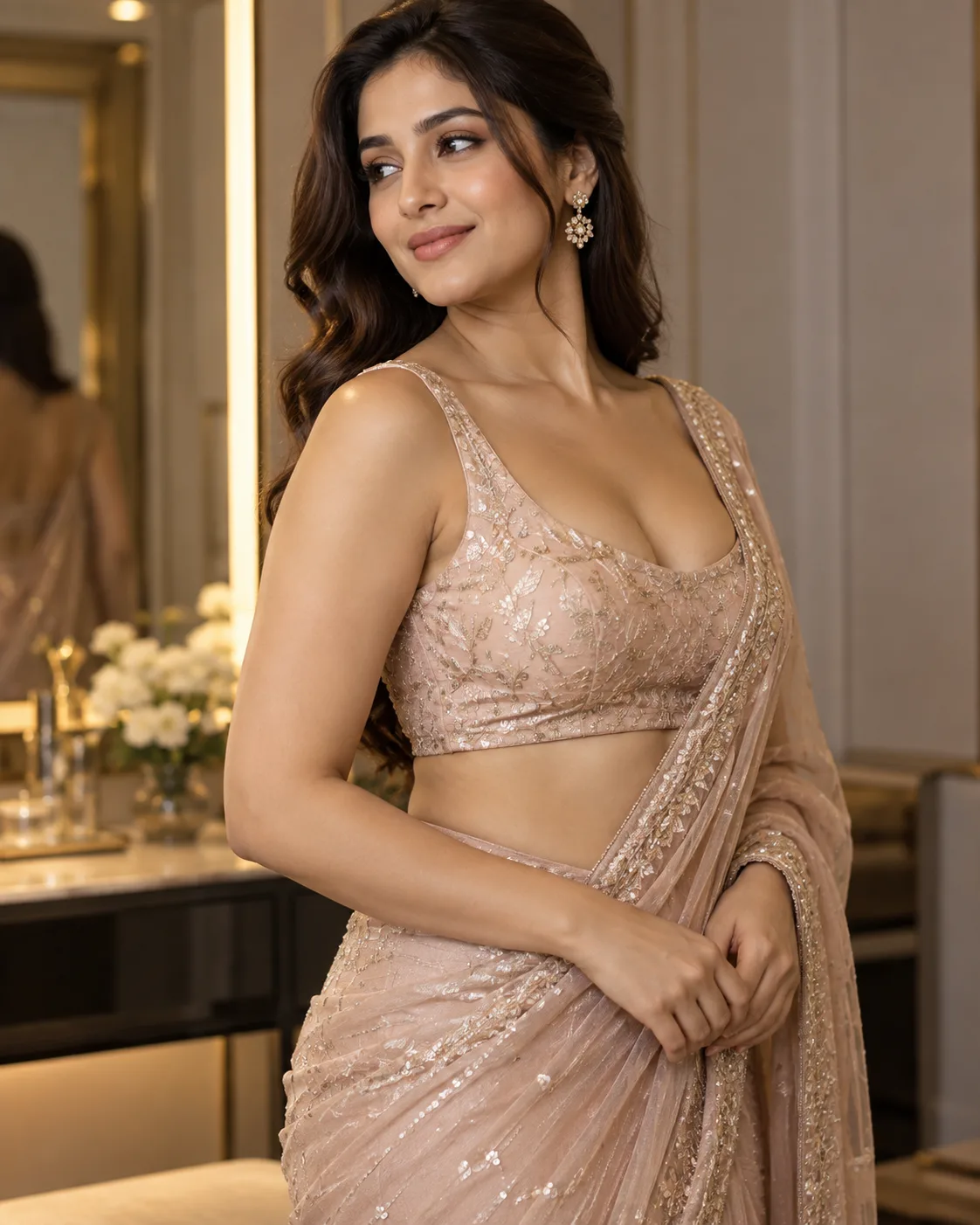 Pin it
Built-in cups do not automatically mean you should skip a bra.
You may still prefer one if the blouse:
feels loose through the bust
has shallow cups that do not match your shape
lacks a firm underbust or structured bodice
shifts when you move
provides coverage but not enough stability for you
This is where personal preference matters too.
Two people can wear the same padded top and make different choices because they want different levels of support.
The important thing is to avoid using a bra to compensate for a garment that simply fits badly.
If the built-in cups sit too high, too low, or too far apart, adding another bra underneath may only disguise the issue temporarily.
A separate bra makes the most sense when it improves the fit without fighting the construction already built into the garment.
7. What About Removable Pads?
 Pin it
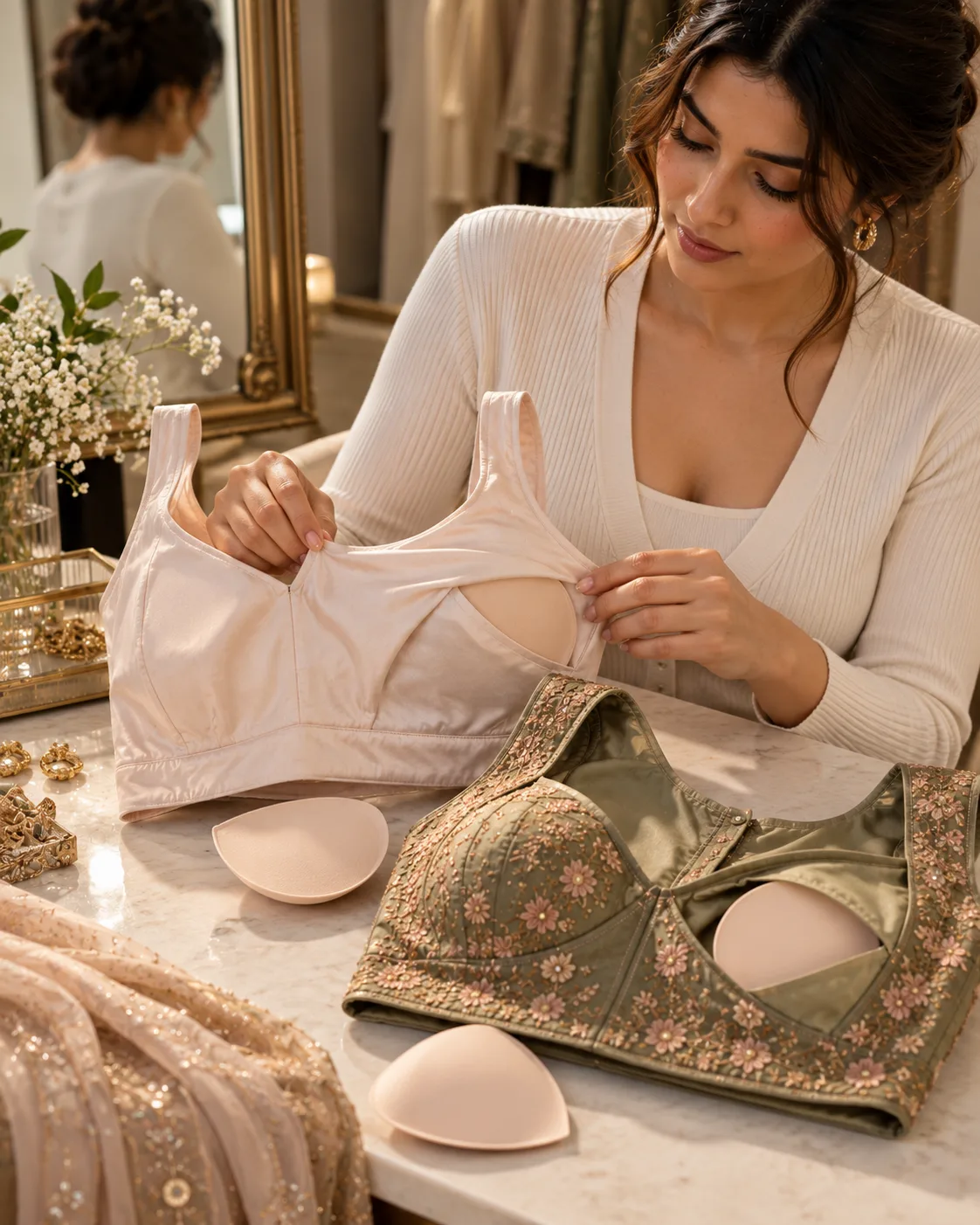
Removable pads can make a top look more finished, but they are usually doing a different job from built-in support.
You often find them in:
padded crop tops
casual camisoles
swim-inspired tops
sports-inspired tops
some ready-made saree or lehenga blouses
dresses with soft inner pockets
Their main purpose is often:
shaping
smoothing
modesty
adding a little structure to the cup area
What they do not automatically provide is the kind of anchoring you get from a supportive band, structured bodice, or well-built internal framework.
A good clue is how easily the pads move.
If you can slide them around inside a pocket, fold them, remove them completely, or reposition them with very little resistance, they are probably there to influence shape rather than to function as a true built-in bra.
That does not make them useless.
In fact, removable pads can be convenient because they let you adjust the garment depending on the outfit, your preference, or how much coverage you want.
But I would not judge the support level by the presence of pads alone.
Instead, look at the garment around them.
Does the top still hold its shape if the pads are removed?
Is there a firm underbust?
Does the bodice stay secure when you move?
If the answer is no, the pads are probably enhancing the garment rather than supporting it.
So when you see “removable padded cups”, read it as a feature — not automatically as proof that you can skip a bra.
Final Thoughts
A padded blouse does not automatically replace a bra.
And a lightly padded blouse does not automatically need one.
The better question is whether the garment can support itself.
Look at what surrounds the cups.
Is there a firm underbust? Structured lining? Stable side panels? Shaped seams? Does the bodice stay in position when you sit, walk, raise your arms, and turn?
If the answer is yes, adding a separate bra may only create extra bulk or interfere with the fit.
If the cups mainly provide shape and coverage while the rest of the garment feels soft or unstable, you may still prefer additional support underneath.
That logic applies whether you are wearing a padded saree blouse, lehenga choli, corset top, evening dress, crop top, or another garment with built-in cups.
So before deciding based on the word “padded,” look at the construction.
Padding tells you what is inside the cup. Structure tells you what the garment can actually do.