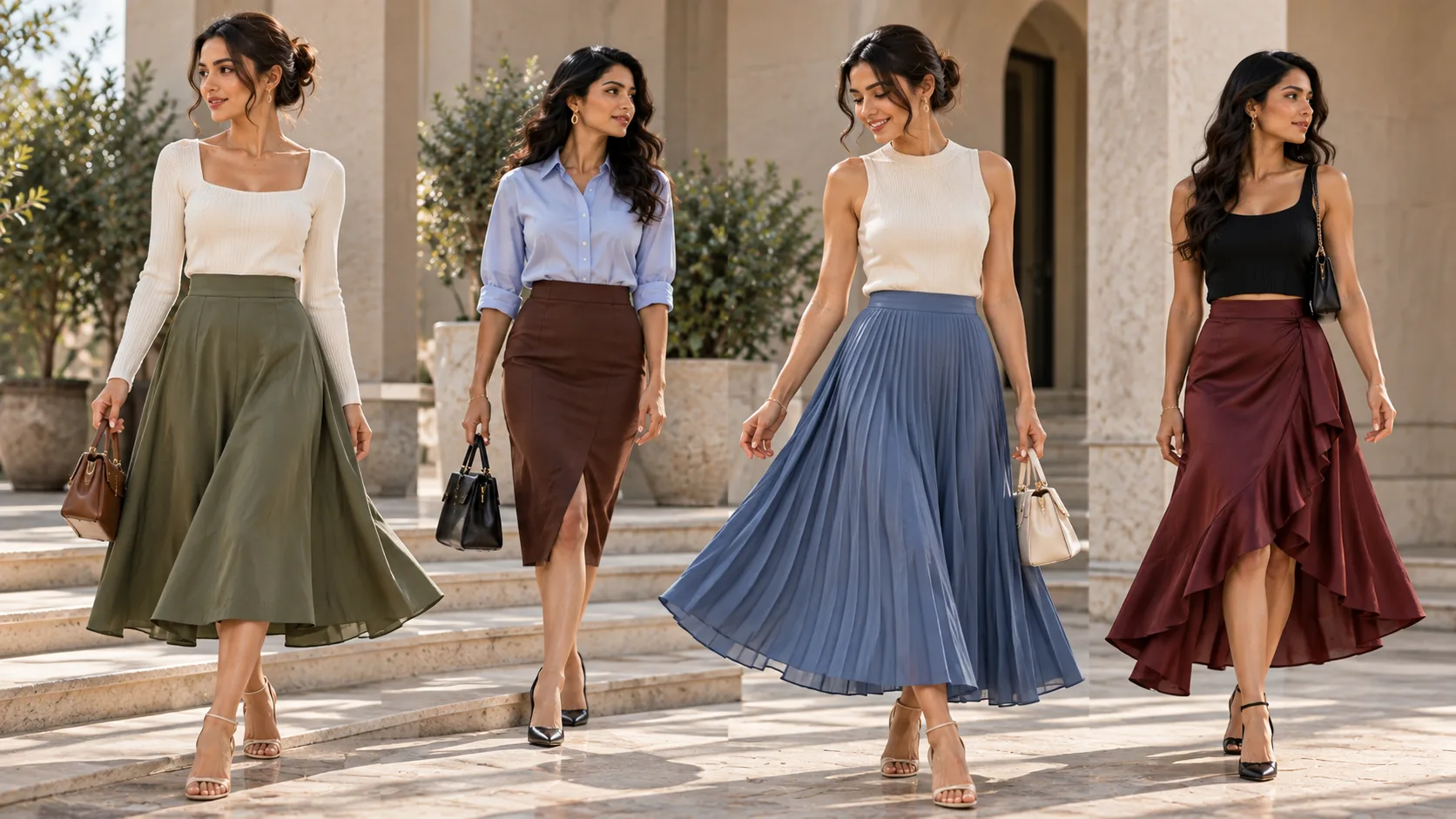
A pleated midi skirt, an A-line denim mini, and a bias-cut satin maxi can all sound like completely different categories — but each name is actually telling you something different about the skirt.
One describes construction.
One describes shape and fabric.
Another combines the way the fabric is cut with the length of the hem.
That is why skirt terminology can become confusing surprisingly quickly.
Not every skirt name answers the same question.
Some tell you how the skirt is shaped around the body. Others tell you where it ends, what it is made from, or how the volume has been constructed.
And those differences matter when you actually wear the clothes.
A pencil skirt and a straight skirt may look similar on a hanger, but they create different lines through the hips and hem. A circle skirt and a pleated skirt can both have plenty of movement, yet that fullness comes from completely different construction. Even something as familiar as a denim skirt still needs another description before you really know what shape it has.
So this guide is not simply a list of skirt names to memorise.
We are looking at 15 types of skirts for women through four more useful questions:
Where does the shape come from?
How does the skirt fall from the waist or hips?
What creates its movement or volume?
And what makes it different from another skirt that initially looks similar?
1. A-Line Skirt
 Pin it
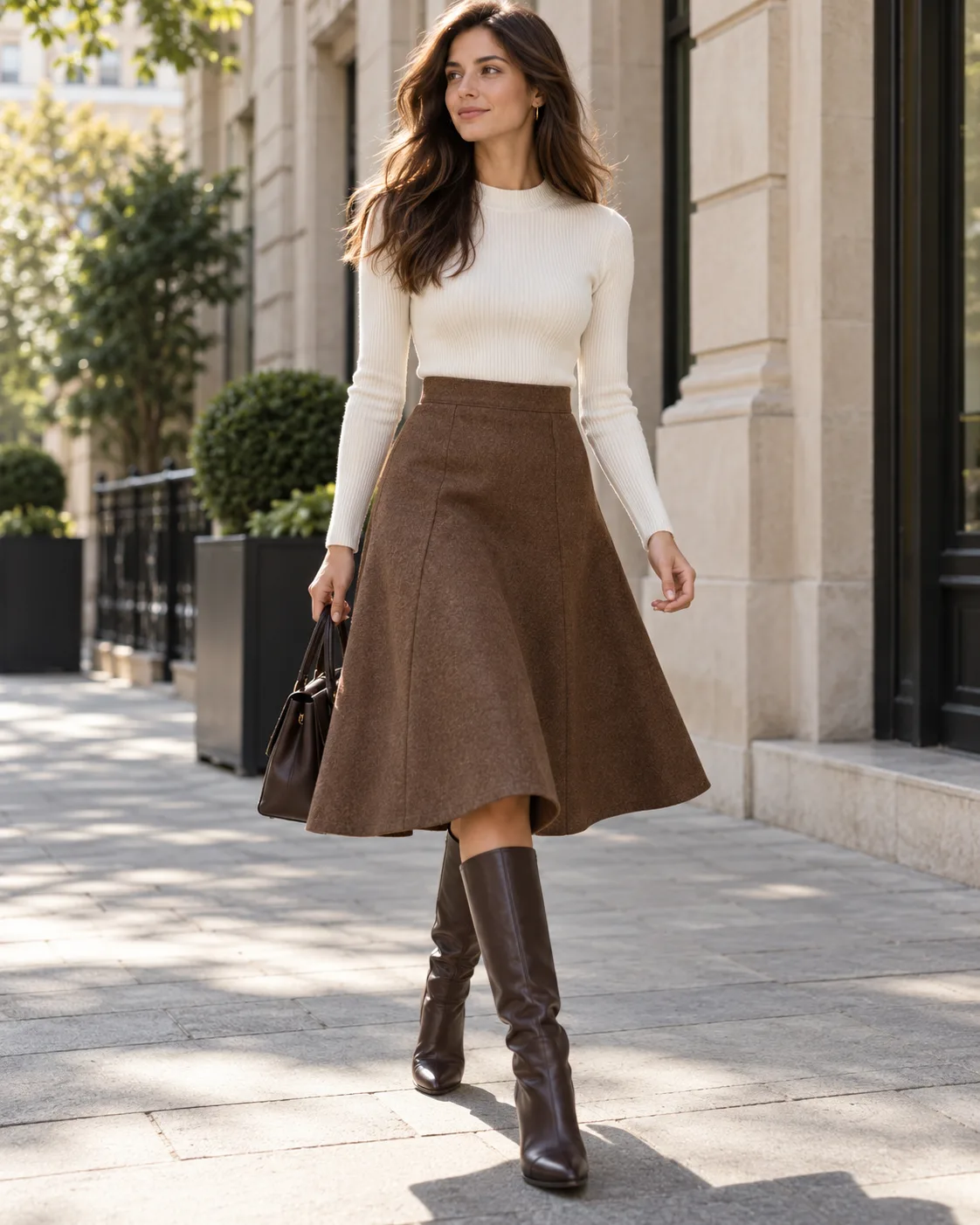
An A-line skirt is narrower at the waist or upper hip and gradually widens toward the hem.
The useful thing to notice is how steadily that width increases.
Unlike a circle skirt, which gets much of its movement from a very full cut, an A-line usually creates a cleaner, more controlled shape.
That makes it one of the easiest skirt silhouettes to move between different wardrobes.
You will see it in:
structured denim minis
cotton midi skirts
wool workwear skirts
lightweight summer styles
longer evening versions
Fabric changes the mood significantly.
A stiff denim A-line holds its shape and feels more graphic.
A softer viscose or crepe version moves more fluidly.
A leather or faux-leather version can feel sharper and more directional.
Length changes the proportion, but not the category itself.
An A-line can be mini, midi, or maxi.
That distinction matters because A-line describes shape, not hem length.
Styling also shifts depending on where the skirt ends. A mini A-line can work with loafers or boots, while a midi version often pairs well with sneakers, flats, or low heels.
If footwear is where the proportions start getting confusing, our 11 Types of Shoes for Women: A Complete Style Guide is a useful reference for seeing how different shoe shapes change the balance of an outfit.
The easiest way to recognise an A-line skirt is simple: the silhouette opens gradually as it moves downward, without relying on dramatic gathers, pleats, or a very full circular cut.
2. Pencil Skirt
 Pin it
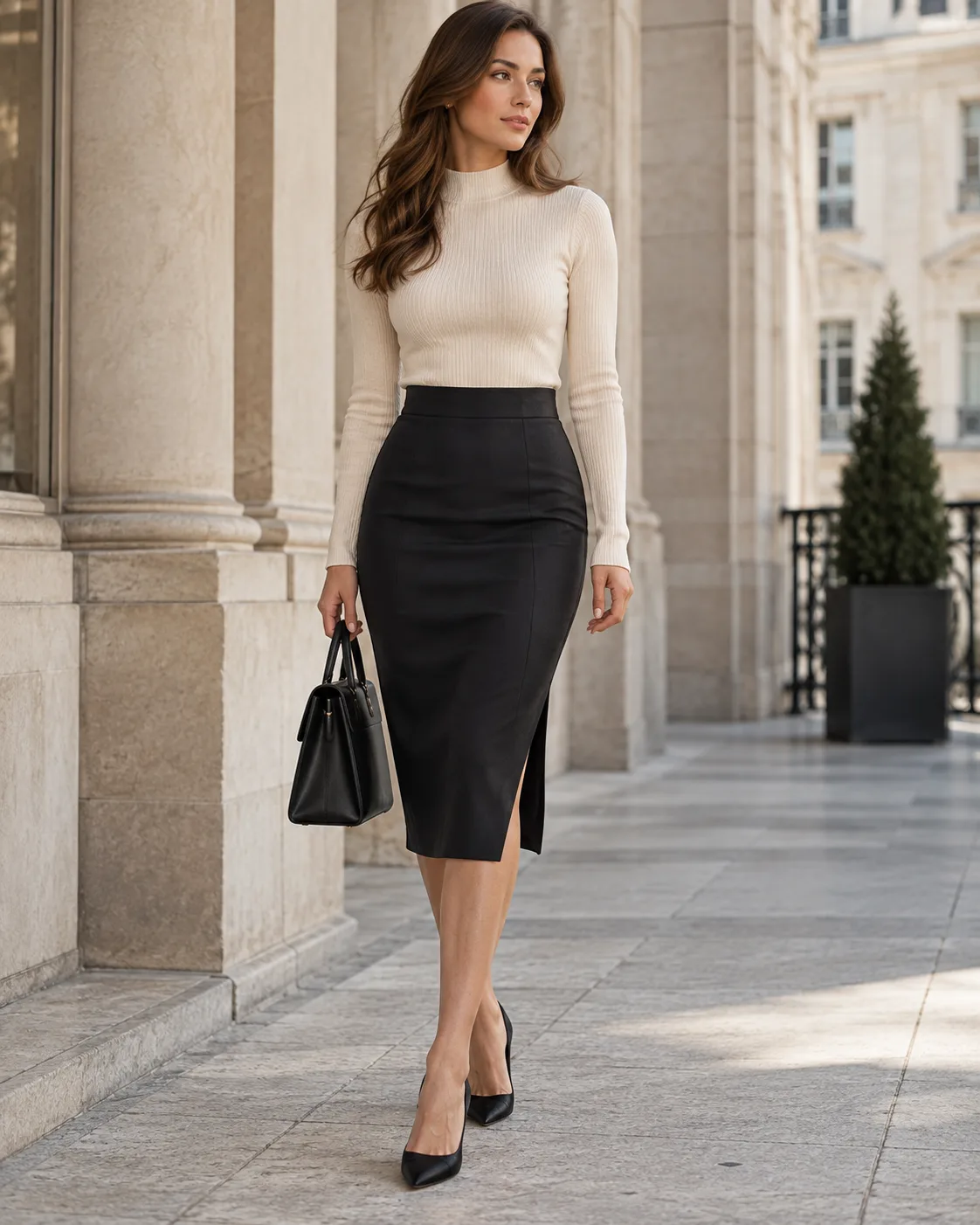
A pencil skirt creates a long, narrow line through the hips and usually tapers slightly toward the hem.
That taper is what gives it a more sculpted look than a straight skirt.
The silhouette is often associated with office dressing, but the category is much broader than that.
You will see pencil skirts in:
tailored suiting fabric
ponte or stretch crepe
denim
leather
satin evening versions
The construction matters because a pencil skirt needs enough control to keep the line clean while still allowing movement.
That is why many versions include:
a back slit
side slit
front vent
stretch in the fabric
Those details are functional, not decorative.
They make a narrow silhouette easier to walk and sit in.
I would also separate pencil from bodycon.
A pencil skirt is usually shaped through tailoring, seams, or a controlled cut.
A bodycon skirt depends more heavily on stretch and close fit.
That difference changes the overall feel.
A tailored pencil skirt can look sharp and architectural.
A stretch-heavy version may feel much more casual or evening-focused.
3. Straight Skirt
 Pin it
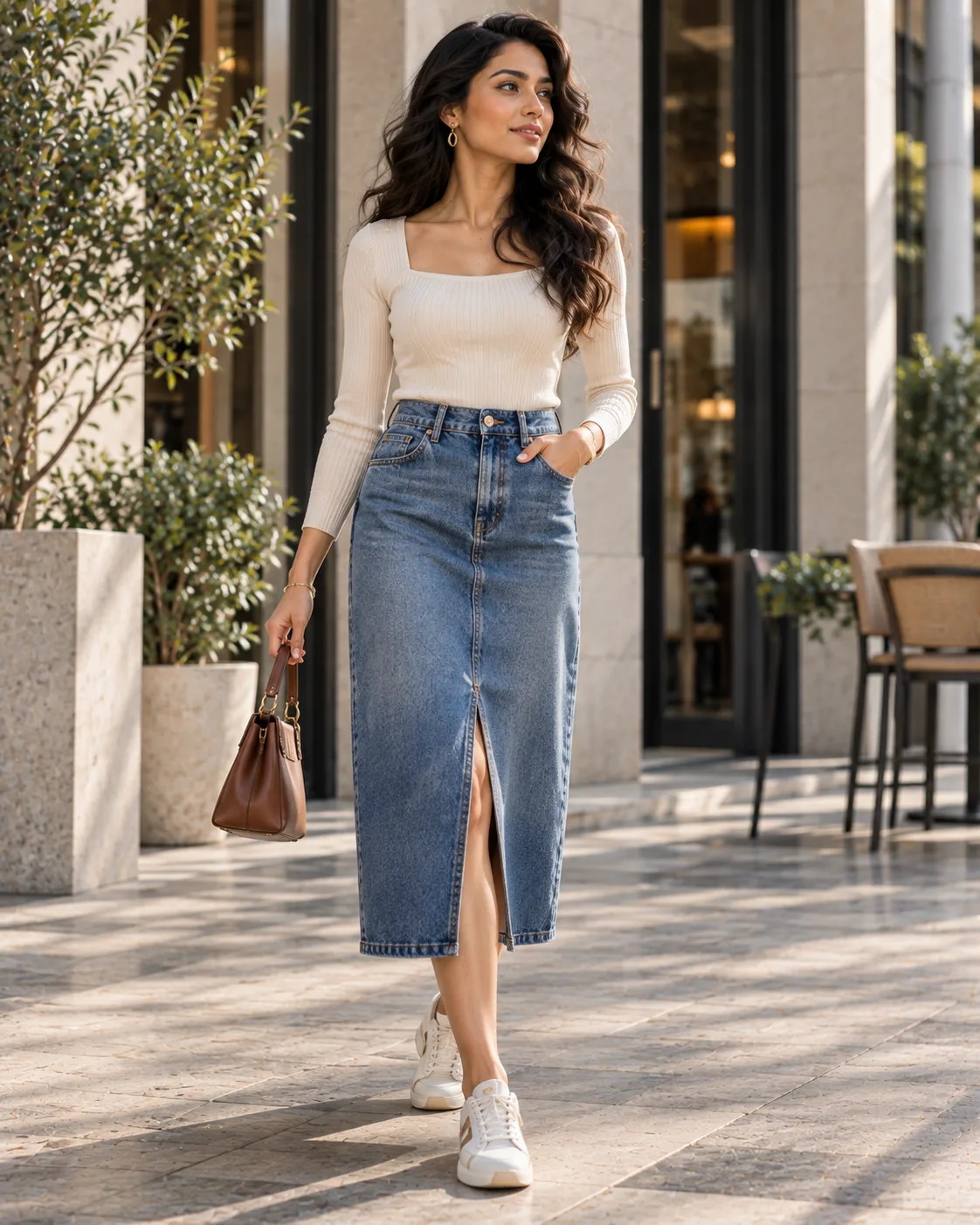
A straight skirt falls much more vertically from the hips than a pencil skirt.
Instead of narrowing noticeably toward the hem, the side seams stay relatively parallel.
That creates a cleaner, less sculpted line.
You will often see straight skirts in:
tailored midi styles
denim skirts
simple workwear
column-like evening skirts
everyday cotton or twill versions
The silhouette can still sit close through the waist and hips, but the lower half usually gives the legs more room than a true pencil shape.
That small difference changes how the skirt moves.
A pencil skirt often needs a slit or stretch because of the taper.
A straight skirt can feel easier simply because the hem is not closing in as much.
This is also why straight denim midi skirts have become such a useful everyday shape: they keep a long, clean line without feeling as formal as a classic pencil skirt.
The easiest comparison is:
Pencil = narrows toward the hem
Straight = falls more vertically
4. Pleated Skirt
 Pin it
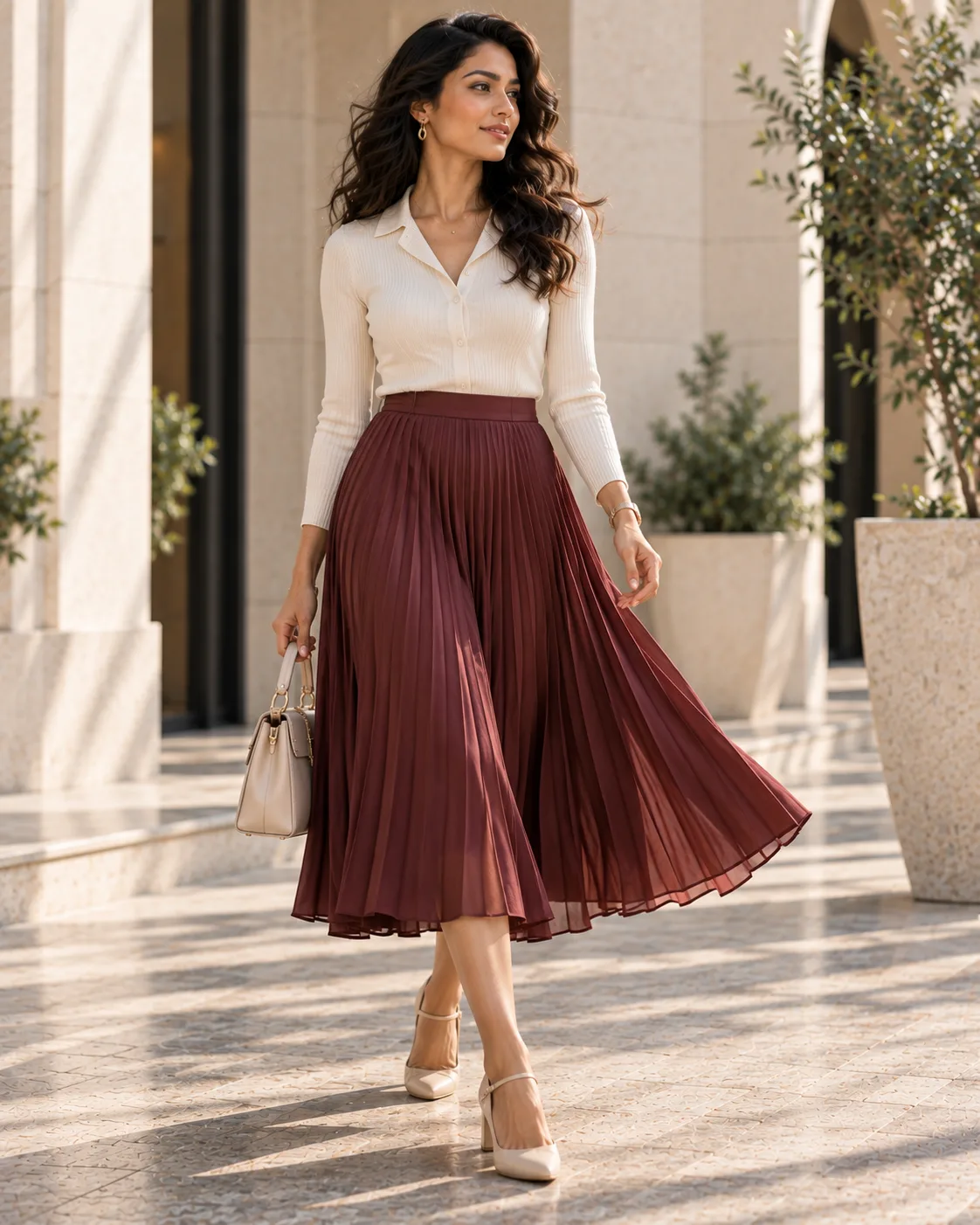
A pleated skirt gets its shape from fabric that has been deliberately folded into repeated sections.
The effect changes depending on the kind of pleat.
You might see:
knife pleats for a sharper, more uniform line
box pleats for more structured volume
accordion pleats for a narrower, more fluid rhythm
wider pleats that begin lower down the skirt rather than directly at the waistband
Where the pleats start matters just as much as the pleat itself.
If they open immediately from the waist, the skirt can create more volume through the hips.
If the upper section stays flatter before the pleats release, the silhouette feels cleaner and more controlled.
That is why two pleated midi skirts can behave very differently even when the length is identical.
Fabric also plays a major role in overall look.
A crisp wool or cotton pleat holds a sharper shape.
A lightweight polyester, chiffon, or satin pleat moves much more fluidly and can feel almost weightless when walking.
A pleated skirt can still be mini, midi, or maxi, and the overall shape can feel straight, flared, or somewhere between the two.
5. Wrap Skirt
 Pin it
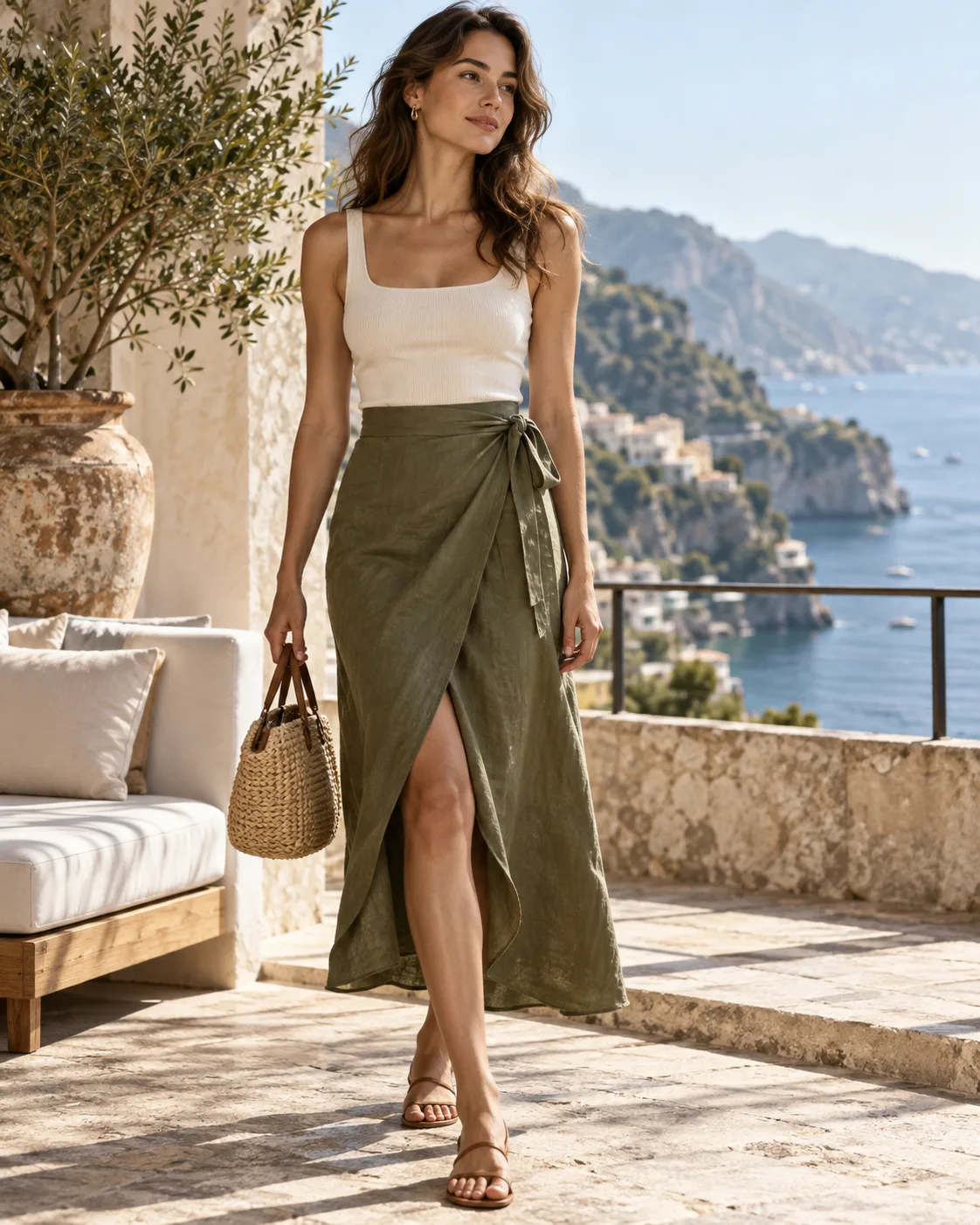
A wrap skirt is built from one panel of fabric crossing over another and fastening at the waist or side.
That overlap is what gives the skirt its character.
It creates:
a diagonal line across the front
adjustable fit at the waist
movement where the panels separate
a slightly different silhouette depending on how tightly it is wrapped
A true wrap skirt can usually be adjusted.
A faux-wrap skirt copies the crossover look but is sewn closed, so the fit is largely fixed.
That difference matters more than it seems.
A real wrap can feel easier across the waist and hips because you can control the overlap.
A faux-wrap version may feel more secure in motion, but you lose that adjustability.
Fabric changes the effect too.
A linen wrap skirt can feel clean and relaxed.
A satin or viscose version creates softer movement.
A structured cotton wrap can look sharper and more architectural.
The easiest way to understand a wrap skirt is: its shape is created partly by the crossover itself, not only by the cut of the fabric.
6. Circle Skirt
 Pin it
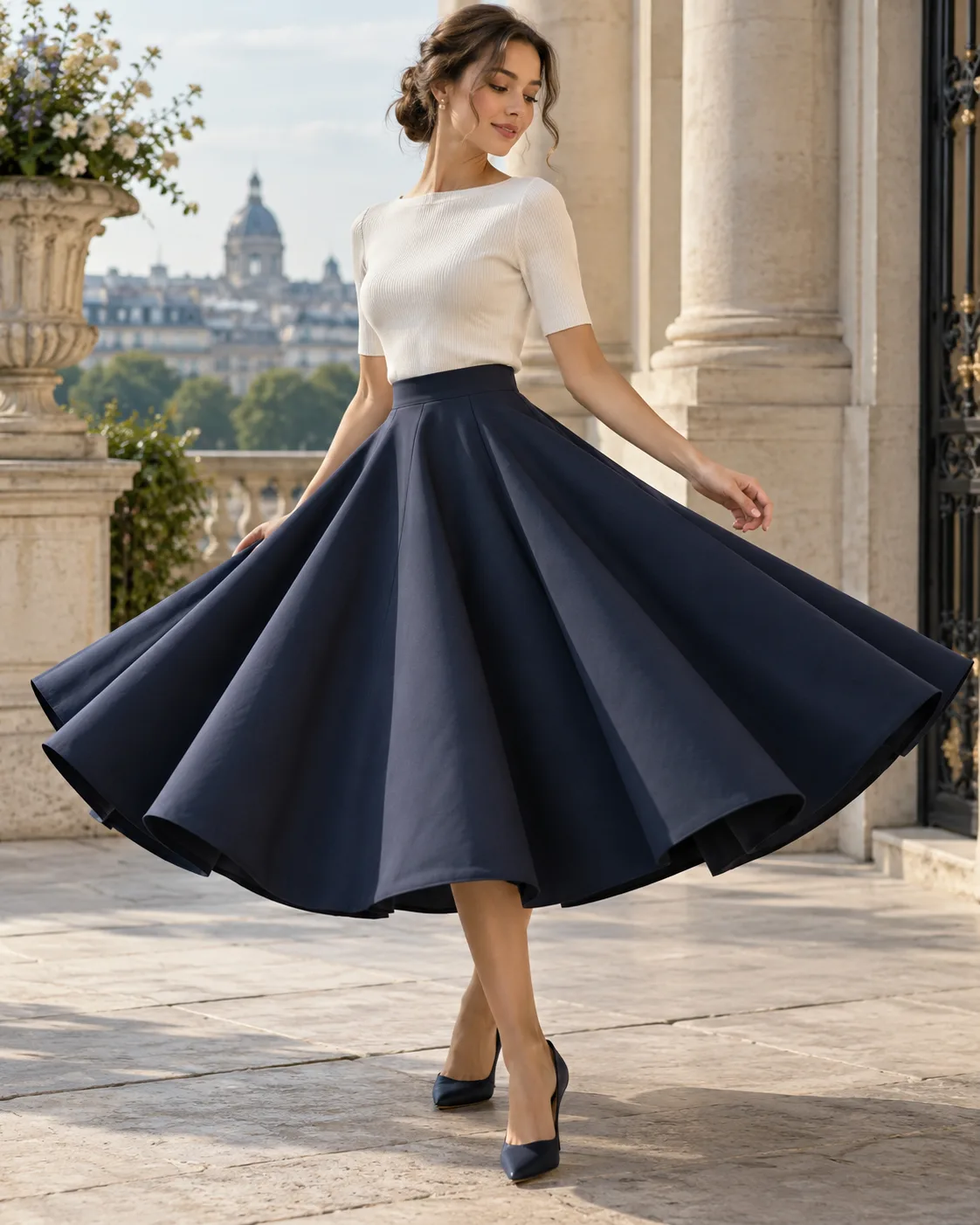
A circle skirt gets its volume from the way the fabric is cut, not from pleats, gathers, or added tiers.
The fabric is cut in a wide circular shape around the waist, which allows the hem to spread out dramatically while the waistband stays relatively clean.
That construction gives the skirt its most recognizable quality:
movement.
When you walk or turn, the fabric opens and swings much more freely than it does in a straight or pencil silhouette.
You will often see circle skirts in:
midi styles
retro-inspired outfits
occasion dressing
structured cotton skirts
softer flowing versions
Fabric changes the effect significantly.
A crisp cotton or taffeta circle skirt holds a more sculptural shape.
A softer crepe or viscose version falls closer to the body and moves more fluidly.
A circle skirt describes the cut and fullness.
A skater skirt usually describes a shorter, fitted-waist, flared style that may use a circle or partial-circle construction.
7. Tiered Skirt
 Pin it
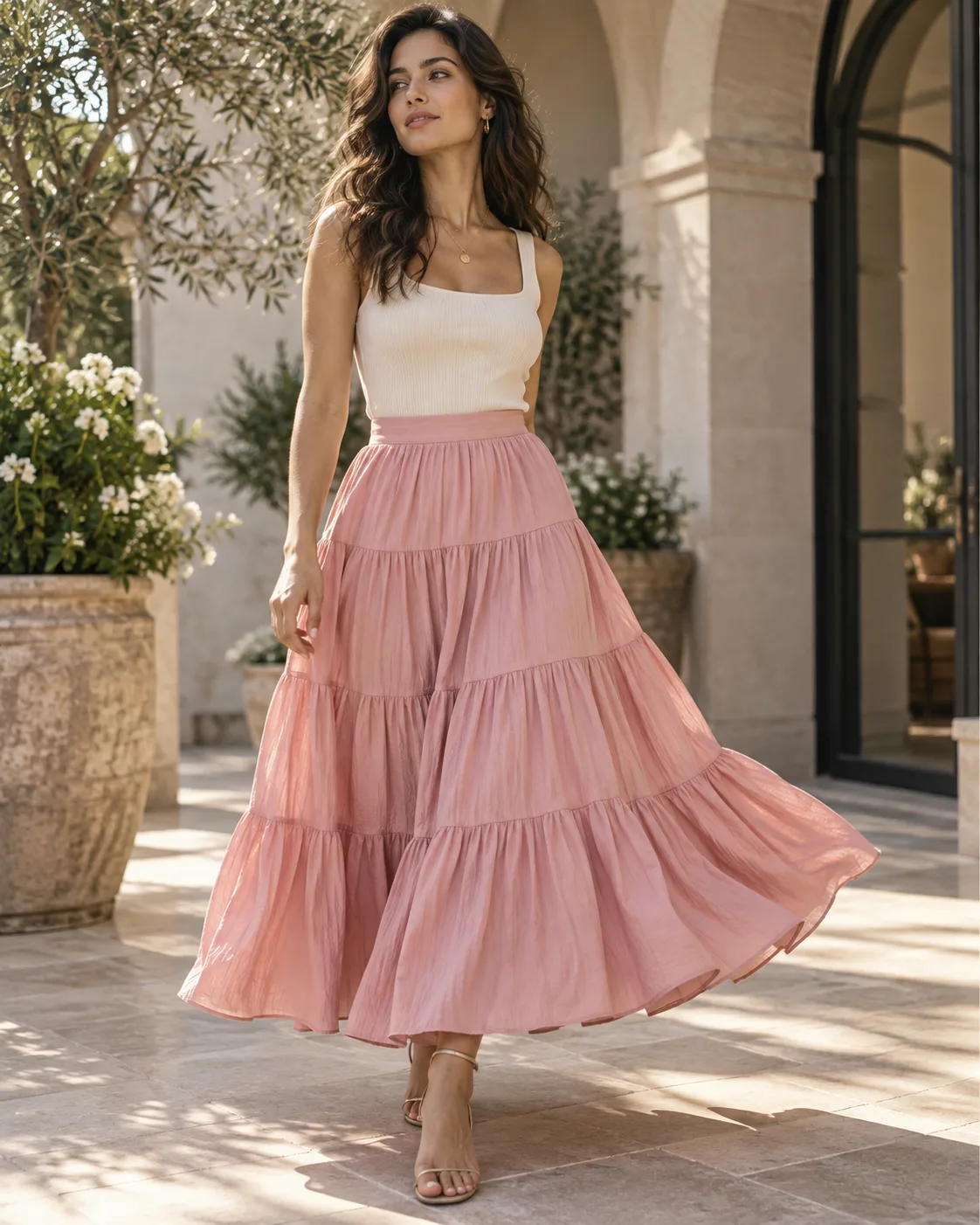
A tiered skirt creates volume in stages.
Instead of one continuous piece of fabric widening toward the hem, the skirt is built from horizontal sections joined together, often with gathering where one tier meets the next.
That construction changes the way the skirt moves.
The upper section can stay relatively controlled, while each lower tier adds more fullness.
You will often see tiered skirts in:
cotton summer styles
relaxed maxi skirts
lightweight vacation dressing
romantic midi skirts
printed everyday versions
But tiered does not automatically mean bohemian.
A skirt in crisp poplin can feel clean and modern.
A soft georgette or viscose version feels much more fluid.
A monochrome black tiered skirt can even look quite minimal if the rest of the outfit is restrained.
The number and placement of tiers matter too.
Fewer, wider sections create a calmer silhouette.
Several narrow gathered tiers produce more movement and visual texture.
That is what separates it from a circle skirt.
A circle skirt gets fullness from the cut itself.
A tiered skirt builds that fullness section by section.
8. Bias-Cut Skirt
 Pin it
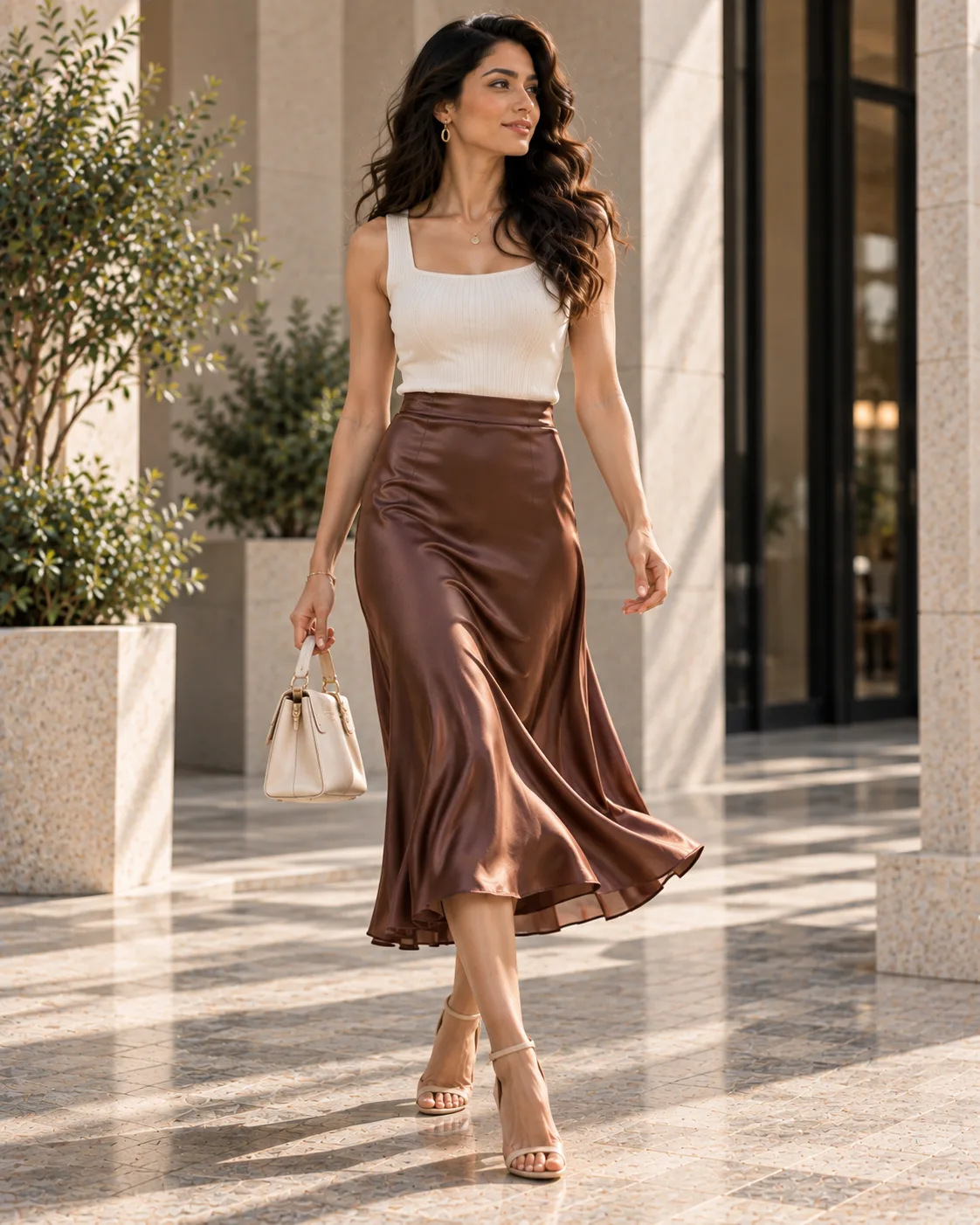
A bias-cut skirt is cut diagonally across the fabric grain rather than straight along it.
That construction gives the fabric more natural stretch and allows it to skim and drape around the body in a way a straight-grain skirt usually does not.
You will often see bias-cut skirts in:
satin midi skirts
fluid evening styles
minimal slip-inspired skirts
soft crepe or viscose versions
The silhouette usually looks simple, but the movement is doing most of the work.
A bias-cut skirt can sit relatively close through the hips without relying on heavy stretch, then fall more freely toward the hem.
That is what gives many satin midi skirts their fluid, almost liquid-looking drape.
Fabric choice matters enormously.
Satin emphasizes shine and movement.
Crepe creates a quieter surface.
Viscose can make the same construction feel much more casual.
Bias-cut is also easy to confuse with slip skirt.
The difference is useful:
Bias-cut describes how the fabric is cut.
Slip skirt describes the overall minimal, fluid style.
Many slip skirts happen to be bias-cut, but the two terms are not interchangeable.
That is why a label such as “bias-cut satin midi skirt” actually tells you three different things at once:
how the fabric was cut, what it is made from, and where the hem falls.
Once you understand that, bias-cut stops being just another skirt name and becomes a clue to how the fabric is likely to move when you wear it.
9. Denim Skirt
 Pin it
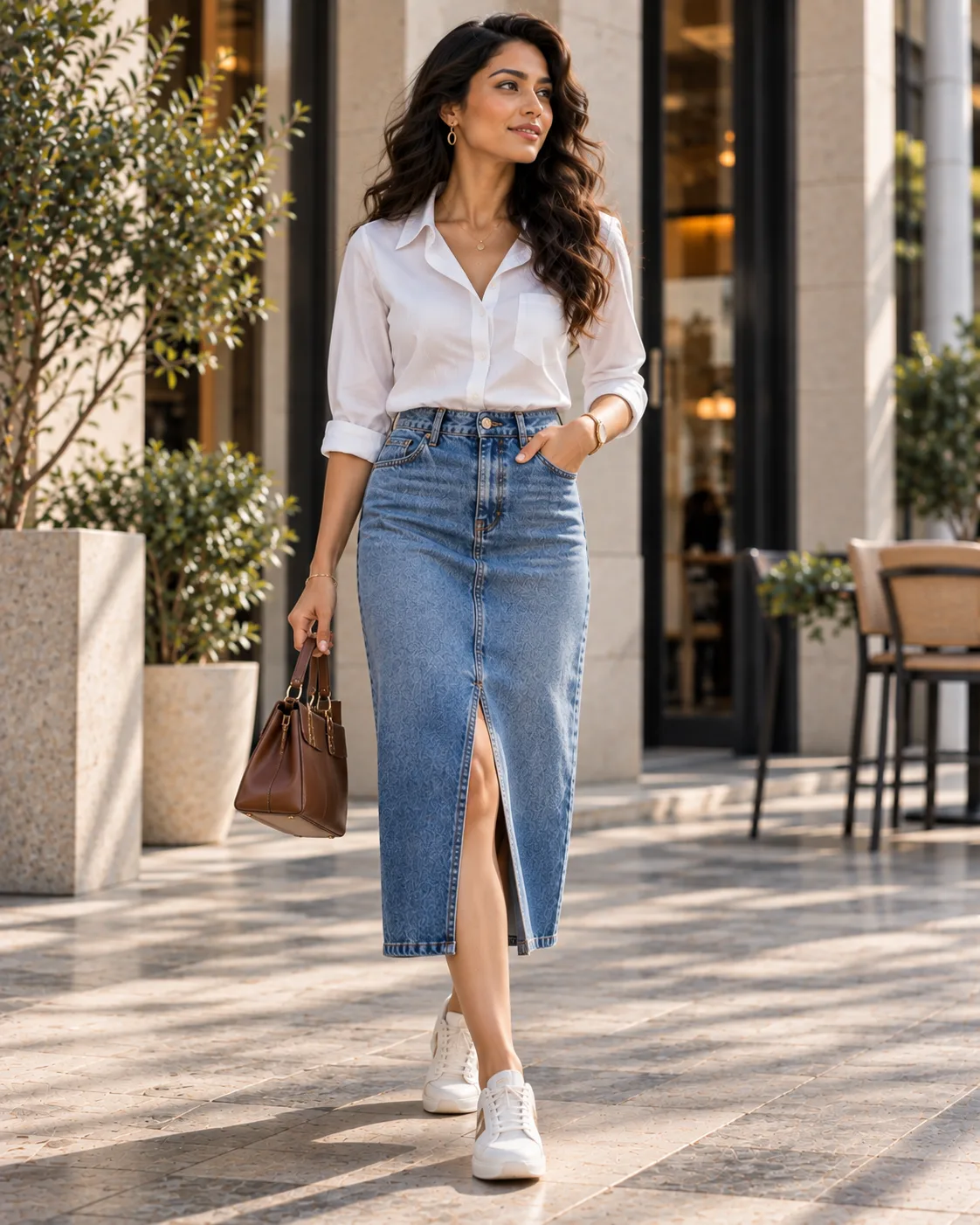
A denim skirt is defined first by what it is made from, not by one specific shape.
That is why the category is much broader than it sounds.
A denim skirt can be:
an A-line mini
a straight midi
a pencil silhouette
a front-slit maxi
a button-front style
a raw-hem casual skirt
The fabric gives all of them a shared character, but the silhouette still changes how the skirt behaves.
A rigid denim mini holds its shape and feels much more graphic.
A softer denim midi can fall closer to the body and move more easily.
A straight front-slit version creates a long vertical line, while an A-line version opens more noticeably from the hips.
Wash matters too.
Dark indigo tends to look cleaner and sharper.
Mid-wash denim feels more casual.
Faded or distressed denim pushes the skirt further into relaxed everyday styling.
Because denim has visual weight, proportions around it matter. A fitted tee, fine knit, crisp shirt, or cropped jacket can balance a heavier midi without making the outfit feel bulky.
The important thing to remember is:
“Denim” tells you the material. You still need another word to understand the shape.
So denim midi skirt is not a complete description.
Straight denim midi or A-line denim mini tells you much more about what the skirt will actually look like when worn.
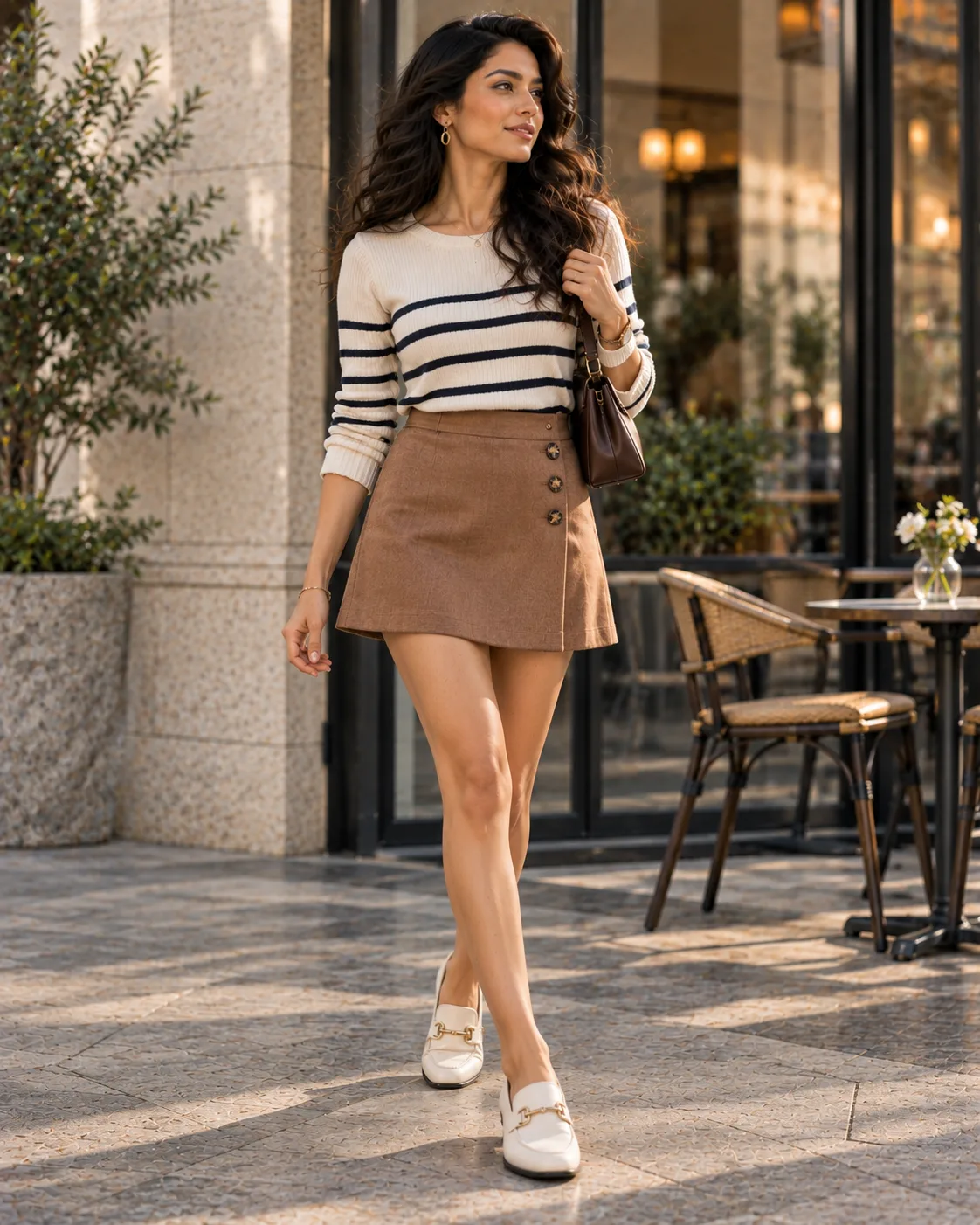
10. Mini Skirt
 Pin it
A mini skirt is defined by its short hemline, usually ending above the knee.
But mini describes length, not shape.
It can still be:
A-line
pleated
pencil
wrap
denim
skater
That is why two mini skirts can look completely different even when the hem falls at the same place.
A structured A-line mini feels sharp, a pleated version adds movement, and a denim mini reads more casual.
The key takeaway is: Mini tells you where the skirt ends. The silhouette tells you what kind of skirt it actually is.
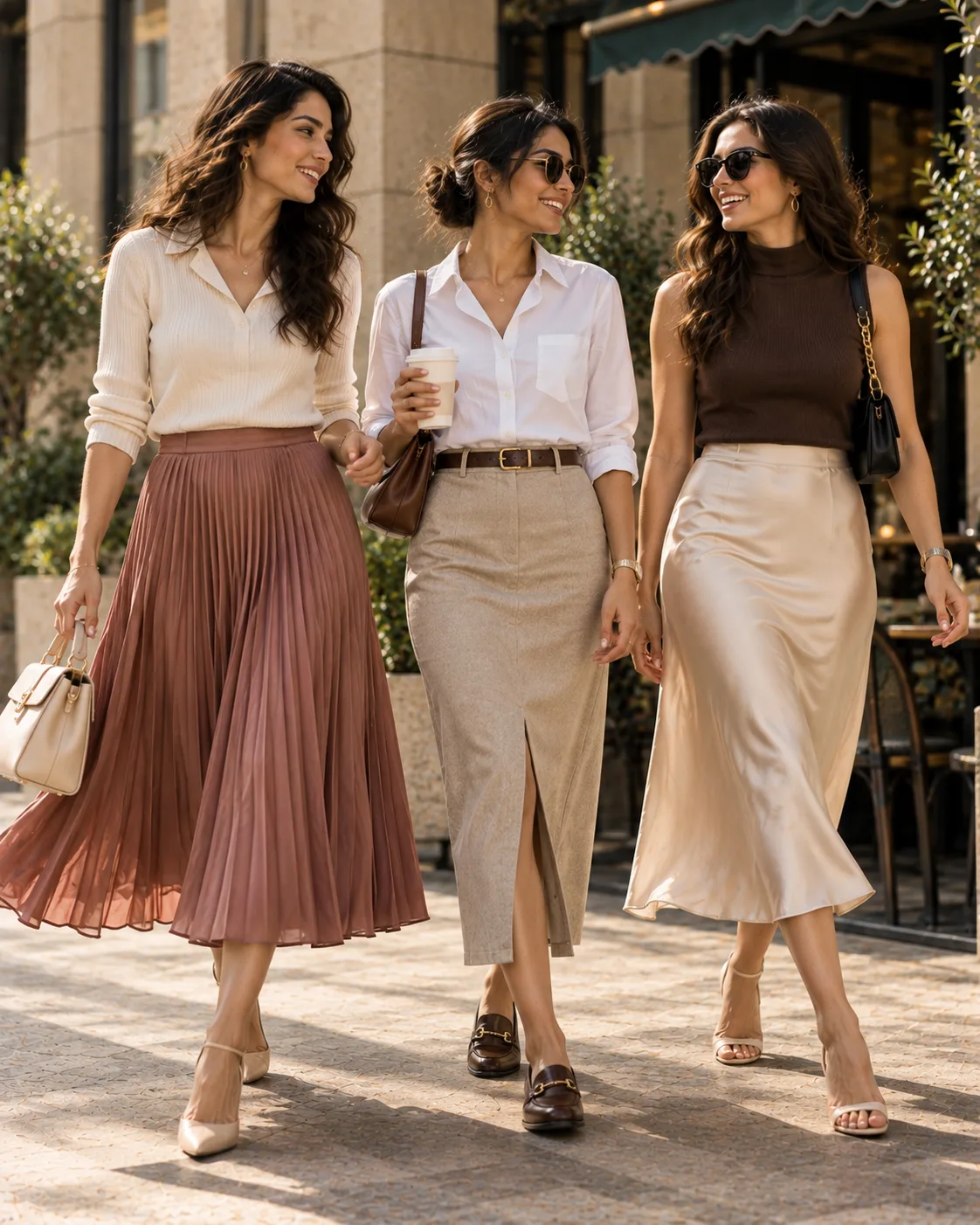
11. Midi Skirt
 Pin it
A midi skirt usually ends somewhere between the knee and ankle.
Like mini, midi describes length, not silhouette.
A midi can be:
pleated
straight
bias-cut
A-line
pencil
That is why a satin bias midi and a structured denim midi can feel completely different despite sharing the same hem range.
The proportion also changes with footwear, so flats, loafers, boots, and heels can all shift how the length reads.
Midi tells you where the skirt ends. Shape and fabric tell you the rest.
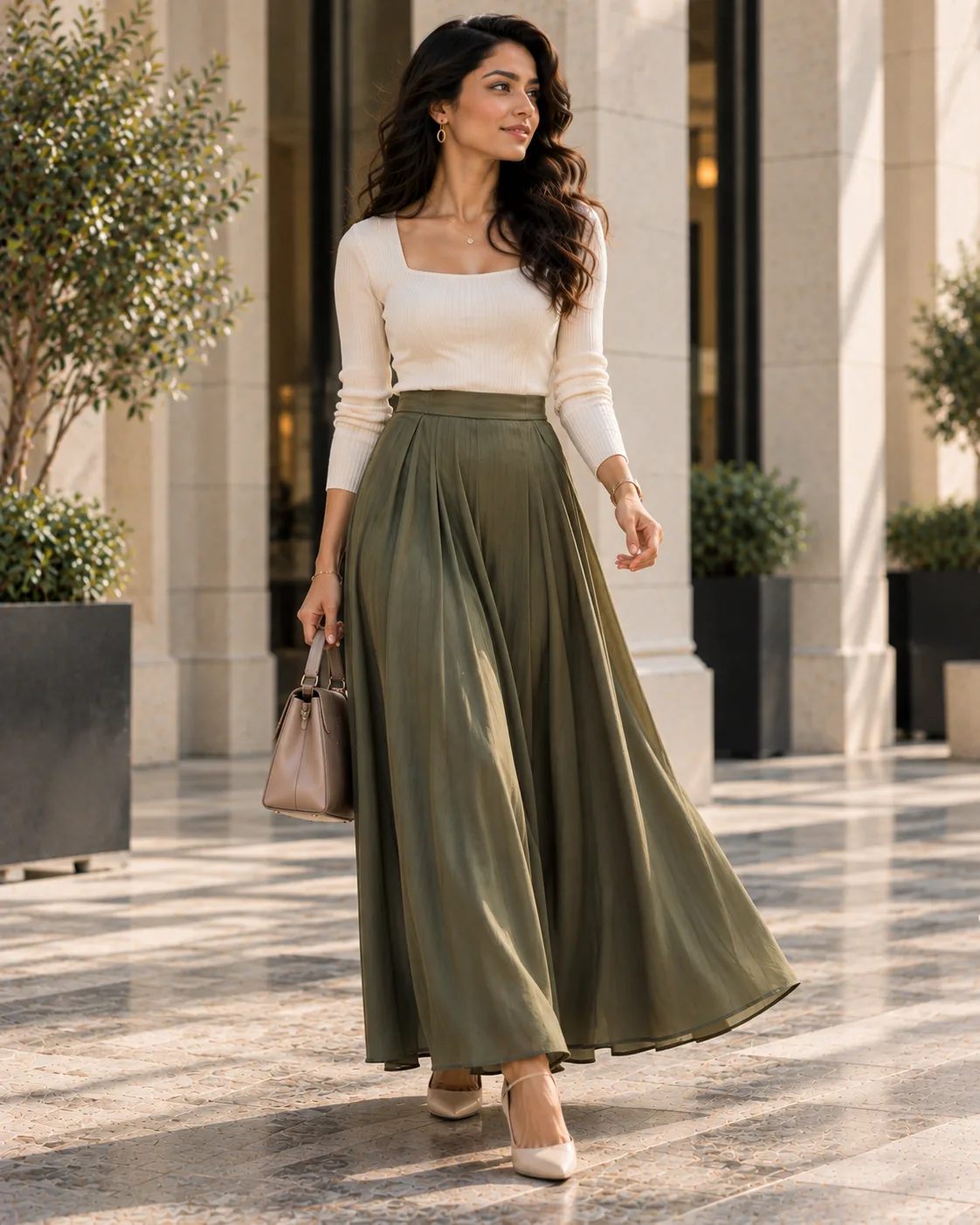
12. Maxi Skirt
 Pin it
A maxi skirt reaches the ankle or close to the floor.
But like mini and midi, maxi describes length, not shape.
It can be:
straight
tiered
pleated
bias-cut
A-line
A tiered cotton maxi feels relaxed, while a sleek satin or straight maxi can look much more polished.
The key point is simple:
Maxi tells you the length. The fabric and silhouette decide the mood.
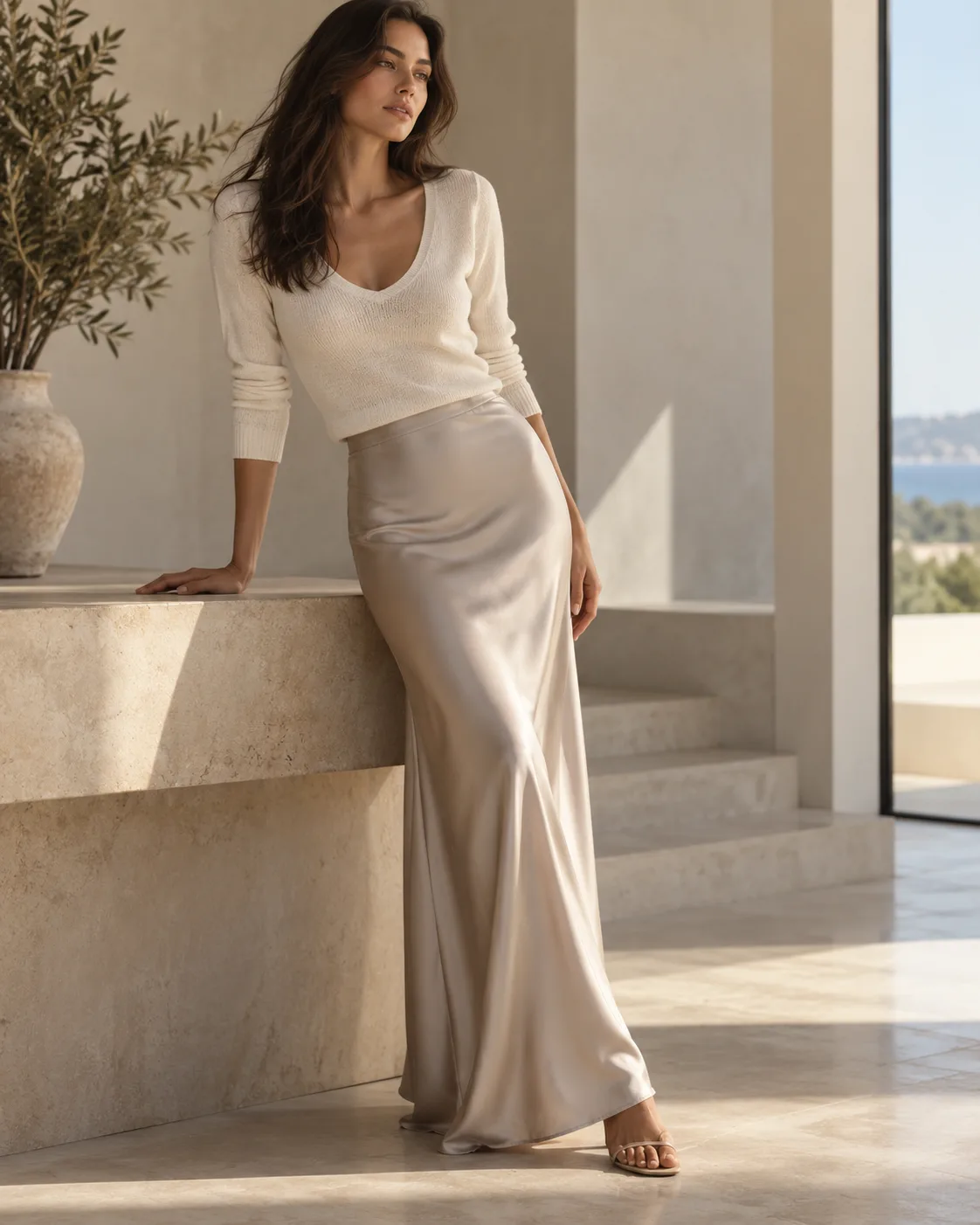
13. Slip Skirt
 Pin it
A slip skirt is defined by its clean, fluid silhouette and minimal construction.
It is often made from:
satin
crepe
viscose
silk-like fabrics
Many slip skirts are bias-cut, but the terms are not identical.
Bias-cut describes how the fabric is cut. Slip describes the overall style.
A slip skirt usually skims rather than clings, making it easy to dress up with heels or down with knitwear, shirts, or sneakers.
The key idea: Slip skirts are about fluid simplicity, not one specific length or fabric.
14. Skater Skirt
 Pin it
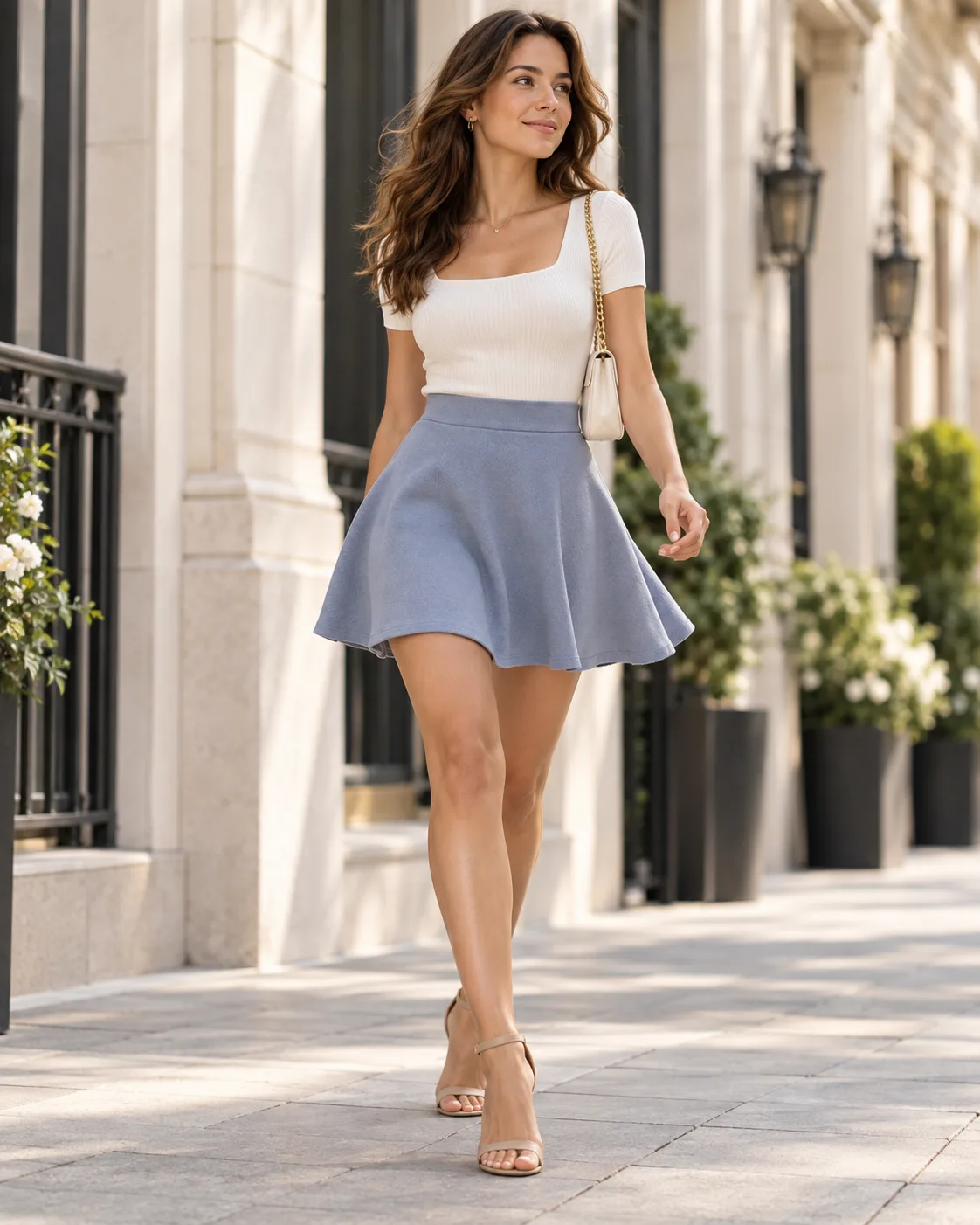
A skater skirt has a fitted waistband and a short, flared shape.
It usually creates more movement than a straight or pencil mini, which gives it a lighter, more playful feel.
Skater skirts are often mini length, but the important part is the fitted waist + flared lower half.
They are closely related to circle skirts, but skater describes the overall short flared style rather than the exact cutting method.
Skater = fitted waist, short hem, easy flare.
15. Asymmetric Skirt
 Pin it
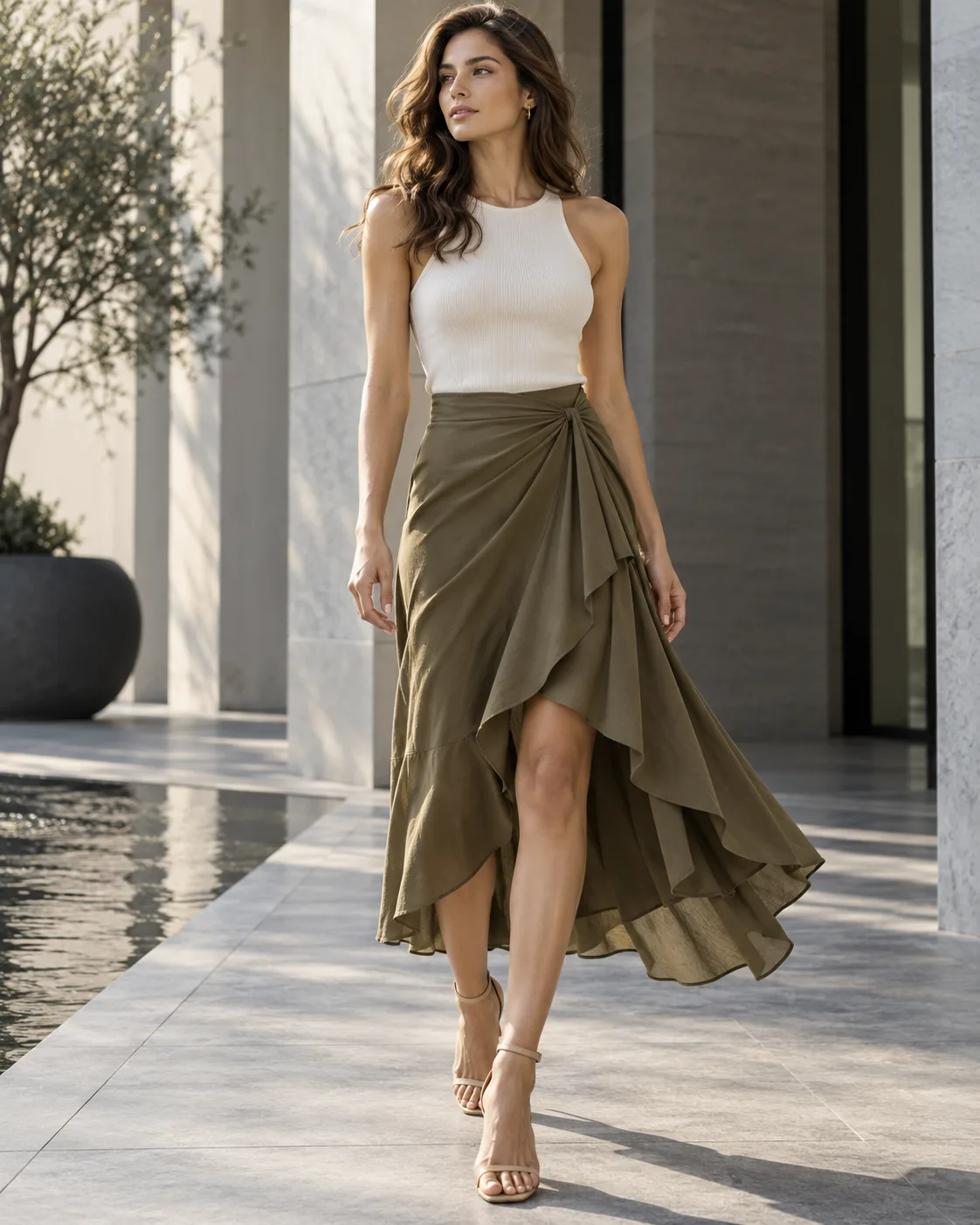
An asymmetric skirt uses an uneven hem or draped construction to create visual movement.
Common versions include:
high-low hems
diagonal fronts
uneven wrap panels
one-sided draping
The interest comes from the imbalance of the cut, so the skirt can feel directional even in a plain fabric.
Because the shape already makes a statement, simpler tops and accessories usually work best.
Asymmetric skirts create drama through cut, not necessarily through print or embellishment.
Shape, Length, Fabric and Construction Are Not the Same Thing
 Pin it
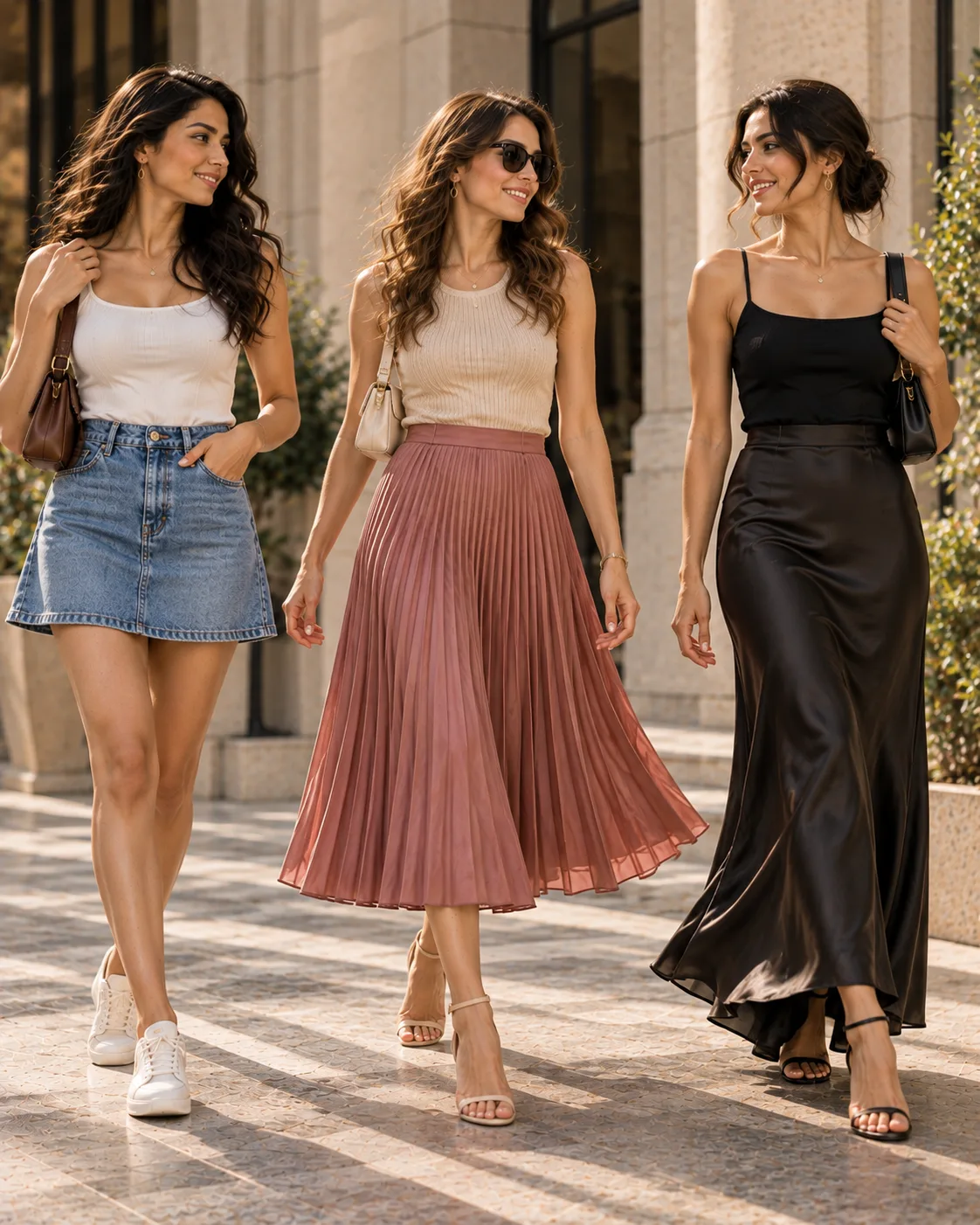
Skirt names often describe different parts of the garment.
Shape
A-line, pencil, straight, skater
Length
Mini, midi, maxi
Fabric
Denim, leather, satin
Construction
Pleated, wrap, bias-cut, tiered
That means one skirt can be described as:
an A-line denim mini
or
a pleated midi skirt
or
a bias-cut satin maxi
This is the easiest way to understand skirt terminology: shape tells you the silhouette, length tells you where it ends, fabric tells you what it is made from, and construction tells you how the skirt is built.
For the same idea applied to dresses, see 15 Types of Dresses Every Woman Should Know.
Skirts That Are Easy to Confuse
 Pin it
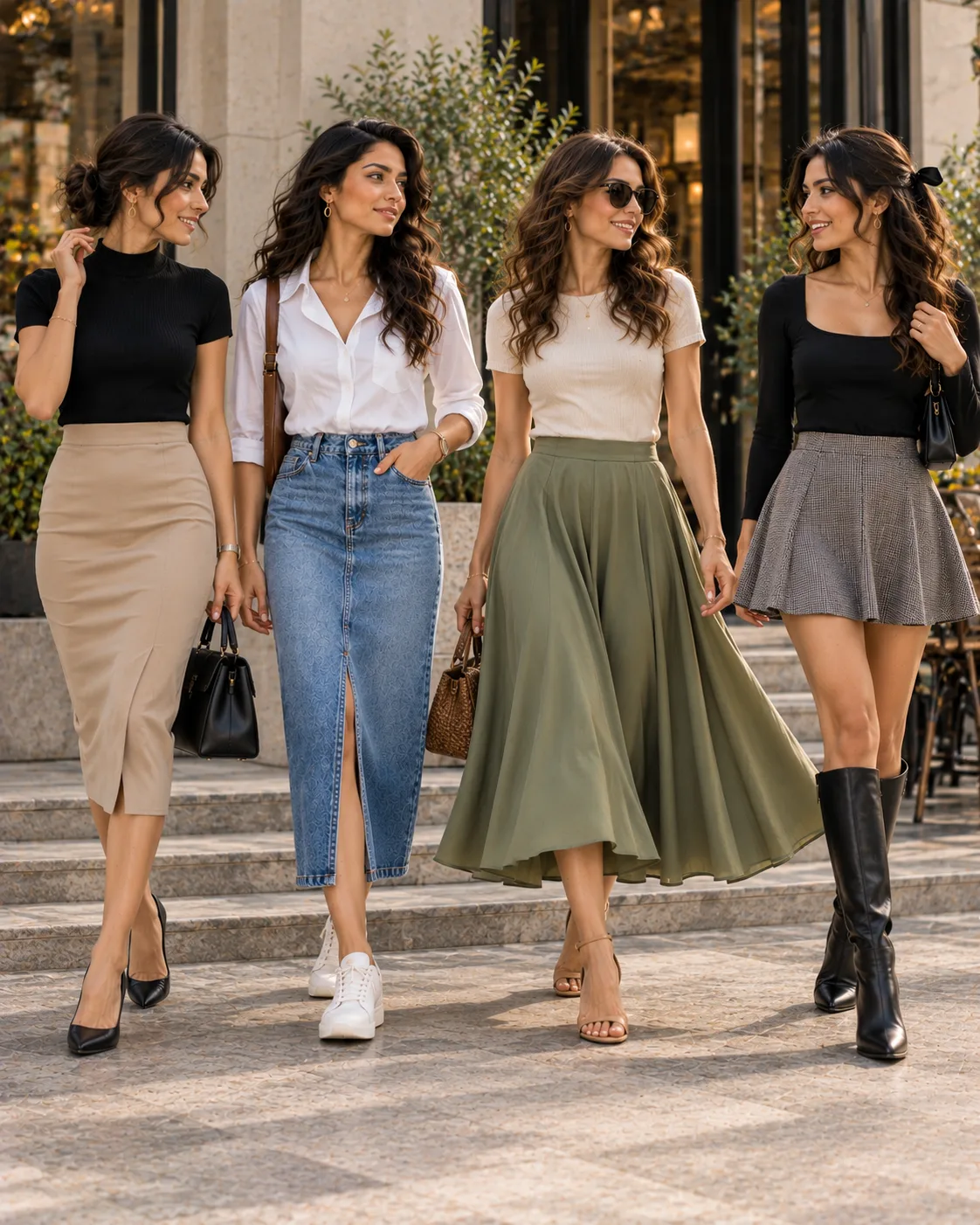
Pencil vs Straight
A pencil skirt tapers toward the hem.
A straight skirt falls more vertically from the hips.
Circle vs Skater
A circle skirt describes the cut and fullness.
A skater skirt usually describes a short, fitted-waist, flared style.
Bias-Cut vs Slip
Bias-cut describes how the fabric is cut.
Slip skirt describes the overall fluid, minimal style.
Midi vs Maxi
Both describe length, not silhouette.
A midi ends between the knee and ankle, while a maxi reaches the ankle or near the floor.
The easiest way to compare similar skirts is to ask: Is the difference coming from the shape, length, fabric, or construction?
Final Thoughts
Skirt names often describe different things: shape, length, fabric, or construction.
That is why one skirt can be an A-line denim mini, a pleated midi, or a bias-cut satin maxi.
Once you understand what is creating the shape and movement, choosing and styling skirts becomes much easier.
The goal is not to memorise every name — it is to recognise what the skirt is actually doing.