← All articles

Style Guide

Types of Dresses Every Woman Should Know

An editorial guide to types of Dresses Every Woman Should Know, with focused inspiration for understanding and wearing the fashion ideas introduced in this article.

Published 29/9/2026 · Updated 29/9/2026

By NomadSoul Editorial Team

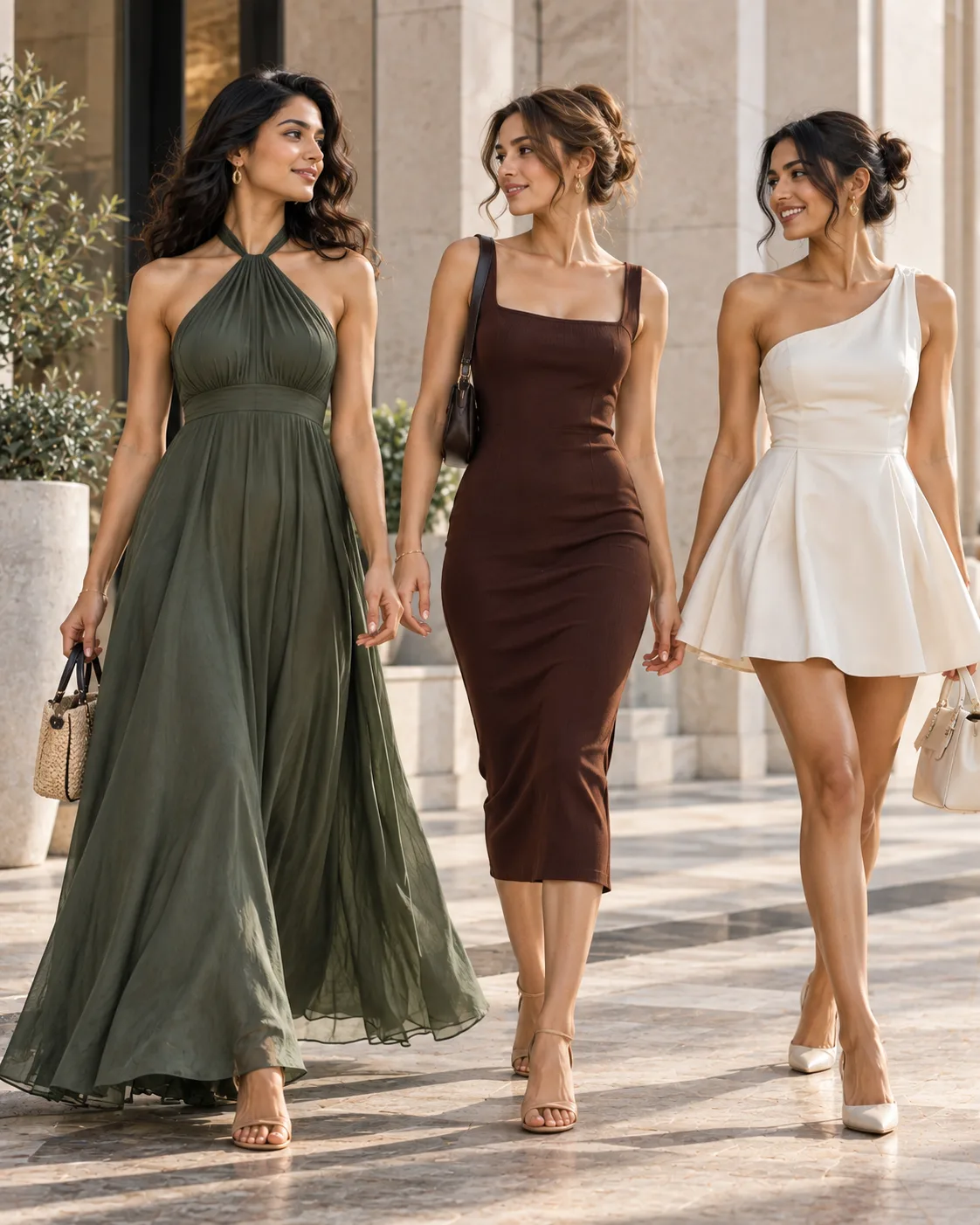
A dress can be called “midi,” “A-line,” “halter,” and “wrap” all at once — and that is exactly why dress terminology gets confusing so quickly.

Not every dress name describes the same thing.

  • Some describe shape.

  • Some describe length.

  • Some describe neckline or shoulder construction.

And some describe the way the garment is actually built.

That distinction matters because two dresses can look completely different while technically belonging to the same category.

A midi dress, for example, might be a fluid slip dress, a structured shirt dress, a fitted bodycon style, or a romantic tiered dress. The word midi only tells you where the hem falls.

An A-line dress tells you something different: how the silhouette widens from the upper body toward the hem.

Once you start separating those ideas, dress shopping becomes much easier.

You stop asking only: “What is this dress called?”

and start understanding: “What is this dress actually doing to the silhouette?”

That is what this guide is about.

We are going through 15 dress types worth knowing — from A-line, shift, sheath, and wrap dresses to slip, bodycon, midi, maxi, and asymmetric styles — but not as a dictionary of fashion terms.

For each one, we will look at what makes the silhouette distinctive, how it behaves when worn, and why you might choose it over another seemingly similar dress.

15 Bras you should know about

Because knowing the name is useful.

Knowing why the shape works differently is what actually helps you dress better.

1. A-Line Dress

A line dressPin it

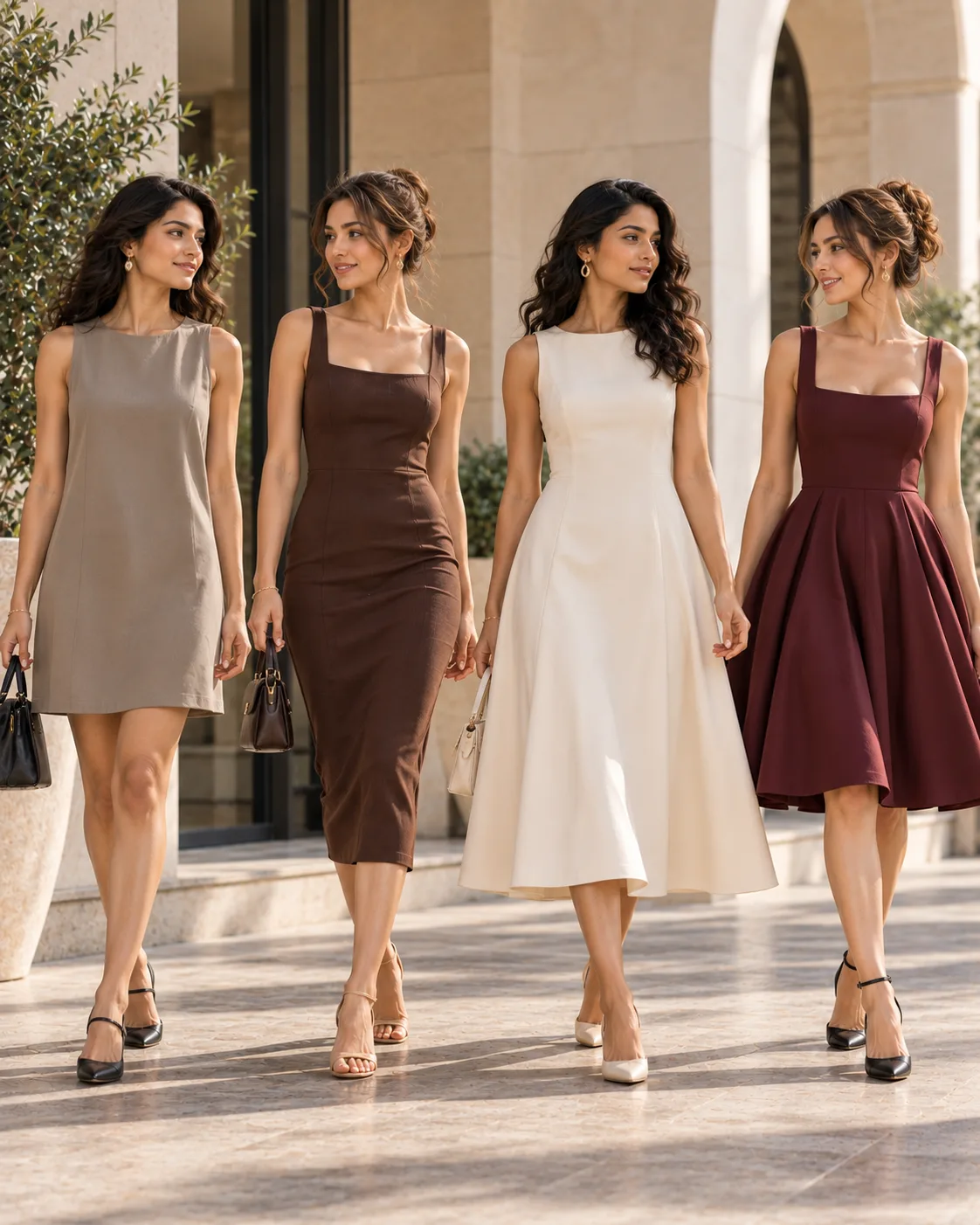
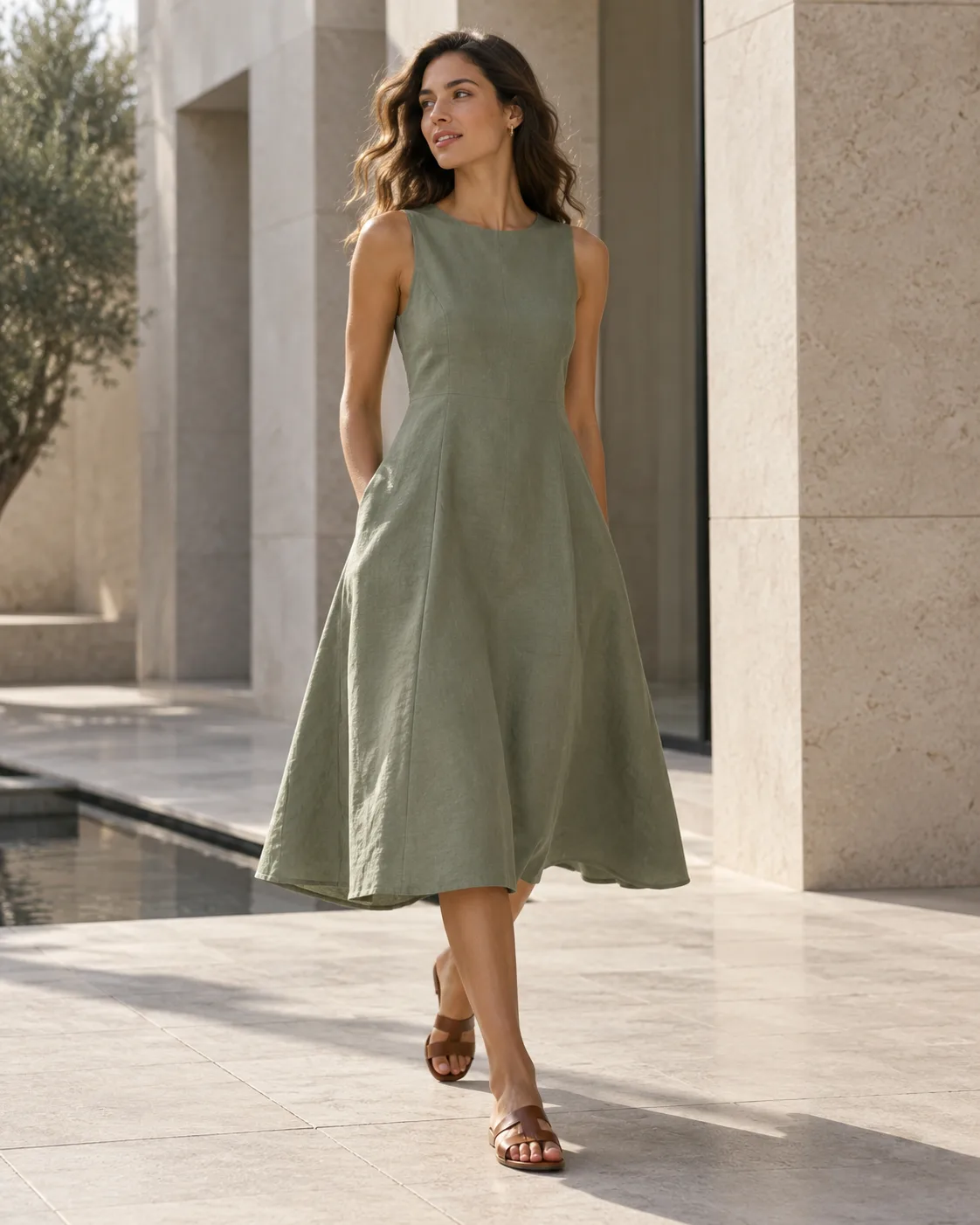
An A-line dress earns its name from the way the silhouette gradually widens toward the hem, creating a shape that loosely resembles the letter A.

But the useful thing to notice is not the name.

It is where the volume begins.

Some A-line dresses stay fairly close through the shoulders and bust before opening gently from the waist. Others start widening almost immediately below the bust or upper torso. That small construction difference can make two A-line dresses feel completely different when worn.

What they usually share is a sense of movement without excessive fullness.

Unlike a fit-and-flare dress, an A-line does not need a sharply defined waist or a dramatic skirt. The widening can be subtle, which is why the silhouette moves easily between:

  • everyday cotton dresses

  • polished workwear

  • denim dresses

  • summer linen styles

  • occasion dresses

Fabric changes the personality dramatically.

A crisp cotton A-line can feel architectural and clean.

A softer viscose or satin version creates more drape and movement.

A structured mini A-line can feel distinctly modern, while a longer version can become relaxed and understated.

That versatility is probably the real reason the shape keeps returning.

You can style a simple A-line with sneakers or flat sandals for everyday wear, then take a more tailored version in a completely different direction with loafers, boots, or heels.

If footwear is where an outfit usually gets confusing, our 11 Types of Shoes for Women: A Complete Style Guide is a useful companion for understanding how different shoe shapes change the proportions of a dress.

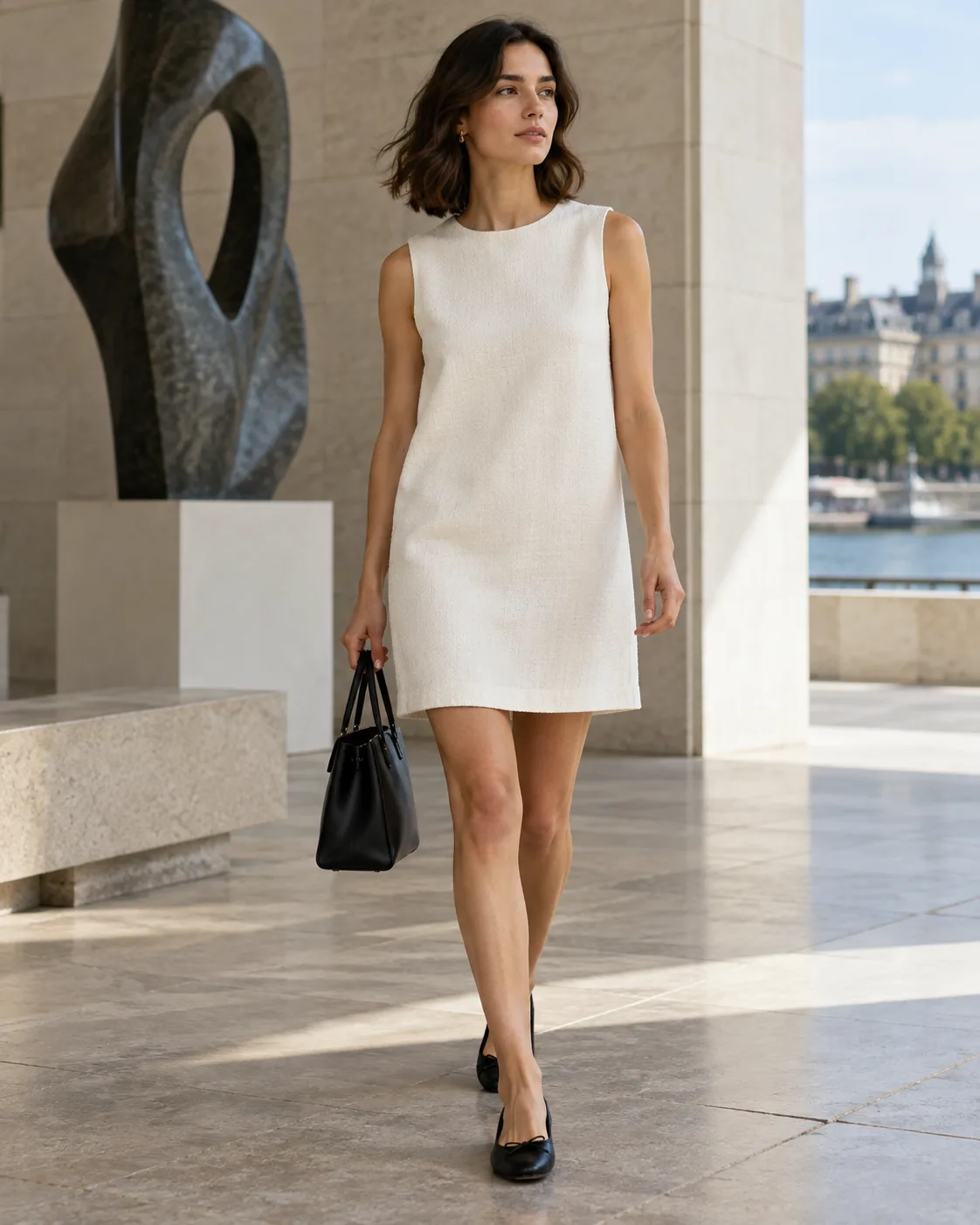
2. Shift Dress

shift dressPin it

A shift dress does something almost opposite to an A-line.

Instead of gradually opening away from the body, it tends to fall in a straighter line from the shoulders or upper torso.

That does not always mean oversized or shapeless.

A good shift dress can still be beautifully cut.

The difference is that it usually creates its own vertical silhouette rather than following the waist closely.

That is why shift dresses often feel clean, modern, and uncomplicated.

You will see the shape in:

  • sleeveless summer dresses

  • structured mini dresses

  • minimalist office styles

  • simple wool or tweed dresses

  • relaxed linen versions

Fabric matters a lot here.

A crisp cotton or structured weave gives a shift dress a sharper architectural line.

A softer fabric makes it feel more relaxed and fluid.

The silhouette is especially useful when you want the dress itself to create the shape rather than relying on a defined waist.

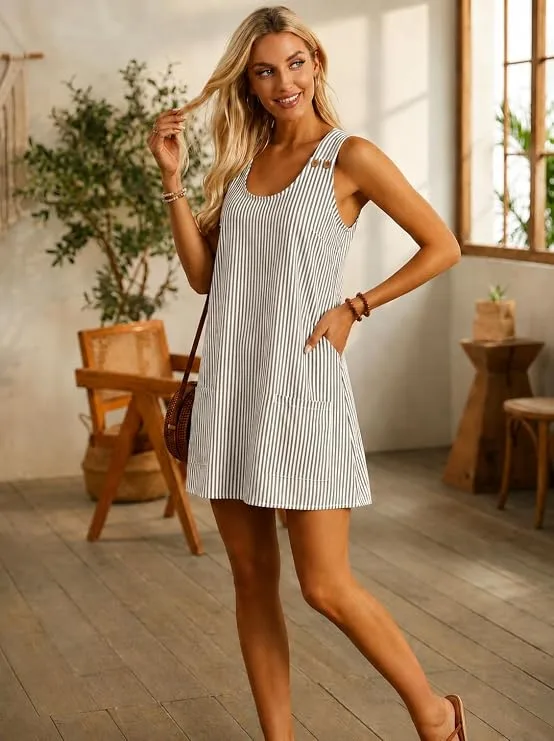
Cotton Stripe shift Dress Western Stylish One Piece For Woman

Cotton Stripe shift Dress Western Stylish One Piece For Woman

INR 699INR 199965% off

That also changes how you style it.

A straight mini shift with loafers can feel polished and slightly retro.

A linen shift with flat sandals feels much more relaxed.

A structured black shift with simple heels can work as clean eveningwear without needing much embellishment.

The easiest way to understand the silhouette is to compare it with the A-line.

An A-line gradually widens. A shift generally stays straighter.

That difference may sound small on paper, but it completely changes the way the dress moves and the overall mood it creates.

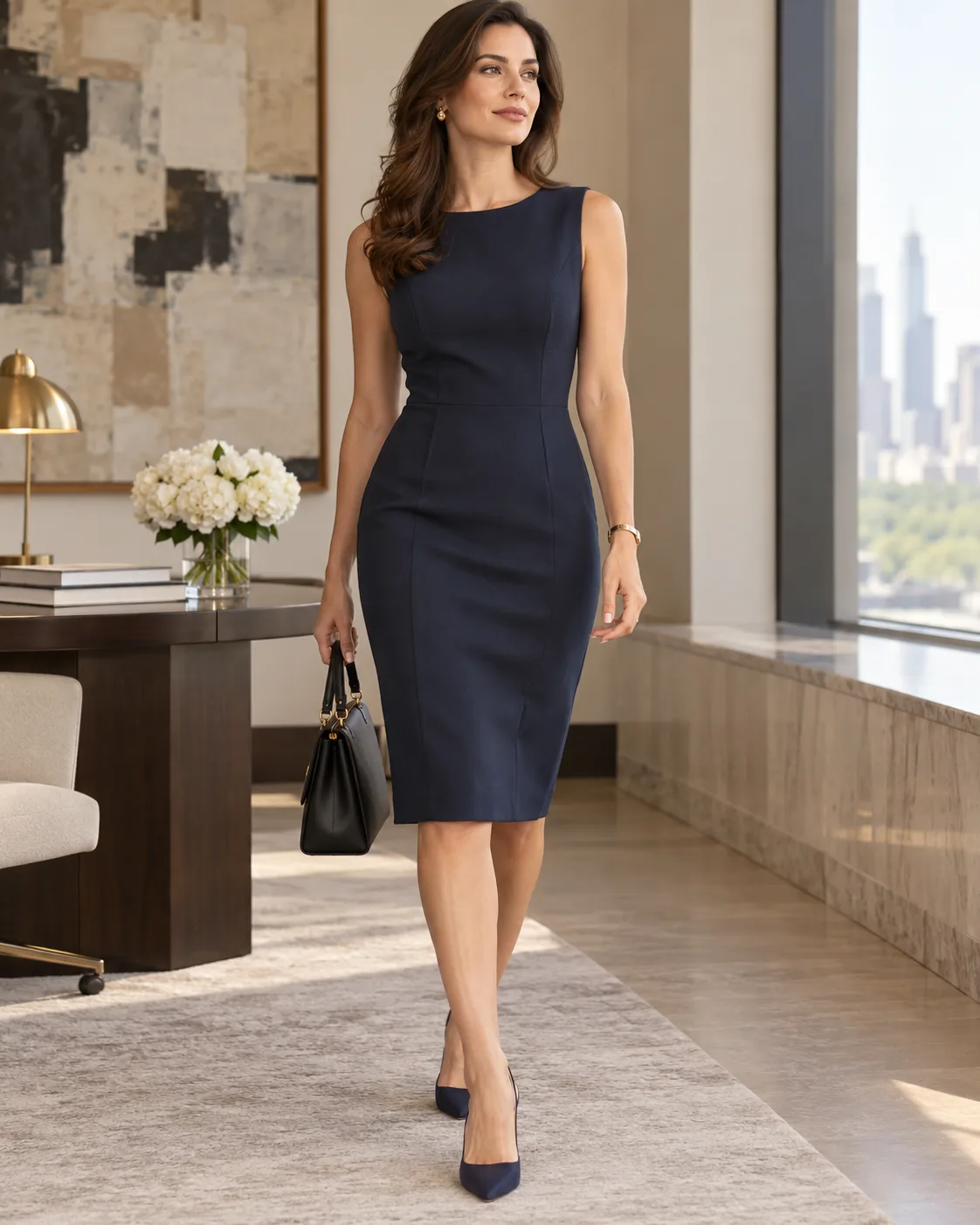
3. Sheath Dress

adult woman wearing a polished sheath dressPin it

A sheath dress sits closer to the body than a shift dress, but it is not automatically bodycon.

The silhouette is usually shaped through the bust, waist, and hips with:

  • darts

  • princess seams

  • tailored panels

  • structured fabric

That gives it a cleaner, more polished line.

You will often see sheath dresses in:

  • office wear

  • business events

  • cocktail dressing

  • formal daytime occasions

  • minimalist evening looks

The difference from a shift dress is mainly how much the garment follows the body.

A shift creates a straighter outline.

A sheath is deliberately shaped.

Fabric plays a major role here too.

A ponte or tailored crepe sheath can feel structured and professional, while a softer stretch version can look more relaxed.

The key is that the dress should look fitted because of its construction, not because it is simply tight.

That is also what separates it from bodycon, which we will get to later.

If you want a dress that feels polished without looking overly formal, the sheath is one of the clearest examples of how tailoring can do most of the styling for you.

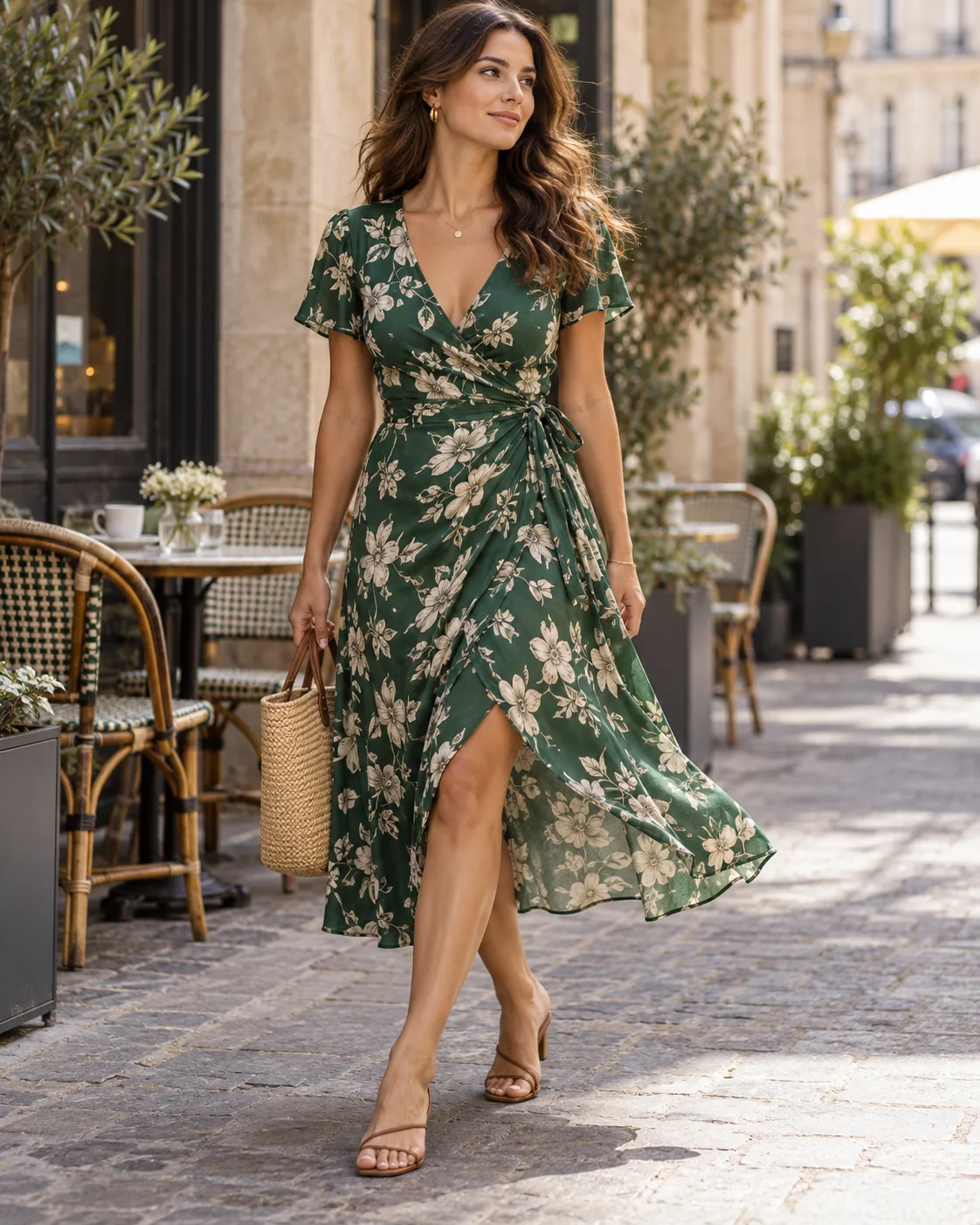
4. Wrap Dress

Wrap DressPin it

A wrap dress is defined less by how tight or loose it is and more by how the front of the dress crosses over the body.

In a true wrap dress, one side overlaps the other and usually fastens with a tie at the waist.

That creates three things at once:

  • a diagonal neckline

  • an adjustable waist

  • movement through the skirt

Those details are what give the dress its distinctive shape.

There are also faux-wrap dresses, which copy the crossover look but are sewn closed rather than actually wrapping around the body.

They can look almost identical from the front, but they behave differently when worn because there is less adjustability.

That distinction matters when shopping.

A true wrap dress lets you control how closely it sits at the waist and how the front overlap falls.

A faux-wrap version may feel more secure and easier to wear, but the fit is largely fixed.

Fabric changes the mood dramatically.

A soft jersey wrap dress feels relaxed and easy.

A satin or silk version can feel more evening-ready.

A printed cotton or viscose wrap dress works beautifully for warm-weather dressing because the shape already has movement built into it.

The neckline is also worth paying attention to.

Because wrap dresses often create a V-shaped front, the depth can vary a lot from one design to another.

Some sit quite high and easy.

Others plunge much lower.

If the neckline becomes difficult to style underneath, our What Bra to Wear With a Deep-Neck or Backless Top or Blouse guide explains how to diagnose whether the issue is the centre front, cup edge, or something else.

5. Shirt Dress

Shirt DressPin it

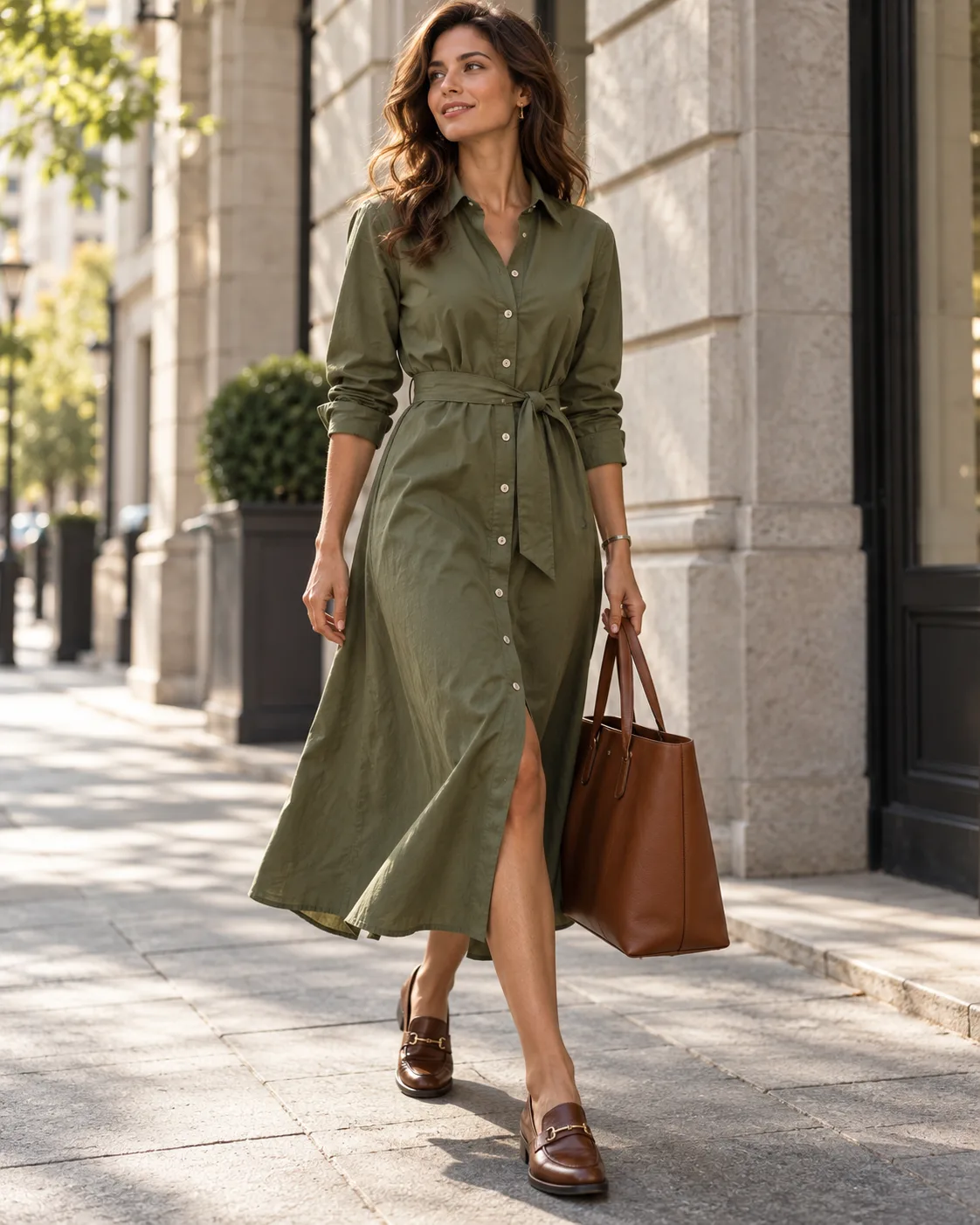
A shirt dress borrows the familiar structure of a button-down shirt and stretches it into a full outfit.

The defining details are usually:

  • a collar

  • button front

  • cuffed or shaped sleeves

  • a straight or gently tailored body

But the interesting part is how much the silhouette can change depending on whether you leave it loose or define the waist.

An oversized cotton shirt dress can feel relaxed and almost architectural.

Add a belt, and the same basic construction becomes much more shaped.

A crisp poplin version can work for office dressing, while linen, chambray, or softer viscose versions feel easier for warm weather and travel.

That versatility is what makes shirt dresses useful internationally and in India alike.

You can wear one with loafers for a sharper finish, sneakers for everyday ease, or flat sandals when the fabric and setting are more relaxed.

The key is to think of the shirt dress as tailoring you can loosen or sharpen, depending on how you style it.

It is less about one fixed silhouette and more about how much structure you choose to keep.

6. Slip Dress

Slip dressPin it

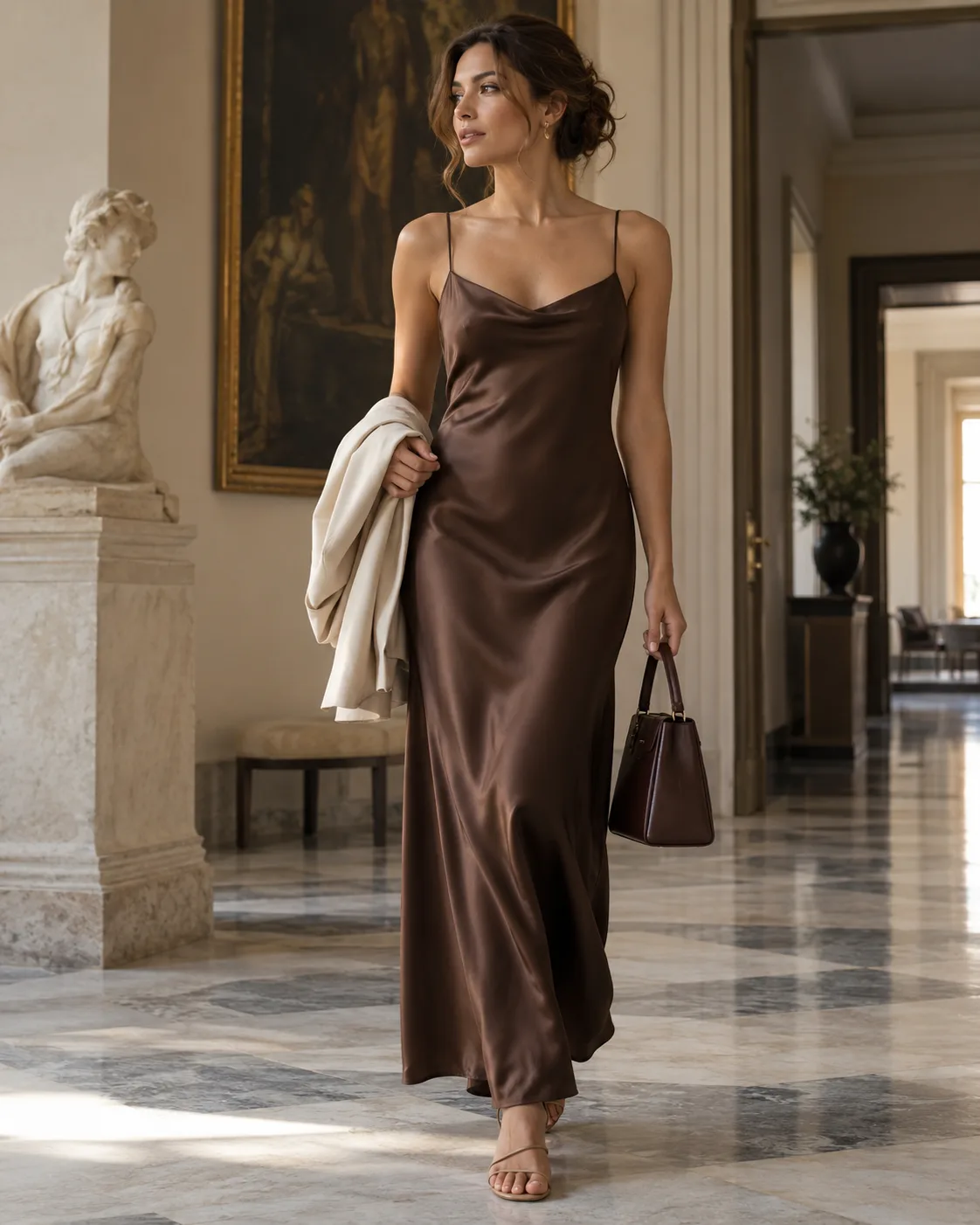
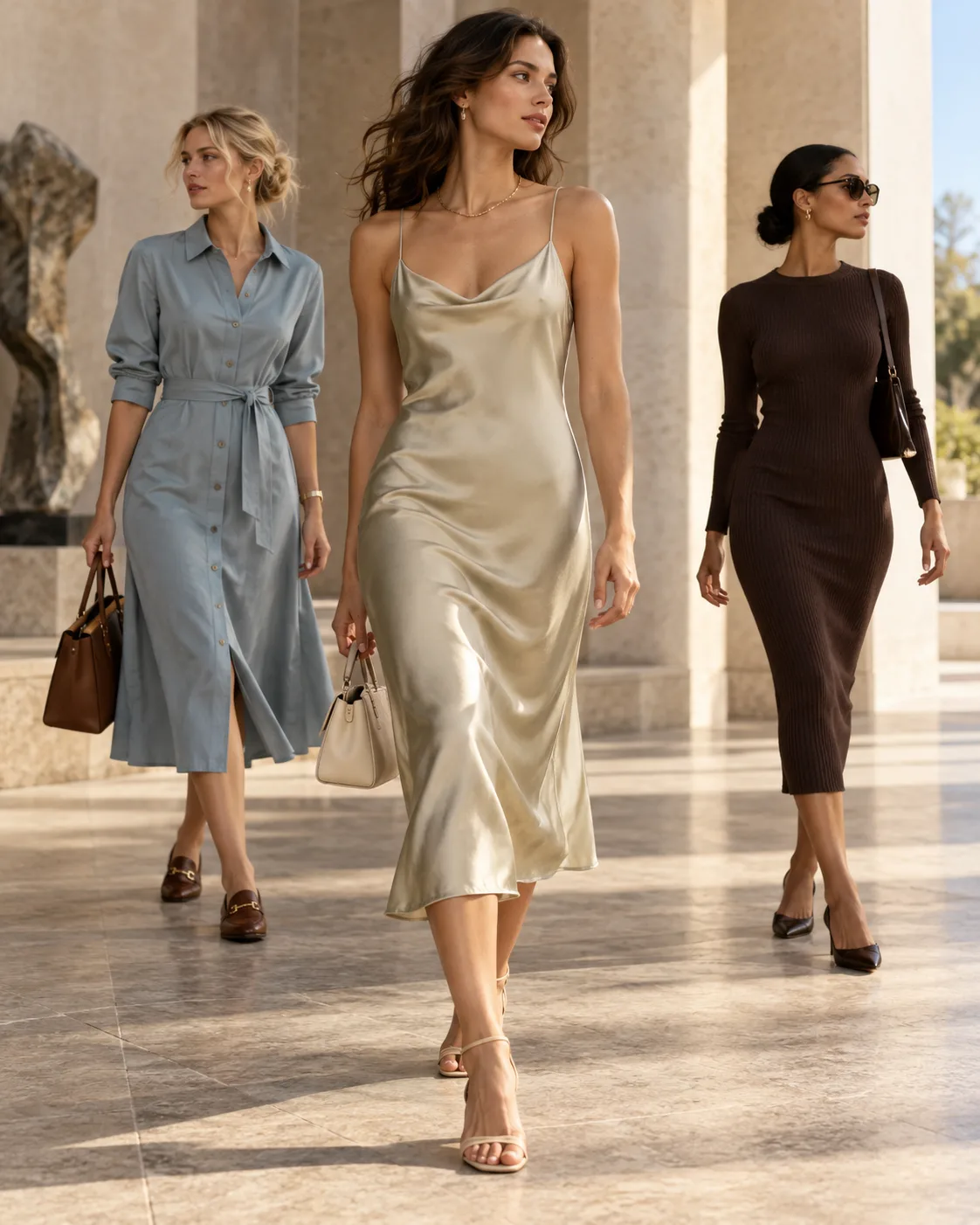
A slip dress looks simple because there is usually very little visual clutter.

The silhouette is often built around:

  • narrow straps

  • a relatively clean neckline

  • a fluid body

  • minimal seaming

  • fabric that skims rather than holds its own shape

That simplicity is exactly what makes the fabric so important.

A satin slip dress reflects light and immediately feels more evening-focused.

A matte crepe version is quieter.

Cotton, jersey, or linen-blend versions can feel much more casual and work easily during the day.

So I would not think of a slip dress as one fixed “sexy evening” category.

The same basic silhouette can move between:

  • dinner

  • holiday dressing

  • layered daytime outfits

  • minimal occasionwear

  • casual summer looks

Layering changes it dramatically too.

Wear one over a fitted T-shirt and it becomes more relaxed.

Add a fine knit underneath and the silhouette can move into cooler weather.

A blazer over the top makes it feel sharper without changing the dress itself.

The thing to remember is: a slip dress gets its character less from structure and more from fabric, drape, and what you layer around it.

7. Bodycon Dress

bodycon dressPin it

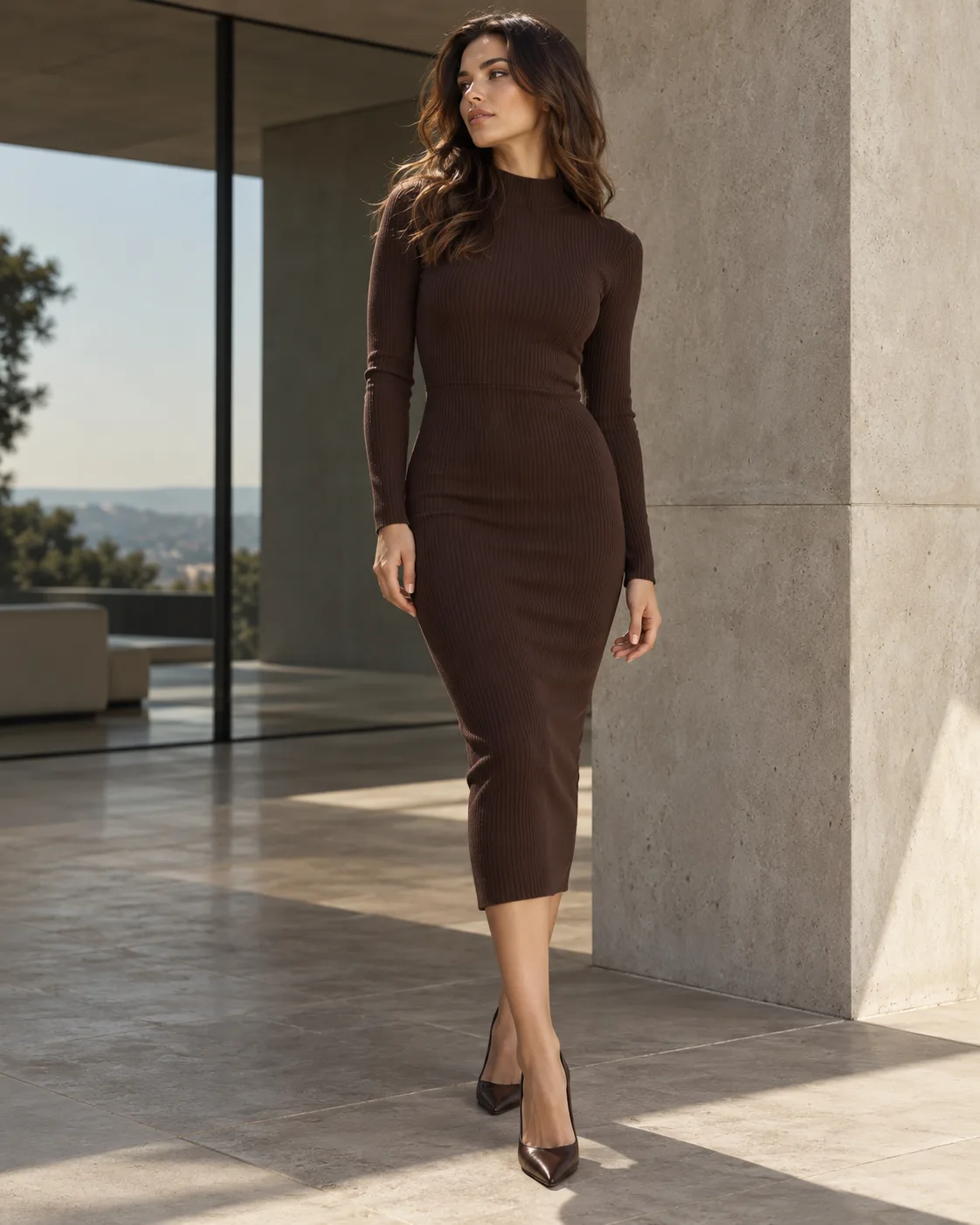
A bodycon dress is designed to follow the body closely, usually with stretch or fabric construction that keeps the silhouette fitted from the bust through the hips.

The important distinction is that bodycon means intentional close fit — not simply a dress that is too small.

Good bodycon dresses rely on fabric with enough weight and recovery to sit smoothly rather than pull unpredictably. Jersey, rib knit, ponte, and stretch crepe can all create very different versions of the same idea.

That is why fabric quality matters more here than in many other dress types.

A lightweight bodycon mini can feel casual and youthful, while a heavier midi in a clean neutral can look much more polished.

Also pay attention to what the fabric reveals underneath. Close-fitting dresses can exaggerate seams, cup edges, and texture that would disappear under a looser silhouette.

The simplest distinction is: A sheath dress is shaped by tailoring. A bodycon dress is defined by deliberate close fit.

8. Fit-and-Flare Dress

fit and flare%20dressPin it

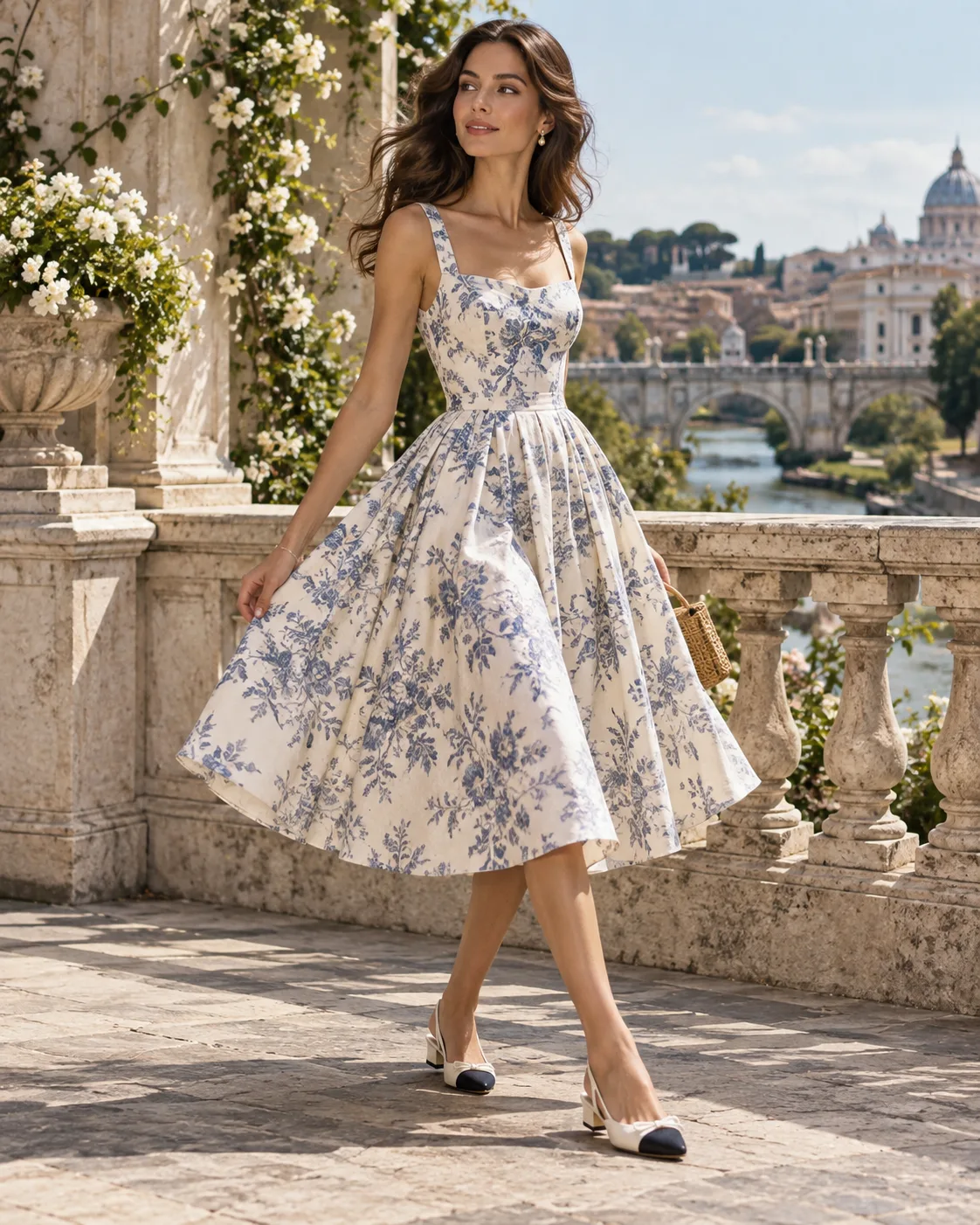
A fit-and-flare dress is more deliberate at the waist than an A-line.

The bodice usually sits closer through the upper body, the waist is clearly defined, and the skirt opens out more noticeably from that point.

That creates a stronger contrast between the top and bottom of the dress.

You will often see the silhouette in:

  • party dresses

  • structured cotton styles

  • romantic day dresses

  • cocktail dresses

  • occasionwear

The fabric determines how dramatic the flare feels.

A crisp cotton or taffeta version can hold a fuller shape.

9. Empire-Waist Dress

empire waist dressPin it

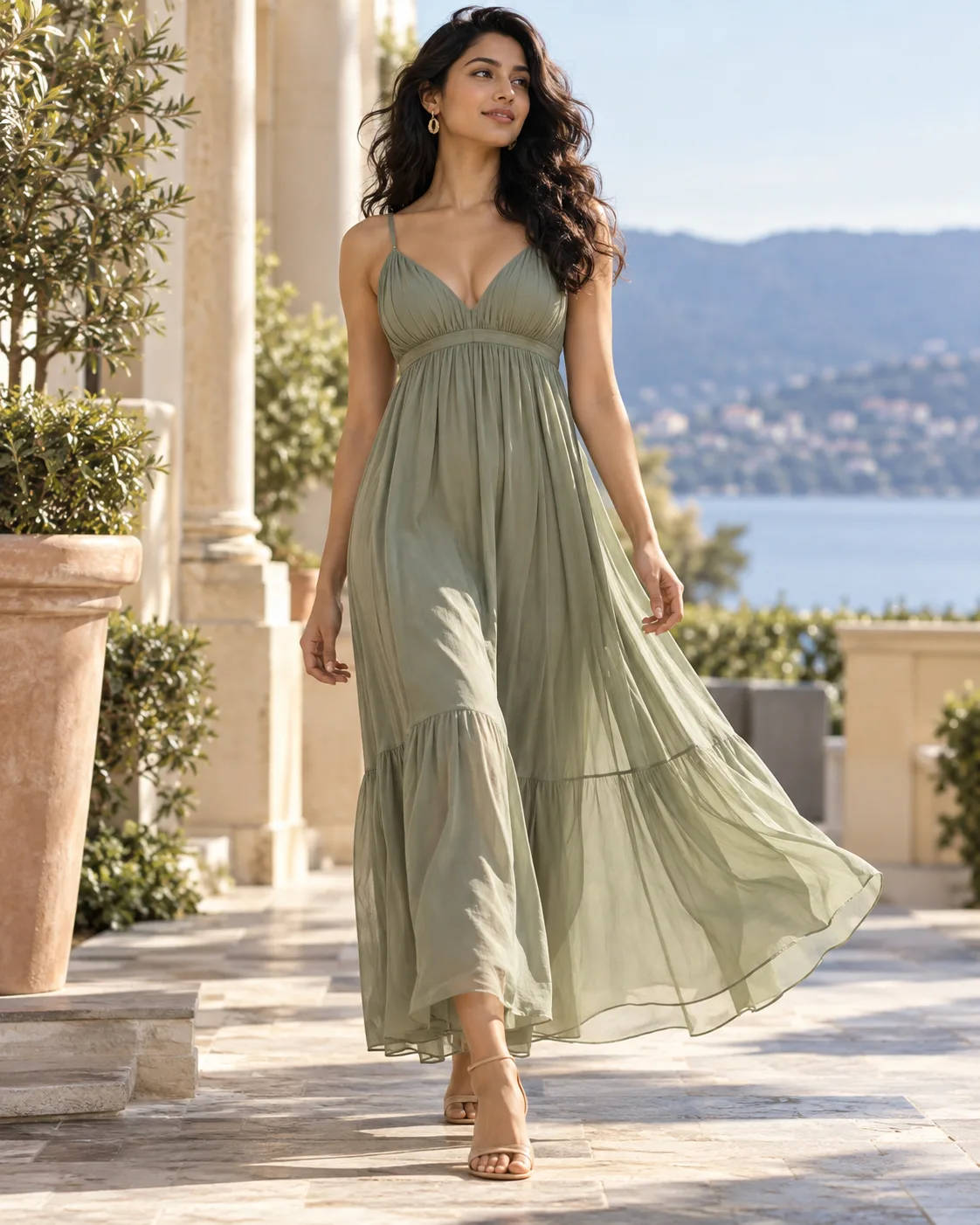
An empire-waist dress moves the waistline much higher than usual.

Instead of shaping at the natural waist, the seam sits just below the bust and the rest of the dress falls from there.

That single change alters the whole proportion of the outfit.

The eye is drawn upward, while the skirt usually has more freedom to move through the waist and hips.

You will often see empire construction in:

  • soft summer dresses

  • romantic maxi dresses

  • lightweight occasion dresses

  • bohemian styles

  • some formal gowns

Fabric makes a big difference.

A soft chiffon or viscose version feels fluid and relaxed.

A more structured fabric can make the raised seam feel much sharper and more formal.

The silhouette also works well with longer hemlines because the high waist visually extends the line of the skirt.

One thing to watch is where the seam actually lands.

If it sits too low, the dress can lose the distinctive empire proportion and start looking more like a regular high-waisted dress.

10. Midi Dress

midi dressPin it

A midi dress is defined by where the hem falls, usually somewhere between the knee and ankle.

That means “midi” tells you almost nothing about the shape of the dress itself.

A midi can be:

  • A-line

  • slip

  • shirt

  • bodycon

  • wrap

  • tiered

  • fit-and-flare

That distinction matters because two midi dresses can create completely different outfits.

  • A satin slip midi feels fluid and evening-ready.

  • A cotton shirt midi can look polished and practical.

  • A fitted knit midi creates a much closer silhouette.

  • A tiered midi adds volume and movement.

So when shopping for a midi dress, I would not stop at the length. Look at what the dress is doing above the hemline.

11. Maxi Dress

maxi dressPin it

A maxi dress is defined mainly by its long hemline, usually reaching the ankle or close to the floor.

Like midi, maxi does not describe one specific silhouette.

A maxi can be:

  • wrap

  • tiered

  • slip

  • empire-waist

  • A-line

  • bodycon

  • shirt-style

That is why one maxi dress can feel relaxed and resort-ready while another looks formal enough for an evening event.

Fabric usually decides the mood.

  • A lightweight cotton or viscose maxi feels easy and breathable.

  • A satin or silk version feels more elevated.

  • A tiered maxi creates movement and volume, while a fitted knit maxi produces a much cleaner, closer line.

Shoes matter more than people sometimes expect because the longer hem changes how much footwear is visible and how the dress moves. Flat sandals can keep a casual maxi relaxed, while heels can sharpen a more formal version.

12. Mini Dress

mini dressPin it

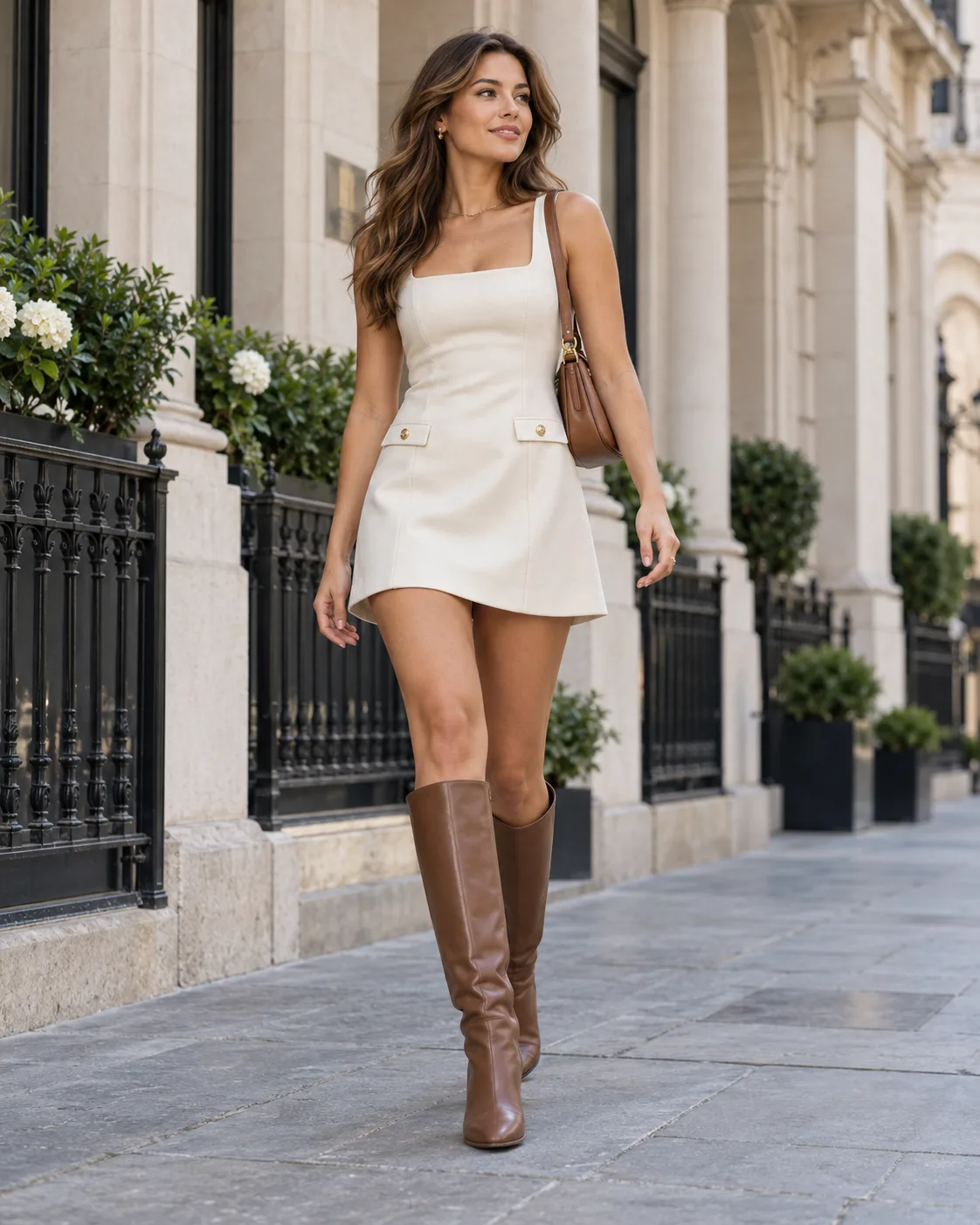
A mini dress is defined primarily by its short hemline, usually ending above the knee.

That sounds simple, but the length alone does not tell you much about the silhouette.

A mini can be:

  • A-line

  • shift

  • bodycon

  • fit-and-flare

  • shirt-style

  • structured and tailored

And each version behaves very differently.

  • A structured A-line mini can feel sharp and modern.

  • A straight shift mini can look clean and slightly retro.

  • A bodycon mini creates a much closer silhouette.

  • A shirt-style mini can feel relaxed and casual depending on the fabric.

That is why I would think about a mini dress in terms of proportion, not just exposure.

Shortening the hem makes the relationship between the dress and the legs much more important, so footwear can change the whole outfit quickly.

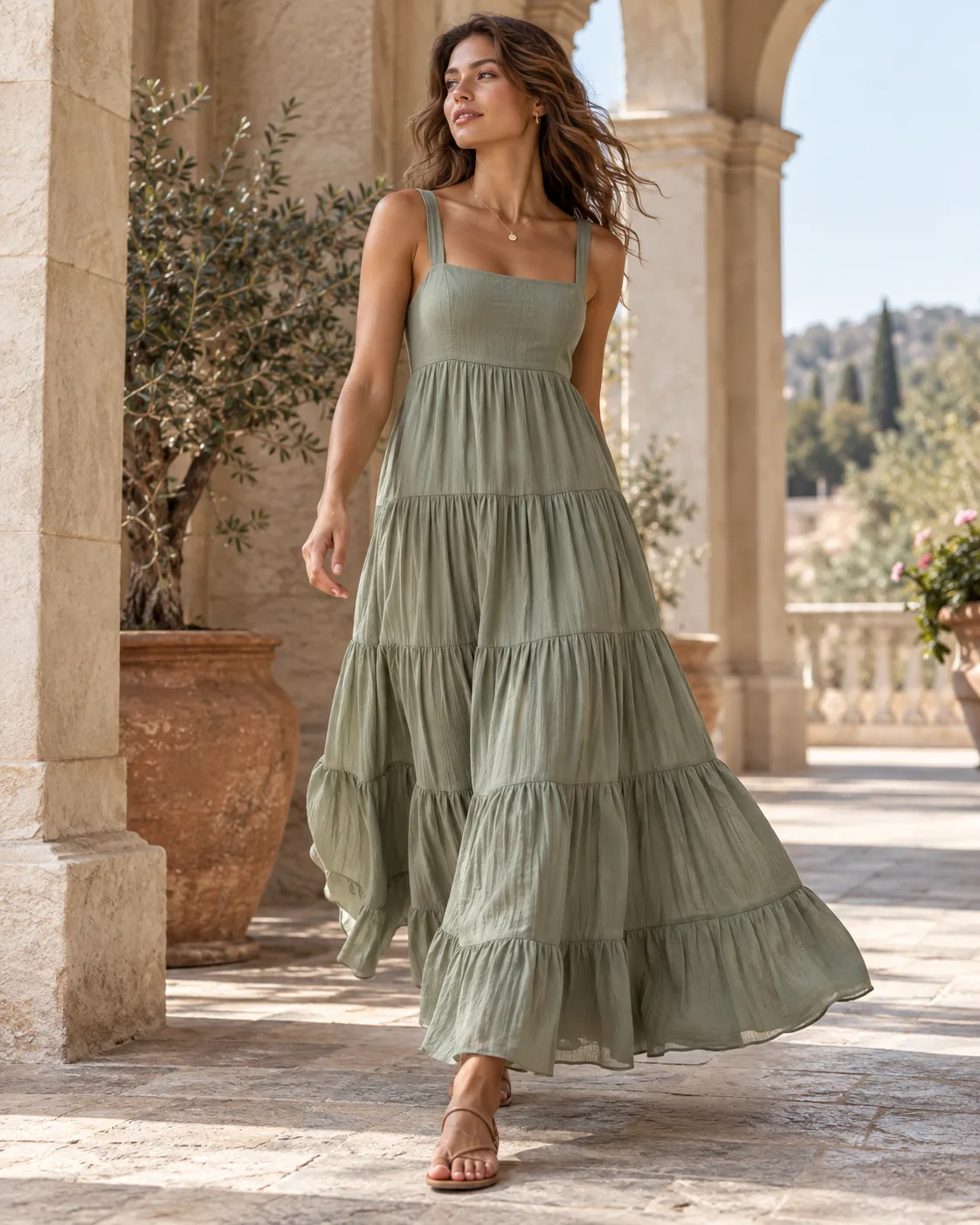
13. Tiered Dress

tiered dressPin it

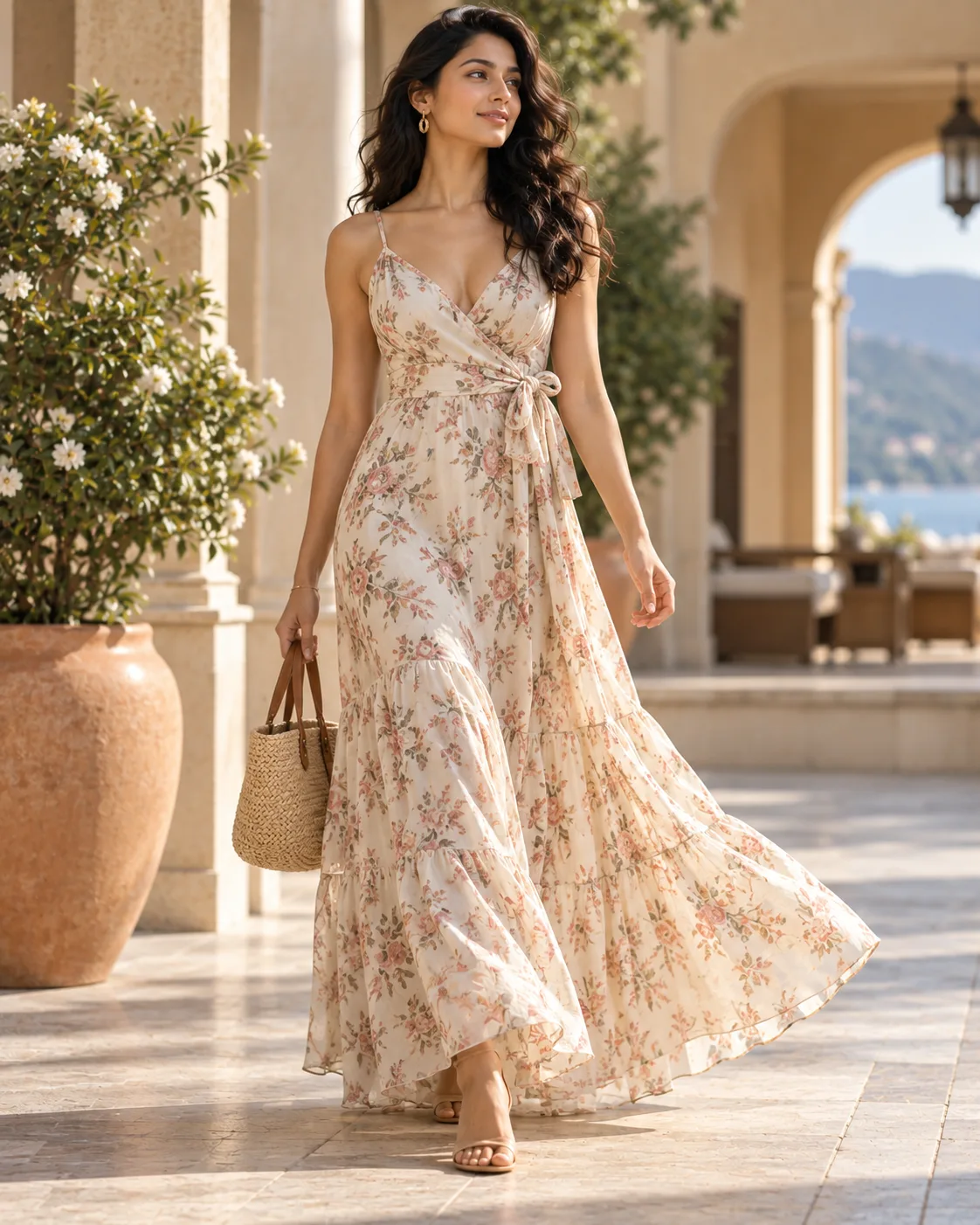
A tiered dress creates its shape through horizontal sections of fabric joined together, often with gathering where one tier meets the next.

That construction adds volume gradually as the dress moves downward.

The effect can be subtle or dramatic.

A lightly tiered cotton midi may feel easy and relaxed.

A fuller maxi with several gathered sections can feel romantic, bohemian, or vacation-ready.

What makes the silhouette distinctive is that the volume is not coming from one continuous flare.

It is being built section by section.

That gives tiered dresses more visible movement than many straighter silhouettes.

You will often see them in:

  • summer dresses

  • holiday styles

  • casual maxis

  • romantic day dresses

  • lightweight occasionwear

Fabric matters a lot- Crisp cotton gives each tier more definition. Soft viscose or georgette creates a looser, more fluid effect.

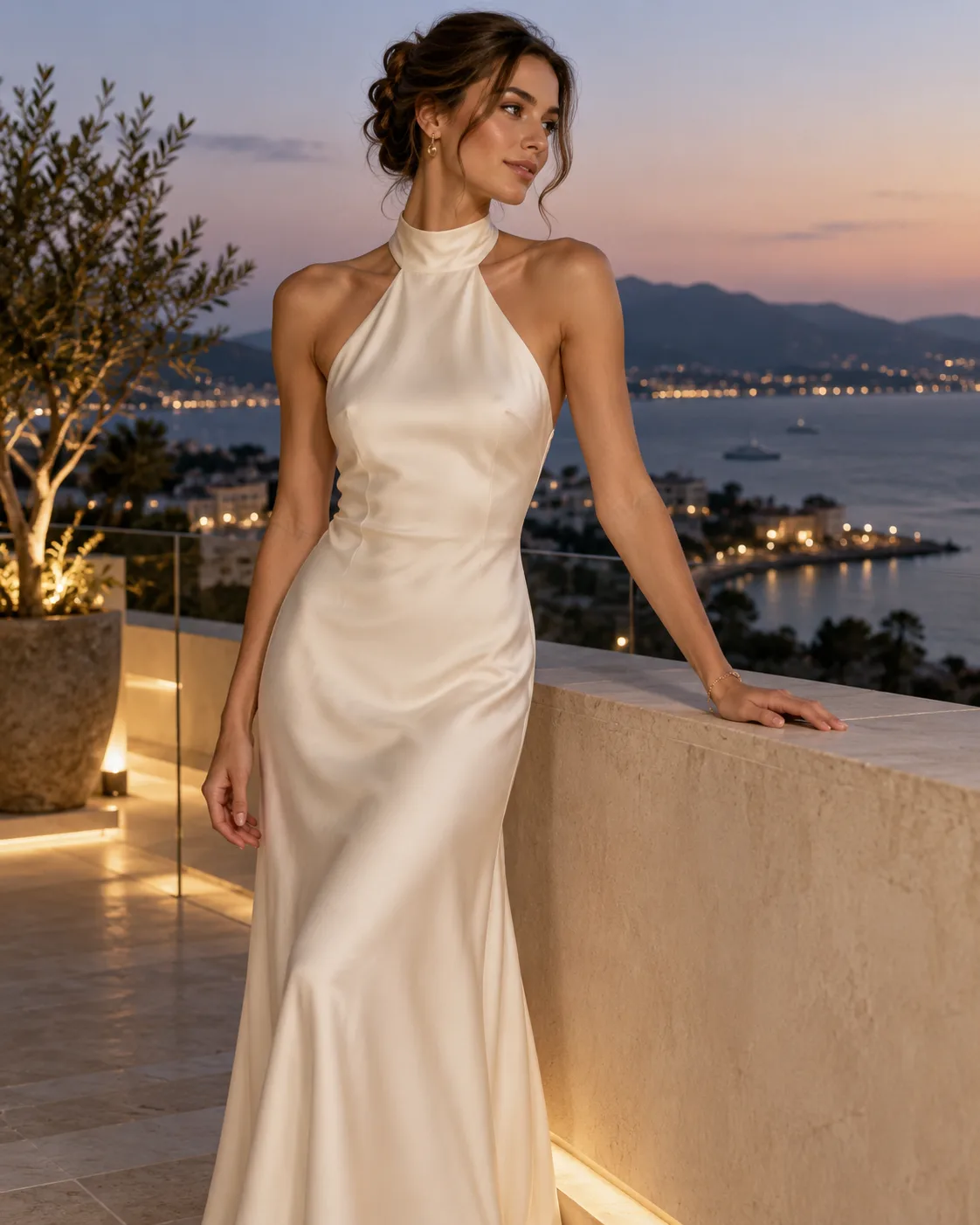
14. Halter Dress

Halter dressPin it

A halter dress is defined by the way the fabric or straps travel upward around the neck, leaving more of the shoulders and upper back exposed.

That means “halter” tells you about the upper construction, not the overall silhouette.

A halter dress can still be:

  • bodycon

  • A-line

  • maxi

  • mini

  • slip-style

  • fit-and-flare

What changes is the visual focus.

Because the shoulders are more open, the neckline and upper back become much more noticeable. That often means jewellery can stay simpler — small earrings or a bracelet may work better than a necklace competing with the neckline.

Halter dresses also vary dramatically in how much support they provide.

Some have a high, secure front and structured bodice. Others plunge lower or leave most of the back open.

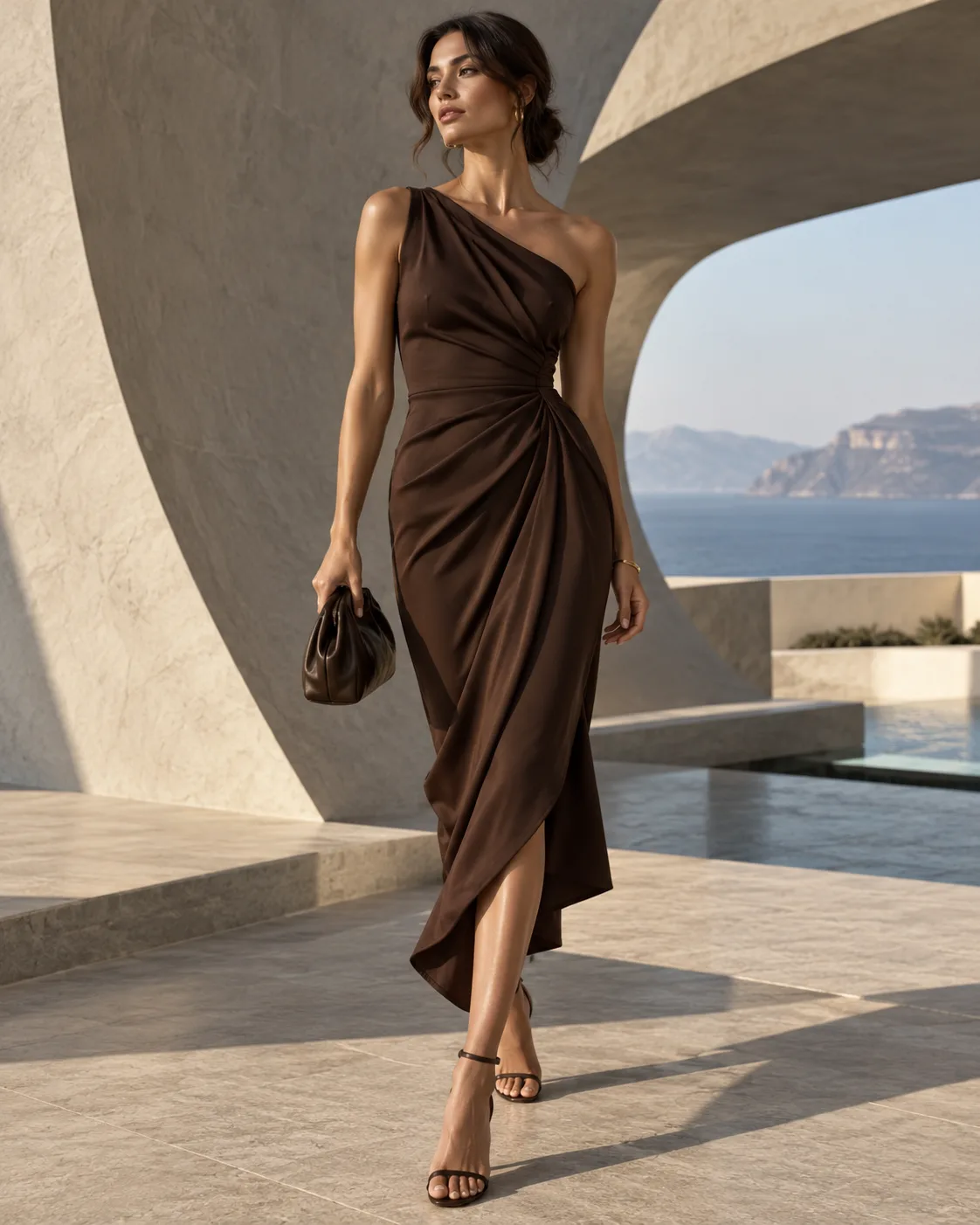
15. One-Shoulder or Asymmetric Dress

One shoulder dressPin it

An asymmetric dress creates visual interest by deliberately making one side different from the other.

That can happen through:

  • a one-shoulder neckline

  • a diagonal neckline

  • an uneven hem

  • draping that falls more heavily to one side

  • a single sleeve or asymmetric strap

The important thing is that asymmetry describes the balance of the design, not one fixed dress shape.

A one-shoulder dress can still be:

  • bodycon

  • A-line

  • midi

  • maxi

  • structured

  • fluid

Because the neckline already creates a strong visual line, I would usually keep the rest of the styling relatively restrained.

Minimal earrings, a clean clutch, and simple shoes often allow the cut itself to remain the focus.

This is especially true with sculptural evening dresses, where the asymmetry can replace the need for heavy embellishment.

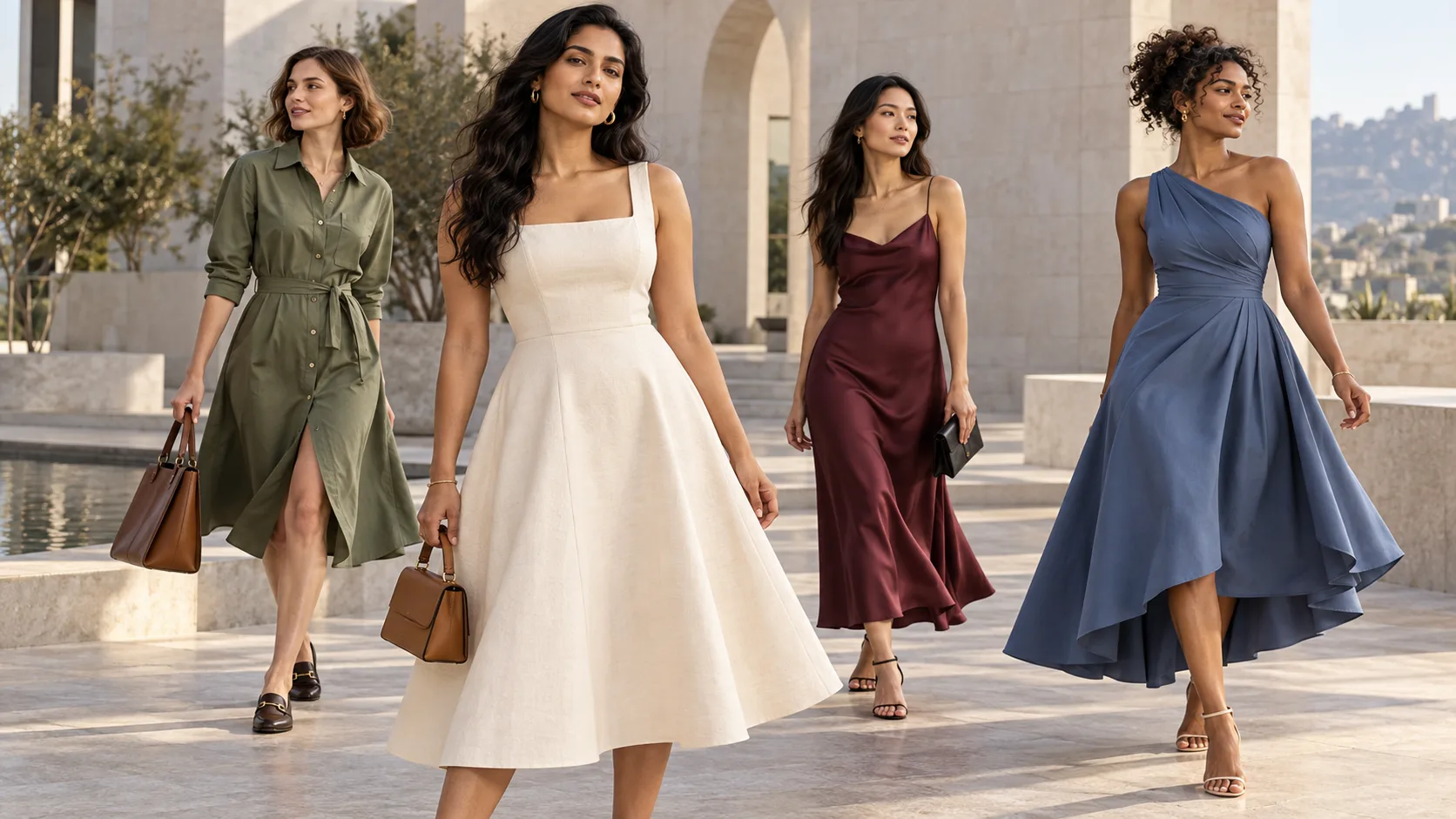
Dress Silhouette, Length and Neckline Are Not the Same Thing

Silhouette Length and Neckline Are Different for dressesPin it

One reason dress terminology becomes confusing is that fashion often stacks several labels onto the same garment.

A dress might be described as:

a halter-neck A-line midi dress

That sounds like three different dress types, but each word is describing a different part of the garment.

Silhouette Describes the Shape

These tell you how the dress relates to the body:

  • A-line

  • shift

  • sheath

  • bodycon

  • fit-and-flare

  • empire-waist

They help you understand whether the dress is straight, fitted, flared, or shaped around a particular point.

Length Describes Where the Hem Falls

These include:

  • mini

  • midi

  • maxi

A midi dress is not automatically flowy.

A maxi dress is not automatically loose.

A mini dress is not automatically fitted.

Length only tells you where the dress ends.

Neckline or Upper Construction Describes What Happens Near the Shoulders

Think:

  • halter

  • one-shoulder

  • square neck

  • strapless

  • off-shoulder

  • deep V

These details can sit on top of almost any silhouette.

So you could have:

a square-neck bodycon midi

or

a halter A-line maxi

or

a one-shoulder fitted mini.

Once you understand that fashion terms can describe different parts of the same dress, the names stop feeling like a long list to memorise.

You start reading the garment in layers:

shape first, length second, neckline and construction after that.

That is usually far more useful than trying to force every dress into one single category.

How to Choose Between Similar Dress Types

How to Choose Between Similar Dress TypesPin it

Some dress names sound interchangeable until you look at where the shape is actually coming from.

Shift vs Sheath

A shift dress creates a straighter line and usually gives the waist more space.

A sheath dress is shaped closer to the body through tailoring, darts, or seams.

Think:

Shift = straighter
Sheath = tailored

A-Line vs Fit-and-Flare

Both widen toward the hem, but they do it differently.

An A-line dress usually opens gradually.

A fit-and-flare dress makes the waist much more obvious before the skirt expands.

Think:

A-line = gradual shape
Fit-and-flare = defined waist + fuller skirt

Slip vs Bodycon

These can both sit close to the body, but the effect is different.

A slip dress usually relies on fluid fabric and drape.

A bodycon dress deliberately follows the body through stretch and close construction.

Think:

Slip = skim
Bodycon = fit

Midi vs Maxi

This one is purely about length.

A midi finishes between the knee and ankle.

A maxi continues to the ankle or near the floor.

Neither term tells you whether the dress is fitted, loose, formal, or casual.

Once you start comparing dresses this way, the names become much easier to understand because you are looking at what the garment is actually doing, not memorising labels.

Final Thoughts

Knowing dress names is useful, but the real value is understanding what each name is actually describing.

Some terms explain the silhouette.

Some explain the hem length.

Others describe the neckline, shoulder construction, or the way the dress is built.

That is why a single dress can be several things at once — a halter maxi, a bodycon midi, a one-shoulder mini, or an A-line shirt dress.

Once you start reading dresses this way, shopping becomes much easier.

Instead of asking whether a dress is simply “flattering” or “trendy,” you can look at:

  • how the silhouette is shaped

  • where the waist sits

  • how much structure or drape the fabric creates

  • where the hem falls

  • what the neckline adds to the overall proportion

And that gives you a much better idea of how the dress will actually behave once you wear it.

The goal is not to memorise every fashion term.

It is to understand the language well enough that you can look at a dress and immediately recognise what is creating its shape.

That is the difference between simply knowing the name of a dress and actually knowing how to style one.
Dresses

Related articles