
Winters are long and your coat is probably getting used more than any other piece of clothing. You'll be wearing it to work, walking around on weekends, squishing yourself into car seats and slinging it over cafe chairs. So by spring your coat should still look good.
To get a durable coat you need to take into consideration the fabric, stitching and how you plan to wear it. A well cut wool coat may be perfect for a dry and cold city but if you experience heavy rain throughout winter then it may not be the best choice. A chunky puffer may keep you warm on your commute but could look out of place with your workwear.
Read below to pick up some tips to help you choose the right coat for your weather, lifestyle and current wardrobe.
How to Buy a Winter Coat That Lasts
 Pin it
Start With the Winter You Actually Have
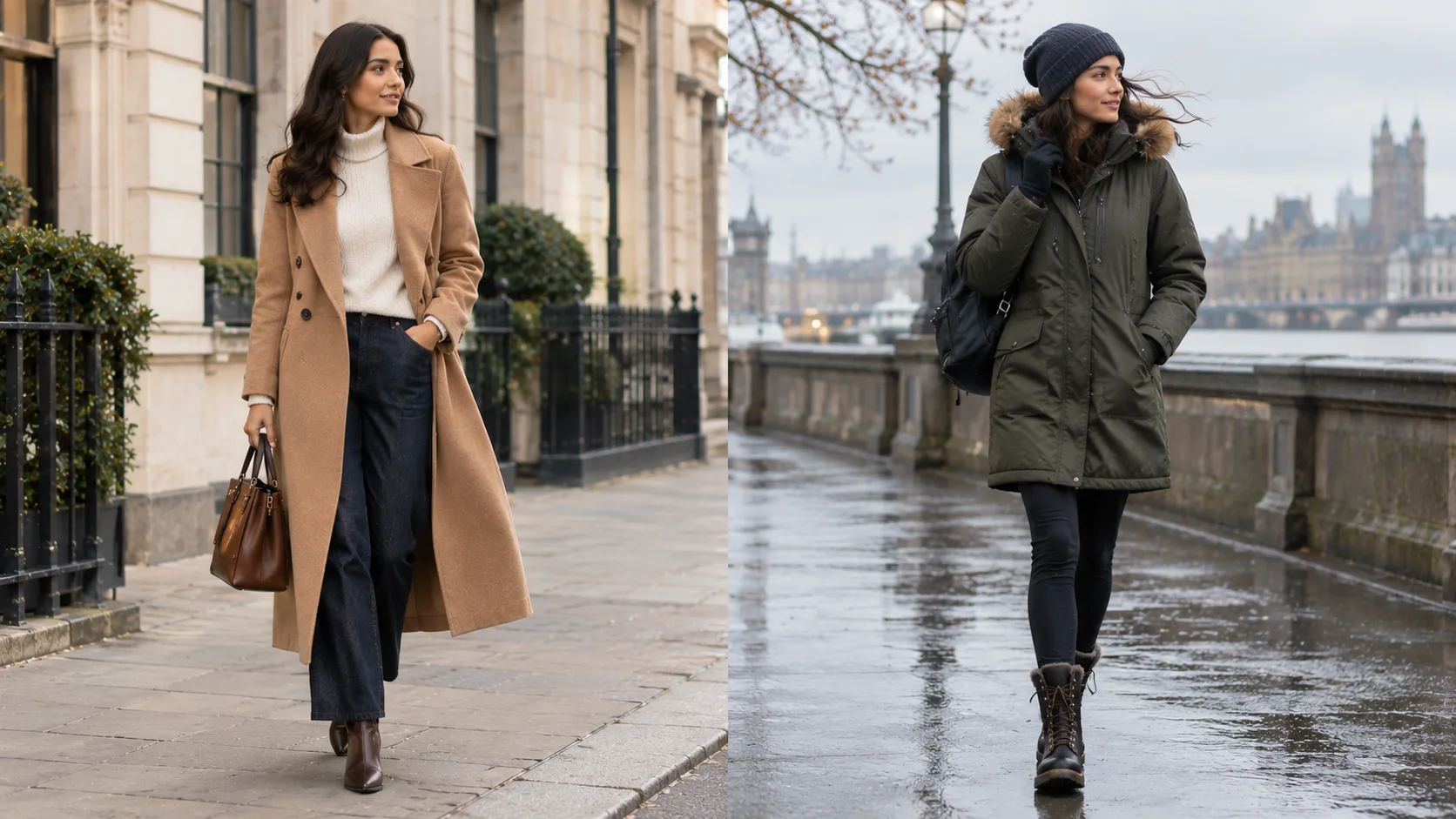
If you're not going to wear your coat, think about the weather. If you're getting caught out in the rain and blowing wind on your commute then you'll need a coat that can handle these conditions.
But if you have a mild winter where it's only cold at night then you'll need something different. If you're walking long distances and having to wait for buses outside you'll want something that really insulates you but if it's a quick walk from your car to work then you can be more fussy.
Consider how many times you'll wear it. If you're going to wear it most mornings then you should spend more on the coat than something that you'll only wear occasionally for those odd chilly evenings. The price per wear will drop very quickly.
Let the Fabric Do the Talking
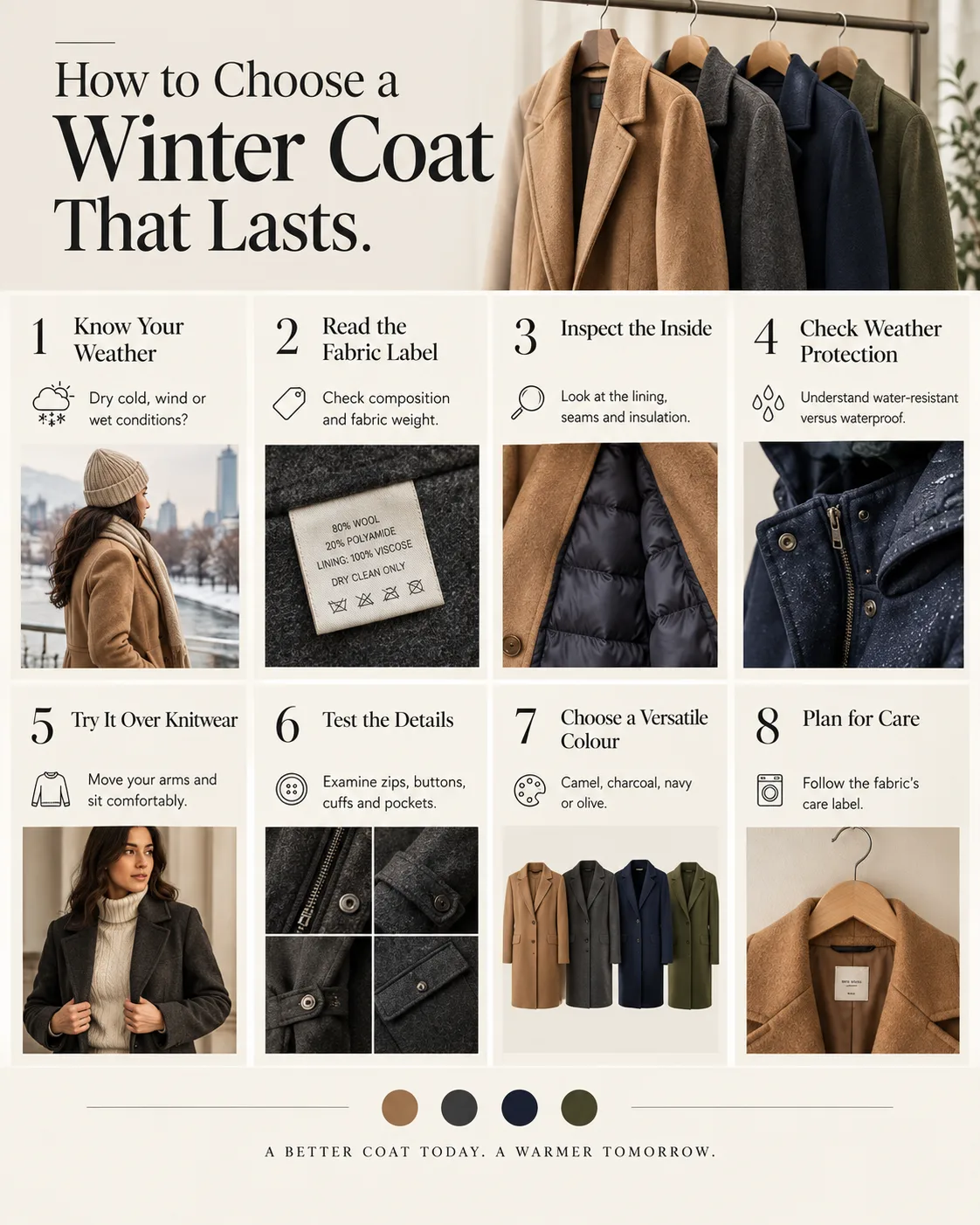
You can learn more about the quality of a coat by looking inside. A classic material used for great coats is wool. It provides insulation, is breathable and resists light rain. Aim for a coat that has a high percentage of wool, with some nylon or polyamide blended to add extra durability. Cashmere will give a lovely feeling against your skin but needs to be treated carefully. 'Wool effect' or mostly polyester coats may look smart but can be very sweaty to wear. They also have a tendency to pill quicker.
Puffer coats differ. Down will keep you warm but is very light. Synthetic insulation will be more suited to a changeable weather. Teddy fleece and faux shearling will only keep you warm if there is a high density of the pile. Real suede and shearling are beautiful but sulk in slush, so keep them for drier climates; our suede jacket outfit ideas show how to style one on cooler days.
Check What Is Hidden Inside
Check the inner lining. A thick, smooth lining will help the coat easily slide over your sweater, and provide extra insulation. Thin/patchy linings mean you rely on the outer shell to do all the work. Look out for nicely stitched, slightly loose linings.
Check the baffles (the sewn in piping which holds the fill in place). Squeeze a few and ensure that there is an even amount of fill from the chest down to the hem. There shouldn’t be any flat areas or lumps. Evenly distributed fill will continue to do its job as it gets colder.
Small Details That Add Real Warmth
Cold gets in through the gaps, so study the edges. A collar that stands up or fastens high keeps the breeze off your neck, and a storm flap behind the zip stops it slipping through the closure. Ribbed inner cuffs seal the sleeve ends against drafts. If you often wear a hat, try the hood over it before deciding it is practical.
For wet weather, look for a water-repellent finish that makes light showers bead and roll off. These finishes fade with time, but a refresh spray from a sports shop brings them back.
Fit Over Your Thickest Layers
Take your bulkiest knit garment into the changing room. If you find it difficult to zip your coat over a slimline top, then it will be too tight when worn over a jumper. The seams along the shoulders should fall just at the edge of your shoulders. Pull your arms across your chest, then forwards as if you were gripping a steering wheel. Finally raise your arms above your head. If the material bunches on your back or the hem rides up above your waist then your coat will be too tight.
The sleeves should come just past your wrist bone, leaving space for gloves. The longer the coat, the less room for movement. A hip length coat will allow easy movement but longer ones reaching to the knees will keep you warmer but may snag on the stairs.
Match the Silhouette to the Way You Dress
A coat has to work with your clothes, not only your climate. If your winter wardrobe leans toward tailored pieces, a straight single-breasted wool coat will sit comfortably over blazers, and our autumn work outfit ideas give a feel for what lives underneath. Soft knits and denim pair well with a relaxed wrap coat; the sweater and jeans outfit ideas show the sort of layers it will sit over. A trench with a removable lining is a smart bridge between seasons, and our trench coat outfit ideas show how many ways it can be dressed.
Quality Checks Before You Pay
Take two minutes to check the quality. Pull on a seam gently and ensure that the stitches do not open. Buttons should be securely attached, preferably with a tiny button sewn to the back of the thick fabric. Zips should also feel like good quality and not snag. The pockets should be deep enough to fit your phone and gloves with a hard lining. If you have a check or stripe pattern then the pattern should match along the seams. This is a subtle indicator that the item has been made well.
Choose a Colour You Can Style Every Day
The best coat colour is the one that sits comfortably with everything you already own. Camel, charcoal, navy, and olive all play well with most wardrobes, and any of them can anchor a travel capsule wardrobe as easily as an everyday one. If you want a little more personality, deep wine shades are worth a look, and the burgundy outfit ideas show what to wear with one. Hold the coat near your face in daylight whenever you can, since shop lighting flatters almost everything.
Time Your Purchase and Widen the Search
Late winter sales are a great time to find a good quality coat for a more reasonable price. Second hand / vintage stores are also a great place to go to. Often you can find older wool coats that have a heavy fabric. Check underarms and lining. You can get a tailor to shorten the sleeves and replace any old linings.
Look After It So It Keeps Going
Use a broad shaped hanger to keep your shoulders looking smart. Brush with a soft cloth brush after wearing to remove any dust and lint from the wool. Let it air out for a day. Only take it to get dry cleaned if necessary. Too much cleaning will cause the fibres to wear down. If you notice a button has come undone fix it straight away. Store in a breathable garment bag (not plastic) during the spring. Puffers should be washed only as stated on the care label.
A quality coat doesn’t really shout about itself. However, you will know you have a good one by the lining, stitching and how it fastens around your bulkiest sweater. After 3 winters it will still look great. Take your bulkiest knit and spend half an hour at your leisure to check.
 Pin it
Final Thoughts
A good-quality coat will have some great finishing touches. From the softness of the fabric to well finished lining, everything should be well constructed and easy to put on over your winter clothes.
Think about what the weather will be like where you live and what your lifestyle is like. Choose a colour you will really wear and be realistic about how much maintenance the coat will need.
Pop your chunkiest jumper in the changing room and take your time. Taking your time now means you are more likely to find a coat you will be happy to reach for next winter.