8 Chikankari Kurti Outfit Ideas for Women That Feel Fresh and Modern
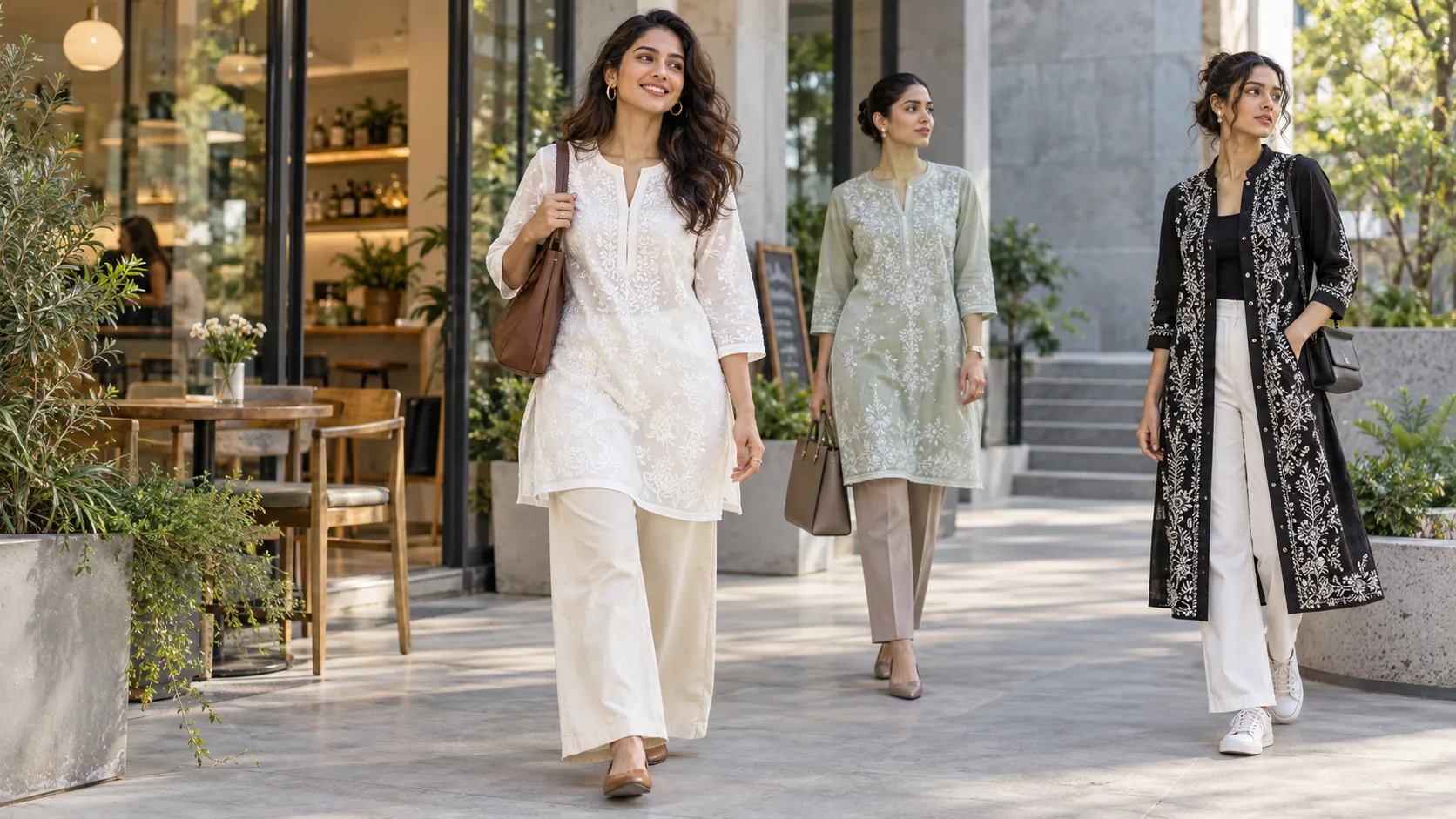
Chikankari can look completely different depending on what you pair it with. These eight outfit ideas move beyond the usual white kurti and blue jeans, using tonal denim, tailoring, contrast, layering, and festive separates to make the embroidery feel more current.
White Chikankari with blue jeans is a classic for a reason. It’s easy, pretty, and almost impossible to get wrong. It’s also the combination we’ve seen so many times that it can make Chikankari feel more limited than it actually is.
The embroidery can work with far more than denim. It can soften tailored trousers, bring texture to a monochrome outfit, make a black kurti feel unexpectedly elegant, or sit beautifully next to a printed dupatta without turning the whole look overly traditional.
The trick is knowing when to let the embroidery lead and when to give it something sharper to play against.
These Chikankari kurti outfit ideas for women move between casual days, workwear, evenings, and lighter festive dressing, with each look built around a different styling idea rather than the same kurti-and-bottom formula repeated eight times.
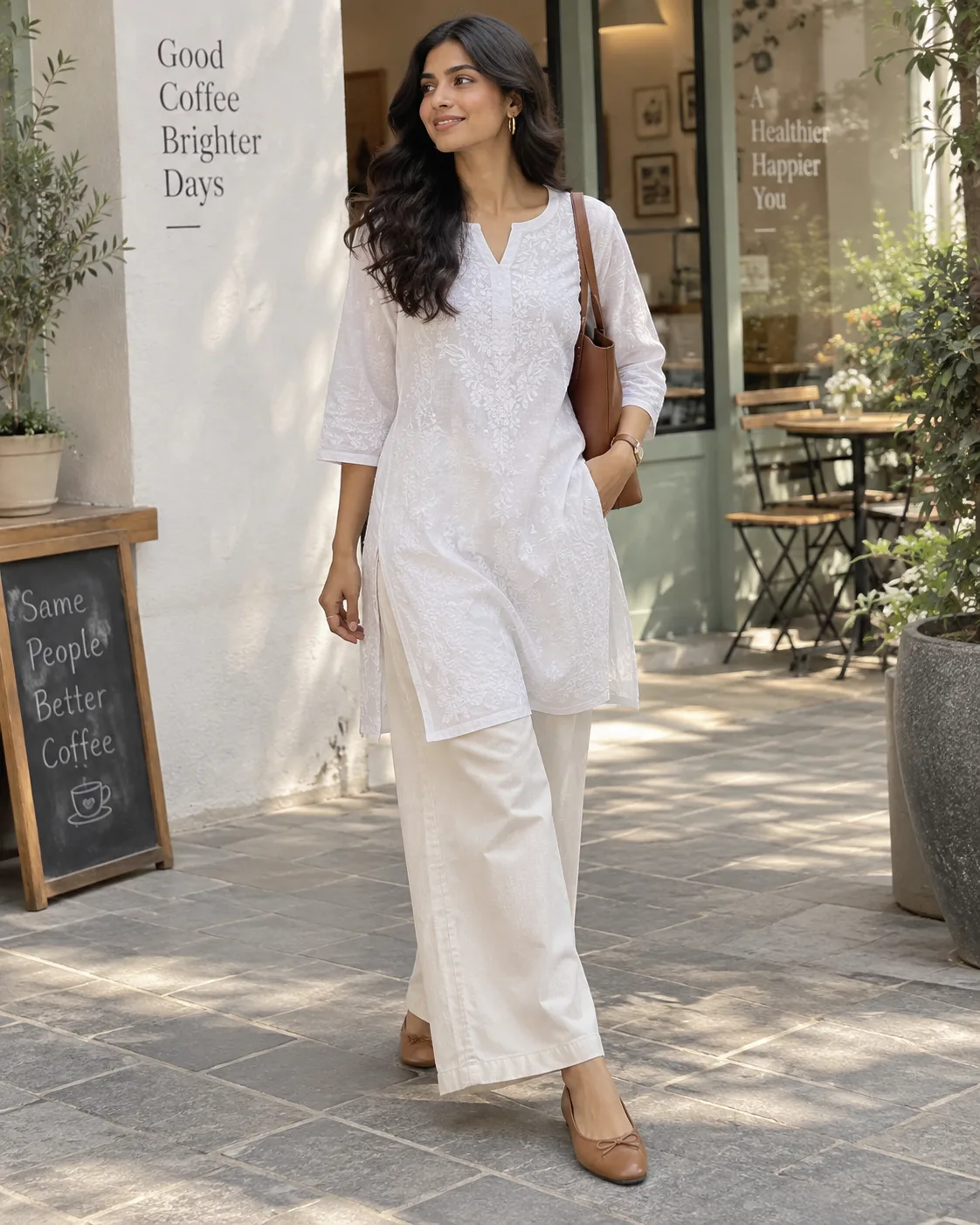
1. White Chikankari Kurti With Ecru Wide-Leg Jeans
White Chikankari with blue jeans is the obvious pairing. If you want the same ease without making the outfit feel predictable, switch the denim to ecru.
That one change makes the embroidery look softer and more considered. Instead of creating a sharp blue-and-white contrast, the whole outfit stays in a light tonal family, which lets the threadwork become the detail you notice first.
I’d choose wide-leg or straight ecru jeans rather than anything too skinny. The cleaner shape gives the kurti a little more presence and makes the outfit feel less like a default college look.
Keep the rest simple: tan leather flats, a brown shoulder bag, and maybe small hoops or one slim bracelet. I wouldn’t add a printed dupatta here—the point is the quietness of the palette.
This is the kind of Chikankari outfit that works because almost nothing is trying too hard. The embroidery gets room to breathe, the denim keeps it casual, and the tonal colour story makes the whole thing feel fresher than the usual white-kurti-and-blue-jeans formula.
If you’re wearing Chikankari to work, the easiest mistake is making the whole outfit too soft.
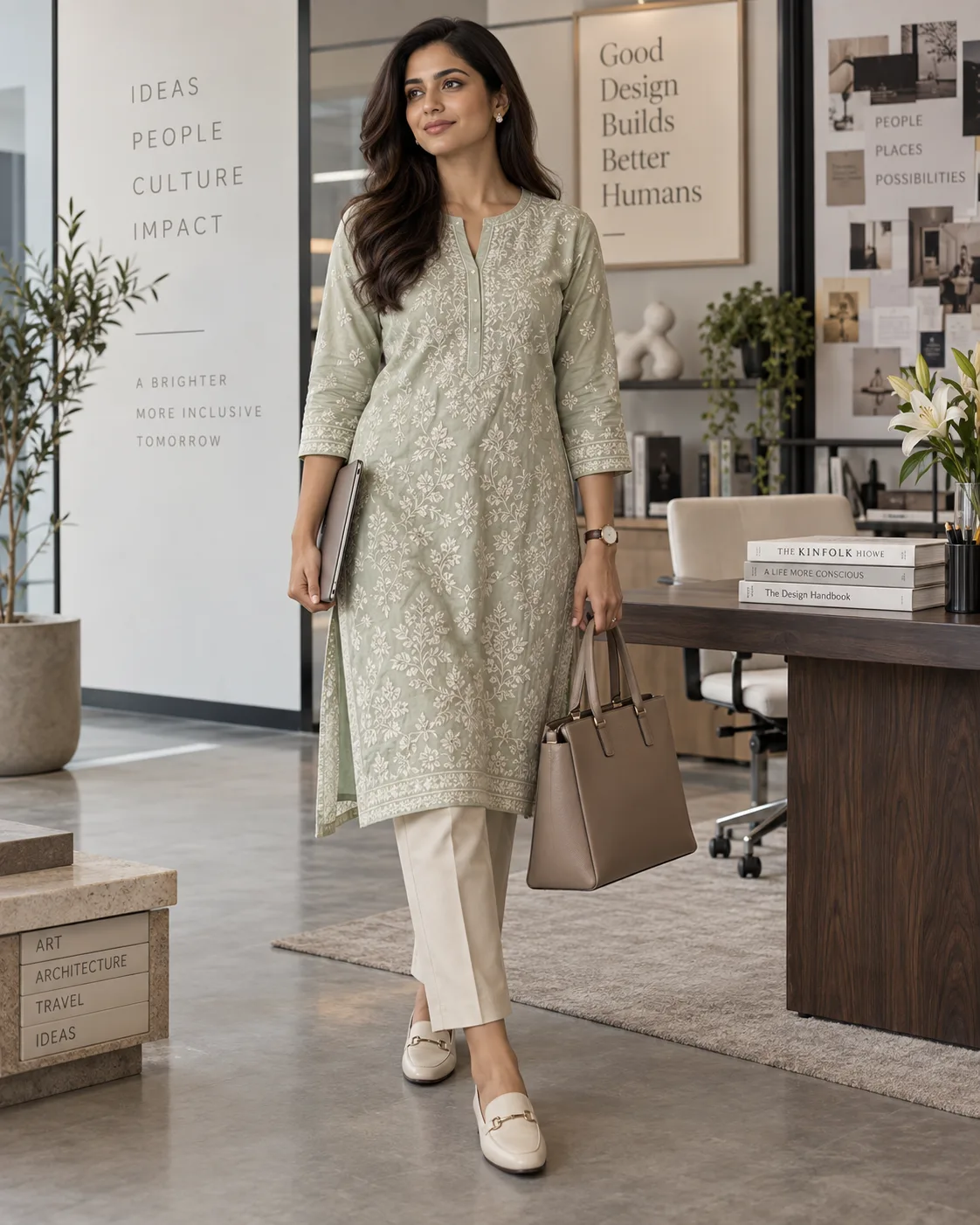
A pastel kurti already has delicacy built into it, so pairing it with equally floaty bottoms can sometimes make the look feel more casual than polished. Tailored trousers fix that immediately.
Try a powder blue, sage, blush, or butter-yellow Chikankari kurti with ivory, stone, taupe, or charcoal trousers. The sharper waistband and cleaner fall of the pants give the embroidery some structure to sit against.
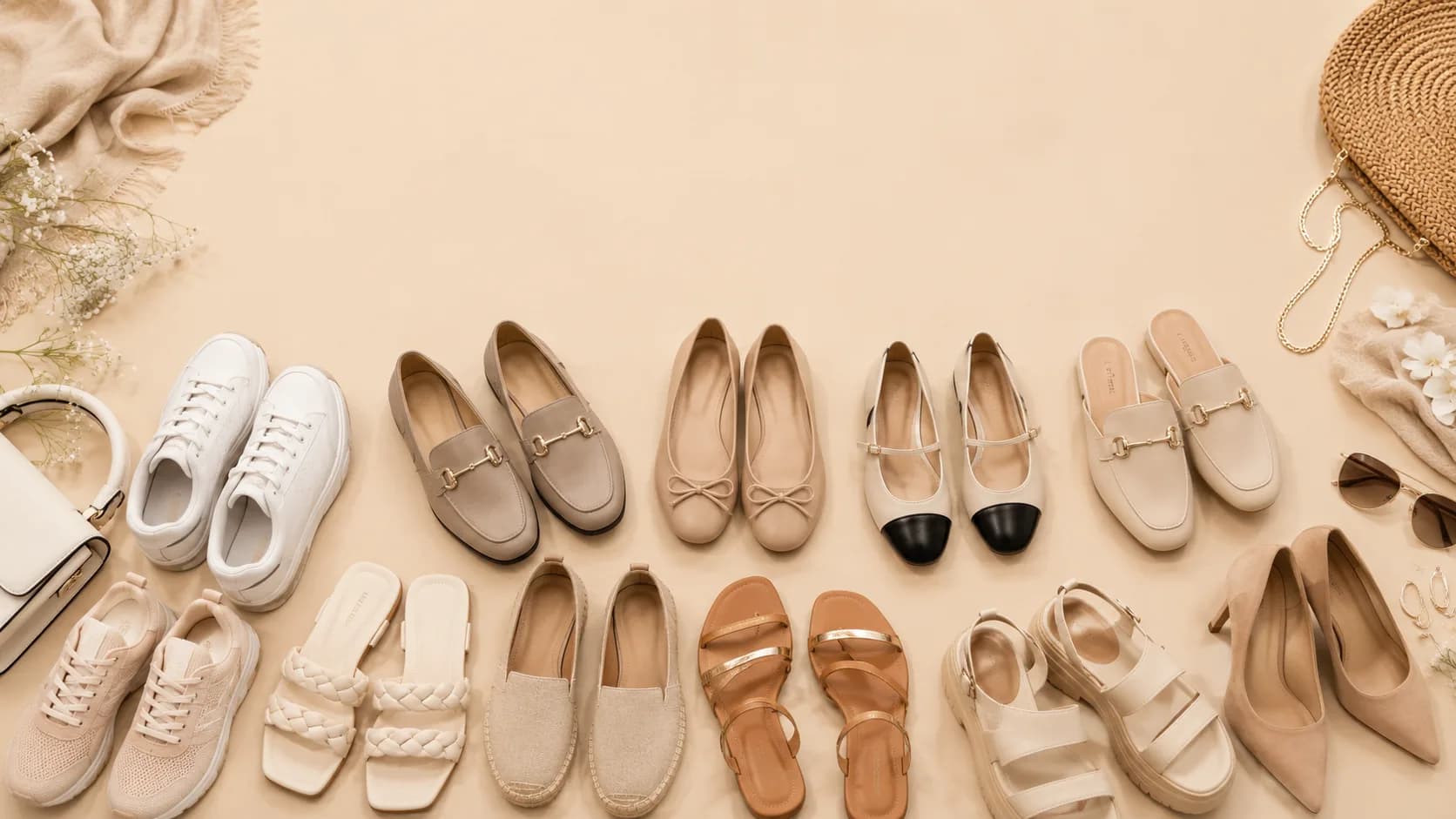
This is also where I’d choose shoes that feel unmistakably work-ready. Pointed flats, loafers, or a low block heel do more for the outfit than another decorative accessory would.
You don’t need much jewellery here. Small earrings and a watch are enough.
If you like this balance of Indian detailing with cleaner trouser silhouettes, our kurta with wide-leg pants outfit ideas explore more ways to get the proportions right without making the outfit feel heavy.
The result is still recognisably Chikankari, just with a much more grown-up, office-friendly finish.
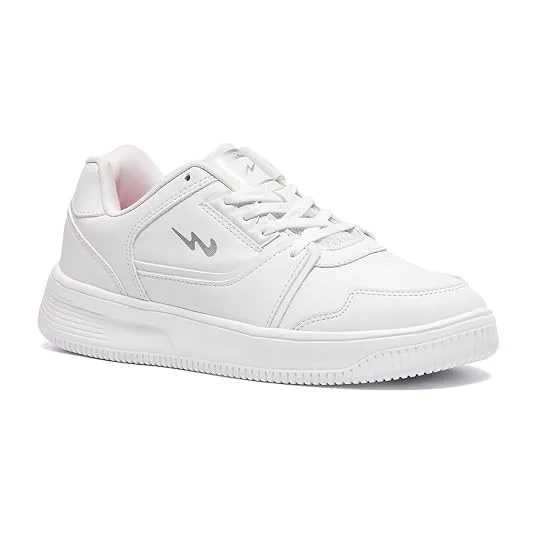
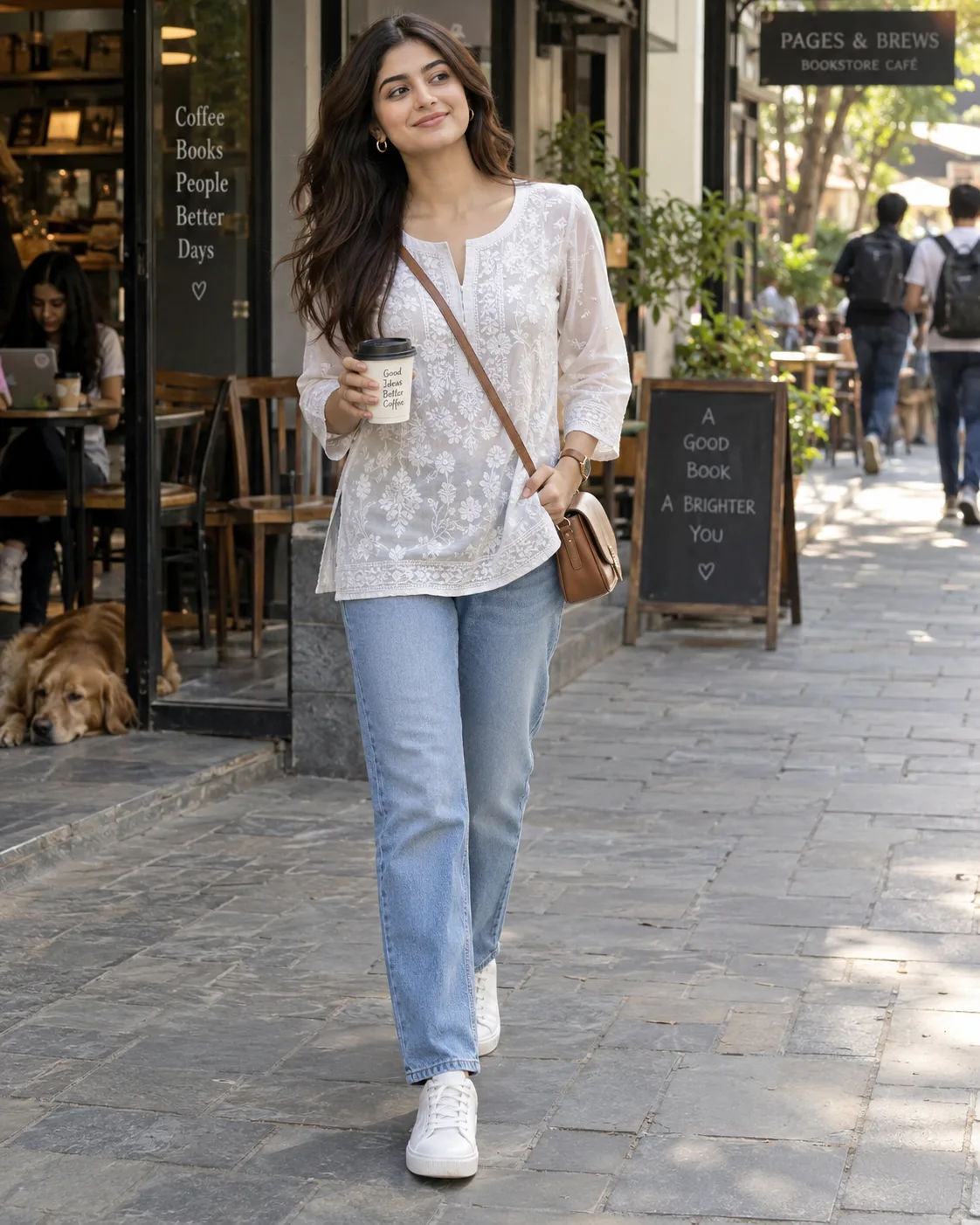
3. Short Chikankari Kurti With Straight Jeans and White Sneakers
This is the kind of Chikankari outfit you can wear without feeling like you’ve dressed for an occasion.
Start with a short kurti that finishes around the hip, then pair it with straight-leg jeans in a clean light or mid wash. Keep the denim simple—too much distressing can compete with the embroidery and make the whole look feel busier than it needs to.
White sneakers make the outfit feel younger and more effortless than loafers would. They also work especially well if you’re walking a lot, travelling, heading to college, or just want something that feels easy from morning to evening.
I’d keep the rest of the styling light: a small crossbody bag, tiny hoops or studs, and maybe a watch. No dupatta needed.
White, powder blue, soft peach, mint, or pale yellow Chikankari all sit naturally with denim and white sneakers, but the real reason this combination works is the mix of something delicate on top with something very everyday underneath.
It doesn’t try to make Chikankari look formal. It just makes it easier to wear.
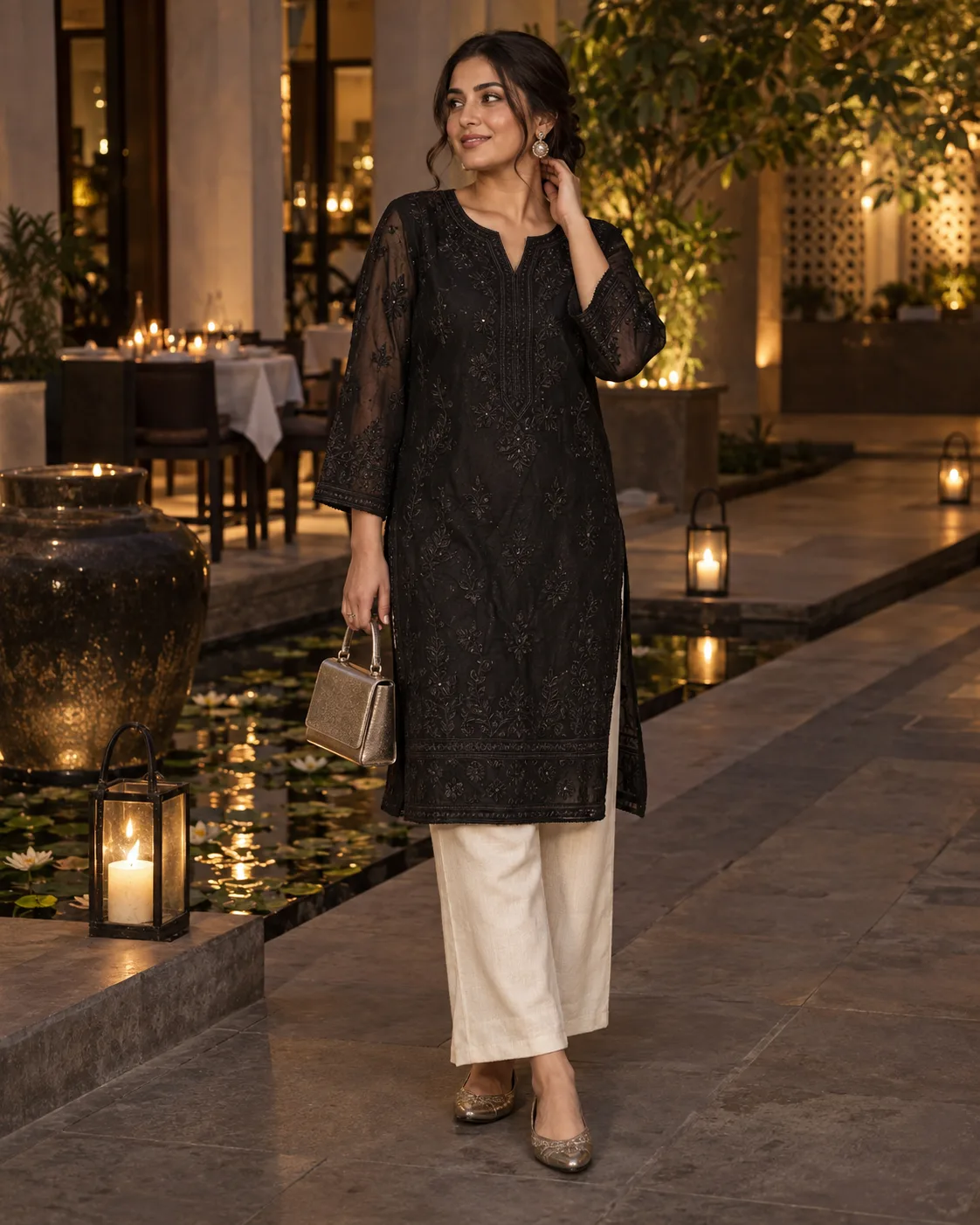
4. Black Chikankari Kurti With Ivory Pants and Metallic Flats
A black Chikankari kurti deserves more attention than it usually gets.
The embroidery becomes subtler against a dark base, which gives the whole outfit a quieter, more grown-up feel. Pair it with ivory or soft cream trousers and the contrast does most of the styling for you.
I’d keep the bottoms straight or softly wide rather than very flared. That cleaner shape makes the black-and-ivory combination feel polished instead of overly traditional.
Metallic flats are the easiest way to lift it for dinner, a family gathering, or a low-key festive evening. Pewter, brushed gold, or antique silver all work without turning the look into occasionwear.
This is also one of those outfits where you can skip the necklace completely. A pair of small statement earrings and a compact bag are enough.
What I’d avoid: adding another strong print, a very colourful dupatta, and heavy jewellery all at once. The appeal here is the contrast between dark embroidery and a pale, clean base.
If you prefer festive dressing that feels quieter and less obvious, this is probably the look in the list I’d start with.
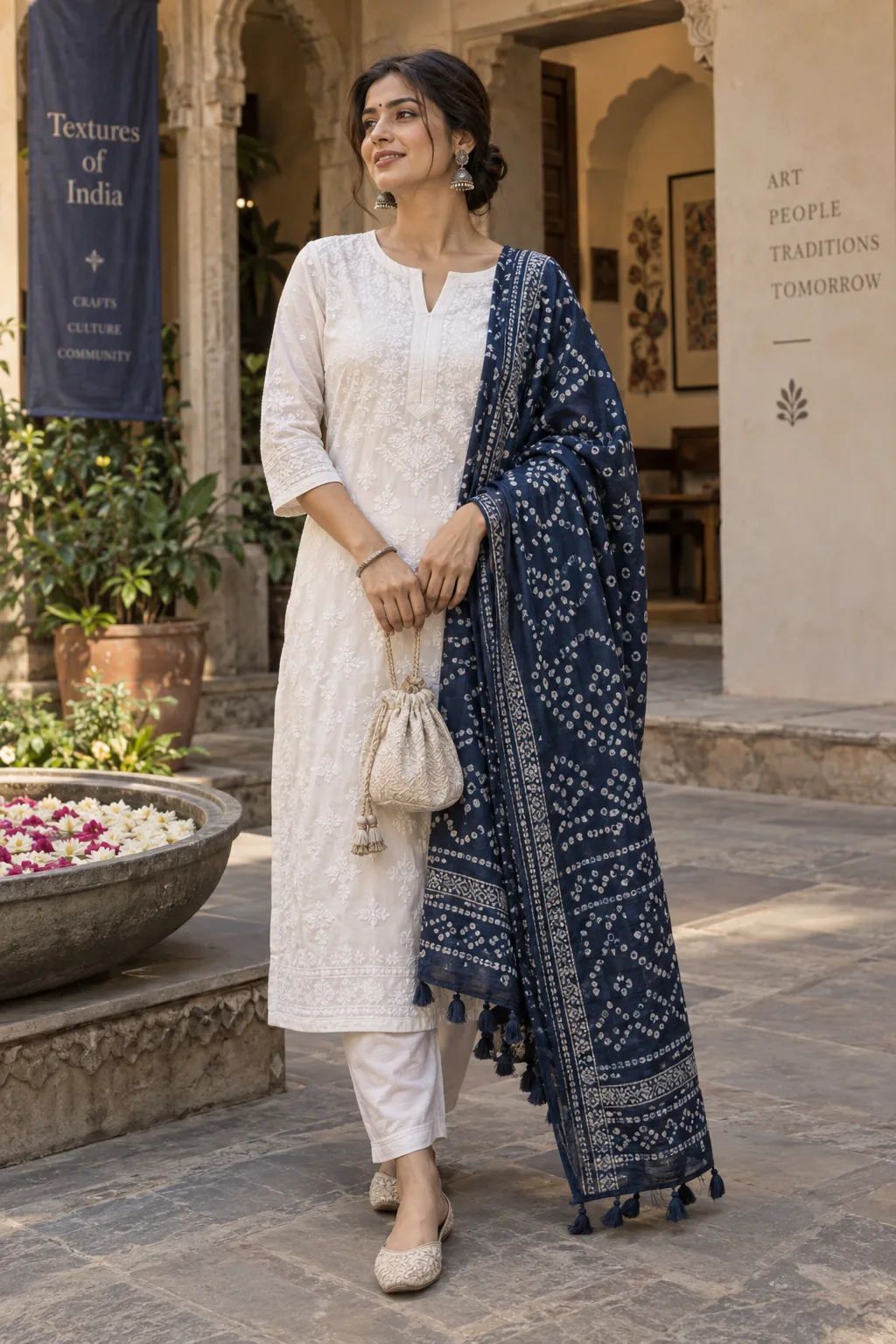
5. Chikankari Kurti With a Printed or Bandhani Dupatta
Chikankari and a printed dupatta can work beautifully together, but only if one of them agrees to stay quiet.
If the kurti has dense embroidery, choose a lighter dupatta with a simpler print. If the Chikankari is sparse and delicate, you can afford a stronger Bandhani, block print, or handloom pattern on top.
I like this best with a plain or tonal bottom — straight trousers, cigarette pants, or even a simple palazzo in the same family as the kurti. That gives the eye somewhere to rest.
A white Chikankari kurti with an indigo Bandhani dupatta is an easy combination. So is blush with wine, sage with rust, or black with a muted red print.
The dupatta should feel like the colour story, not an extra decoration added at the end.
Keep the shoes uncomplicated and let the two textiles do the work. A simple pair of flats or mules is enough.
If you like mixing Indian craft traditions this way, our modern Bandhani outfit ideas for women go further into how Bandhani can work with contemporary silhouettes without feeling overly festive.
The important thing here is balance: one craft brings texture, the other brings colour.
This is where Chikankari can start to feel almost weightless.
A longer kurti works beautifully with palazzo pants, but only if the fabrics cooperate. If both pieces are too stiff or too heavily embroidered, the outfit can become bulky very quickly. I’d keep the kurti light — cotton, georgette, or a soft blend — and let the trousers fall cleanly from the waist.
Tonal colour works especially well here. Think ivory on ivory, powder blue with a slightly deeper blue, sage with muted olive, or blush with dusty rose. The closer the shades are, the more the embroidery becomes about texture rather than contrast.
I’d avoid a very wide palazzo if the kurti already has plenty of flare. A softer, straighter wide leg gives you movement without making the whole silhouette feel oversized.
For shoes, something simple and low-profile works best: flat sandals, minimal mules, or a clean jutti if you want a more traditional finish.
This is the kind of outfit that doesn’t need much styling after that. The interest comes from the softness, the embroidery, and the way the two pieces move together.
If you like this balance of longer kurtas and wider trousers, our kurta with wide-leg pants outfit ideas go deeper into how to keep that proportion from feeling too heavy.
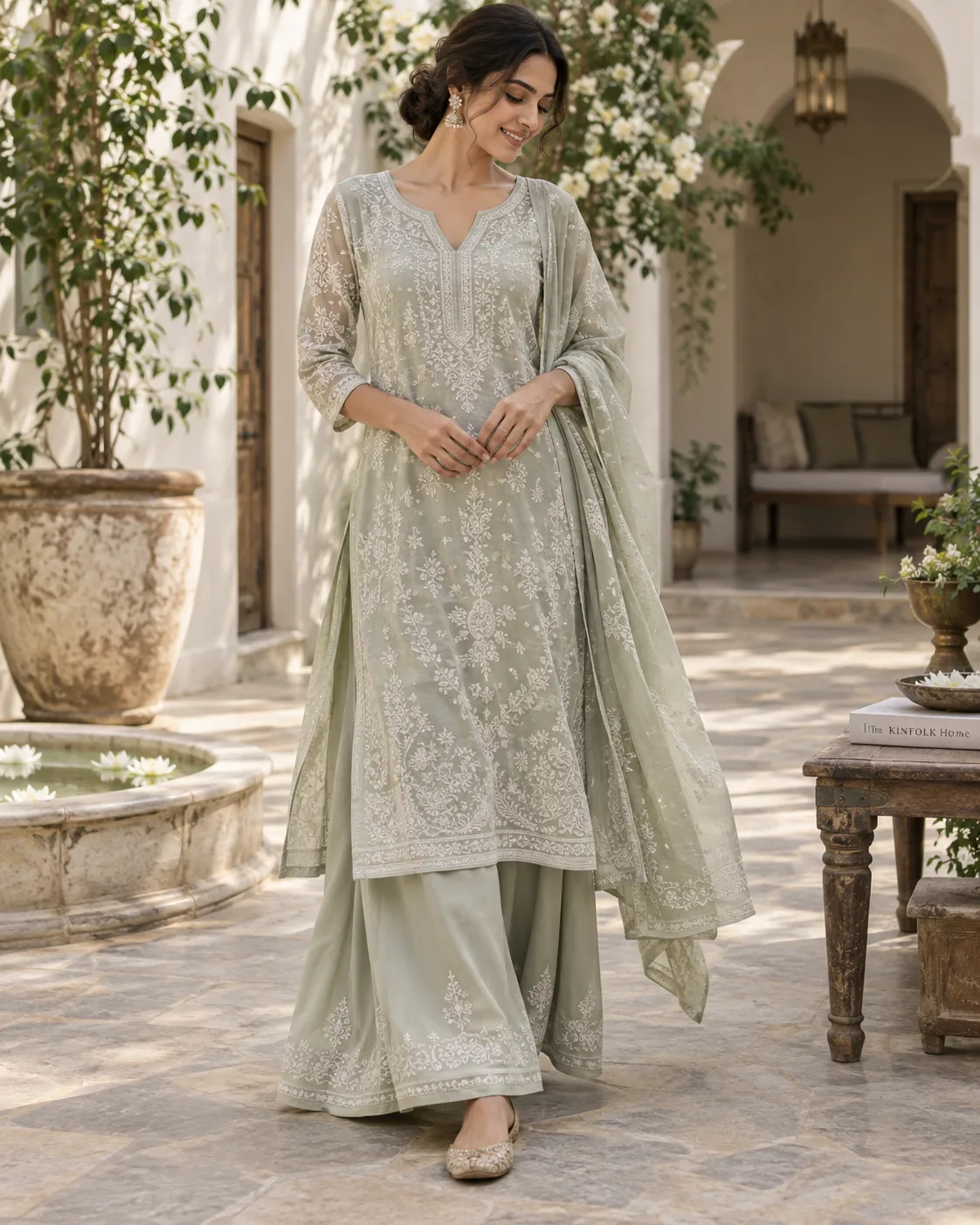
7. Chikankari Kurti With a Sharara for a Light Festive Look
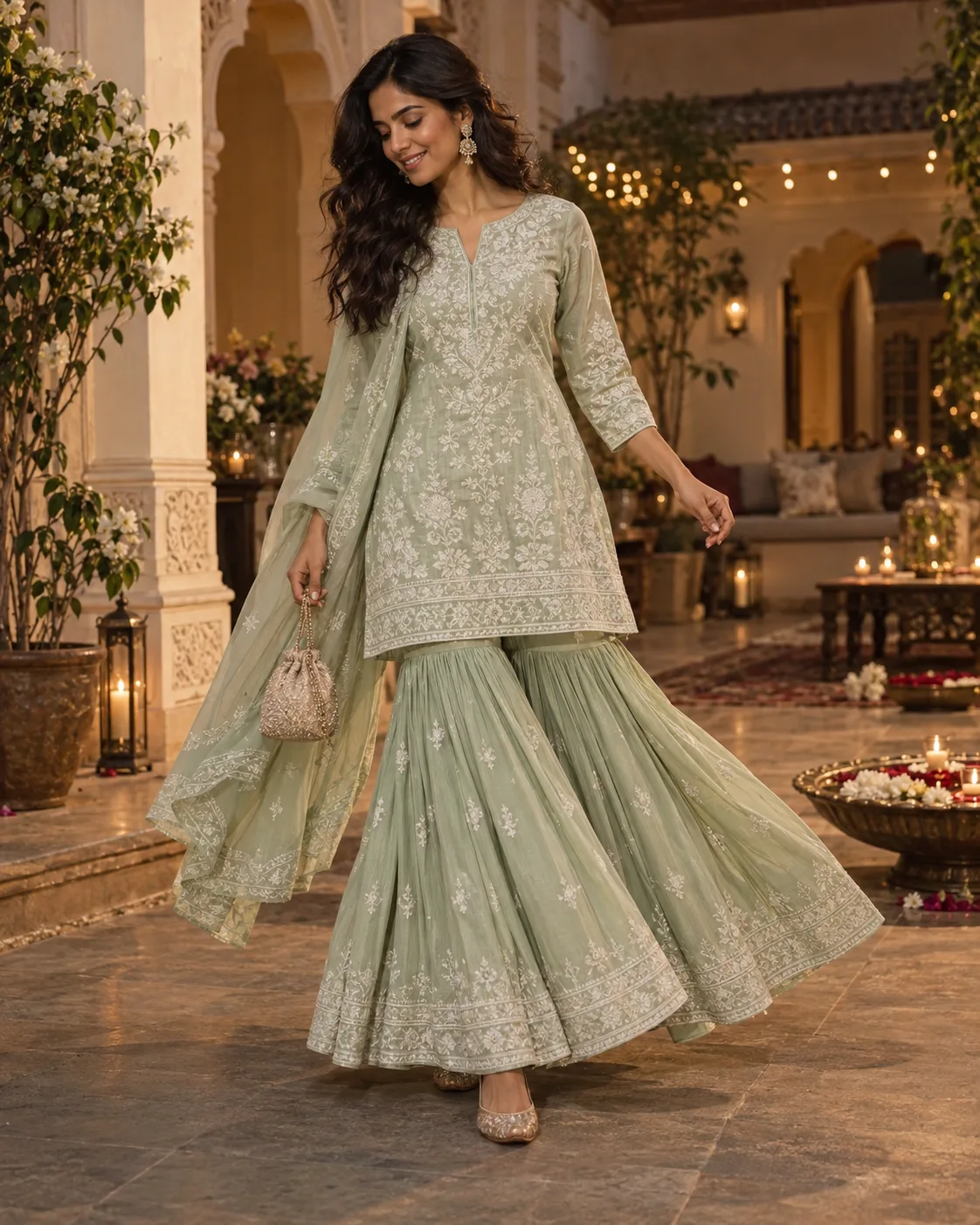
If you want Chikankari to feel festive without turning it into a heavy wedding outfit, a sharara is a good place to add the drama.
The trick is to keep the kurti fairly simple. A short or mid-length Chikankari kurti with clean embroidery gives the sharara enough room to move without making the whole outfit feel crowded.
I’d avoid putting dense work on both pieces. If the kurti has detailed threadwork, let the sharara stay mostly solid or use only a narrow border. If the top is very minimal, you can bring in a slightly more textured sharara.
Soft colours work beautifully here — ivory, pistachio, powder blue, blush, or butter yellow — but deeper shades like wine or teal can make the outfit feel more evening-ready.
A lightweight organza or chiffon dupatta is optional. If you add one, keep it sheer and easy to manage.
For accessories, one pair of earrings and comfortable festive flats are enough. The sharara already gives you the volume and movement.
This is probably the least traditional look in the list, which is exactly why I like it.
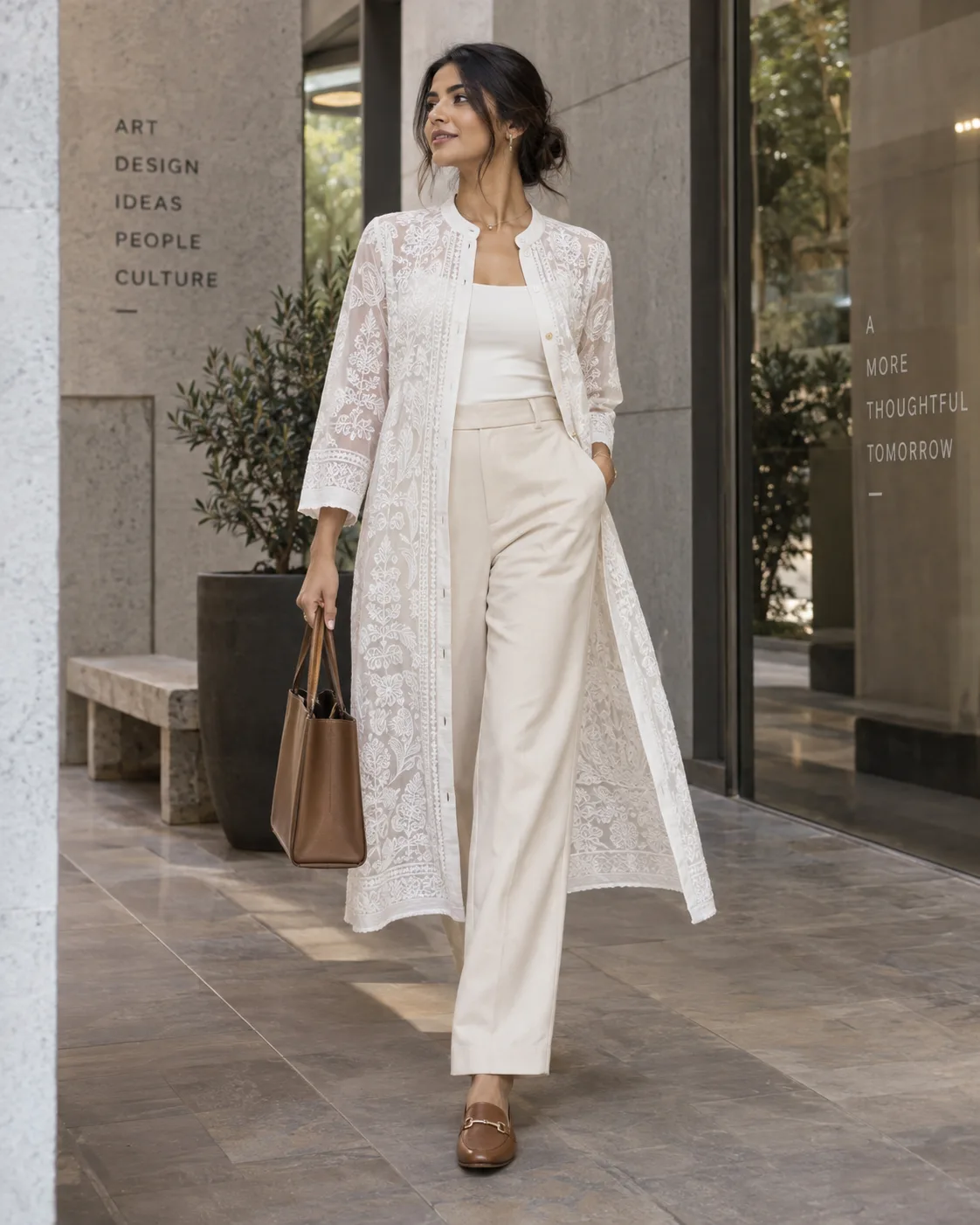
If you have a button-front Chikankari kurti, try wearing it open over a fitted tank, camisole, or simple column dress instead of styling it as a regular kurti. The embroidery starts to read more like a lightweight jacket, and suddenly the whole outfit feels much more contemporary.
For an everyday version, I’d pair a white or ivory Chikankari layer with a fitted beige tank and straight trousers. For something darker, a black Chikankari kurti over a tonal inner layer with cream or charcoal pants can look incredibly sharp.
The important thing is to keep the base underneath clean. No competing print, no extra embroidery, no complicated neckline.
You can leave the kurti fully open or button only one or two closures around the middle to give it a little shape. Roll the sleeves slightly if the fabric allows it.
Finish with clean sneakers, leather flats, or minimal mules depending on how casual you want the look to feel.
It’s a simple styling shift, but it changes the role of the garment completely. Instead of asking, “What bottoms go with this kurti?” you start treating the Chikankari itself as the finishing layer.
This is one of those details that can quietly make or break the outfit.
A lot of Chikankari kurtis are slightly sheer, especially in white, ivory, pastel cotton, georgette, or organza. The easiest fix is not to add more layers on top — it’s to choose the right base underneath.
For White or Ivory Chikankari
A skin-tone camisole or slip usually disappears better than bright white underneath. White-on-white can sometimes show more than you expect, especially in daylight.
If you want a softer monochrome look, an ivory or cream inner can also work as long as it matches the kurti closely.
For Pastels
Choose a nude or tonal camisole that sits close to the colour of the kurti. Blush under blush, pale blue under powder blue, or soft beige under sage usually looks cleaner than a contrasting inner.
For Dark Chikankari
Black, charcoal, deep navy, or wine kurtis are easier. A matching or near-matching inner keeps the embroidery visible without distracting from it.
When Contrast Actually Works
Contrast can be intentional if the Chikankari is being worn open as a layer. A white embroidered kurti over a black fitted tank, for example, can look sharp because the contrast is part of the outfit rather than something you’re trying to hide.
The main rule is simple: if the inner layer is visible, it should either disappear completely or look deliberately chosen. Anything in between tends to make the outfit feel unfinished.
The Chikankari Styling Mistake I’d Avoid
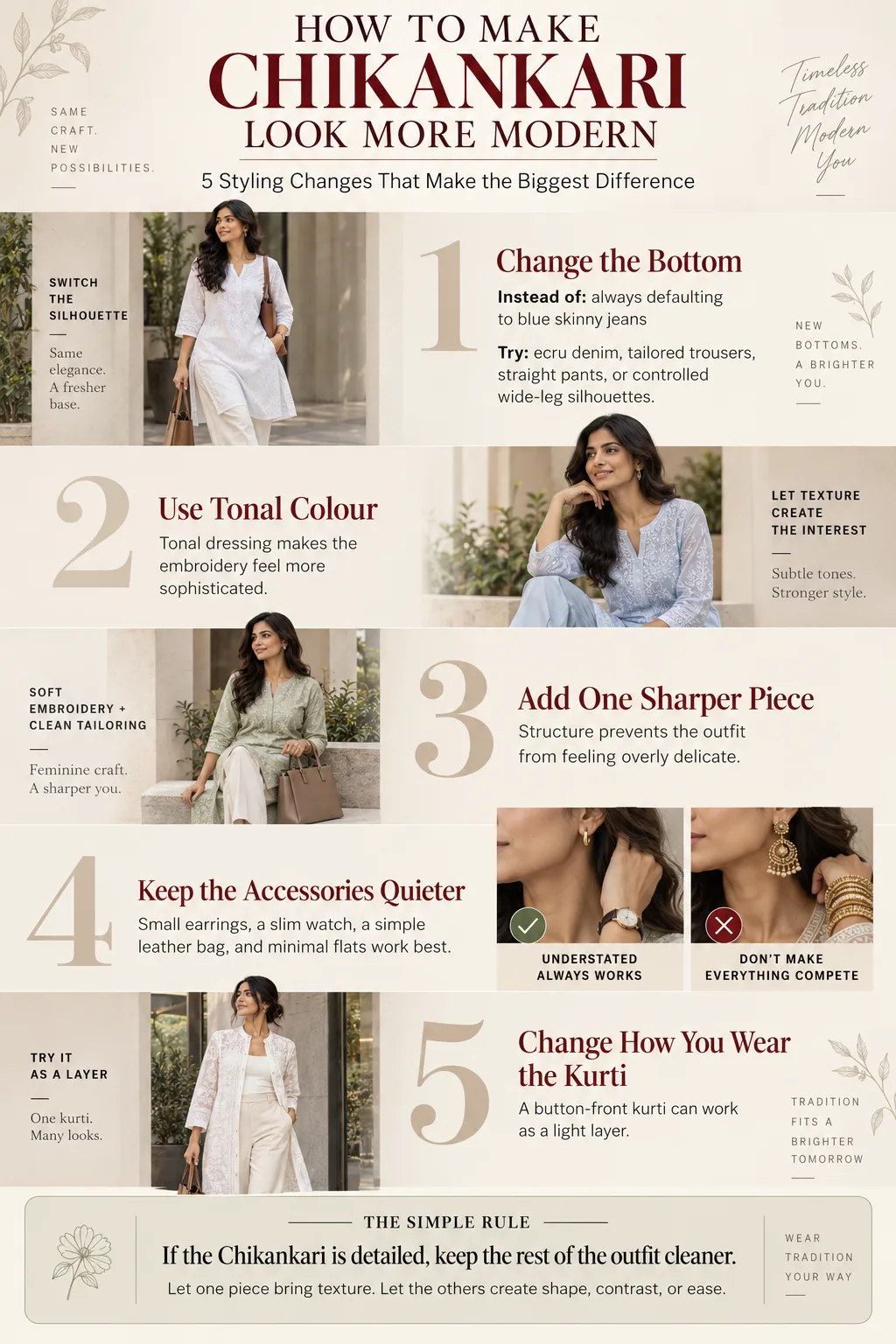
The easiest way to make Chikankari look less refined is to make everything else equally decorative.
If the kurti already has beautiful embroidery, you usually don’t need heavily embellished trousers, a busy dupatta, statement jewellery, ornate shoes, and a decorative bag all in the same outfit.
That doesn’t mean Chikankari has to be styled minimally every time. It just means the texture needs some space.
With a heavily embroidered kurti, I’d keep the bottoms cleaner. If the dupatta is printed or Bandhani, I’d reduce the jewellery. If the outfit is already tonal and detailed, I’d choose simpler footwear.
The embroidery is delicate by nature. It tends to look better when you notice the workmanship first, not after sorting through five other competing details.
So if an outfit feels like it needs “one more thing,” I’d usually try removing something before adding anything else.
Final Thoughts
Chikankari doesn’t need much help to look beautiful. Most of the styling work is really about deciding what kind of mood you want around it.
With denim, it can feel easy and everyday. With tailored trousers, it becomes sharper. A sharara takes it into festive territory, while an open button-front kurti can work almost like a lightweight embroidered jacket.
That range is what makes Chikankari so useful.
You don’t need to keep styling it the same way just because the embroidery is traditional. Change the proportion, the fabric next to it, the colour story, or even the role of the kurti itself.
And if the embroidery is already doing enough, let it.
 Pin it
 Pin it
 Pin it